
 English EN
 French FR
 German DE
 Portuguese PT
 Spanish ES
 Russian RU
 Japanese JA
 Korean KO
 Arabic AR
 Greek EL
 Turkish TR
 Italian IT
 Polish PL
 Hindi HI
 中国 CN
中国 CN
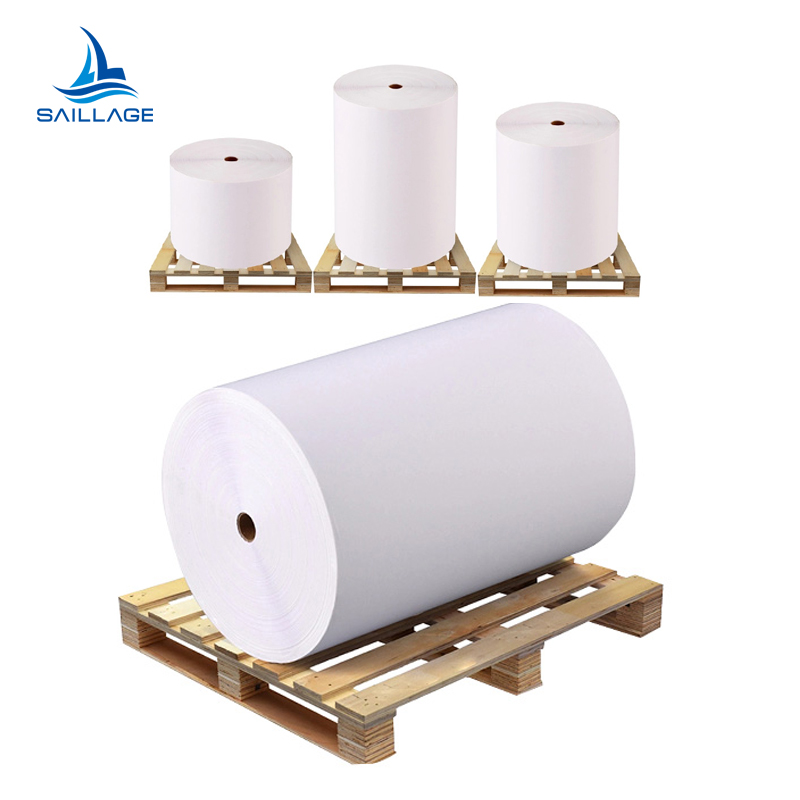
How to Compare DTF Film Coating Weight and Ink Absorption Specs
The performance of a DTF film is not determined by its PET base alone — it is determined by two coating layers applied on top of it: the release coating that controls how and when the film separates from the transfer, and the ink absorption layer that controls how ink is received, held, and ultimately expressed as color. Both layers have an optimal weight range. Too far in either direction and print quality, peel behavior, or color saturation suffers in specific, predictable ways.
Why Coating Weight Is the Specification Most Buyers Never Ask About
When buyers evaluate DTF film, the most commonly requested specifications are base film thickness, peel type (hot or cold), and general compatibility with printer models. Coating weight — the gram-per-square-meter measurement that defines how much release and absorption material has been deposited on the PET base — is almost never disclosed voluntarily by suppliers, and almost never requested by buyers.
This is a significant oversight. Coating weight is the primary determinant of two of the most visible and commercially consequential DTF quality variables: peel behavior (does the film release cleanly without disturbing the transfer?) and color saturation (does the ink produce the depth and vibrancy the design file intends?). Getting either coating layer outside its optimal range introduces failure modes that are difficult to diagnose and expensive to correct in production.
What Coating Weight (g/m²) Actually Measures
Coating weight, expressed in grams per square meter (g/m²), is the mass of coating material applied per unit area of the base film. It is a direct proxy for coating thickness: a higher coating weight means more material has been deposited, which typically translates to a thicker layer — though the relationship also depends on the density of the coating formulation.
Release Layer Coating Weight: The Peel Performance Dial
The release coating on a DTF film performs a precise and counterintuitive function: it must hold the ink layer securely to the film during printing, powder application, and curing — then release it completely and cleanly the moment heat and pressure are applied during heat pressing. The coating weight of this layer determines how much force is required to trigger this transition, and whether that force falls within the range that produces clean, undisturbed transfers.
The Vibration Problem: Why Too Much Release Coating Causes Patterns to Drop
This failure mode is one of the most commercially damaging and least understood in DTF production. When a release coating is formulated or applied too heavily, the adhesion between the cured ink layer and the film surface becomes so low that normal handling vibration — picking up a stack of printed films, feeding them into a heat press, or even transport — can cause the pattern to partially or fully separate from the film before it has been transferred to the garment.
The result is not always a completely blank area where the pattern fell off. More often, it manifests as specific zones within the design where adhesion was lowest first — typically fine detail areas, isolated dot elements, and thin-line components — that arrive at the heat press already compromised, producing a partial, damaged transfer that cannot be salvaged.
Ink Absorption Layer Coating Weight: Where Color Depth Is Decided
The ink absorption layer is the surface that DTF ink physically contacts and bonds to during printing. Its coating weight determines three interdependent properties: the rate at which ink is absorbed into the layer, the depth to which it penetrates before being held, and the dot gain characteristics that determine edge sharpness in fine detail. All three directly affect the color saturation, detail resolution, and ink usage efficiency of the final print.
The Color Depth Mechanism: Why Heavy Absorption Layers Produce Pale Prints
The color we perceive in a printed area is primarily produced by pigment particles that remain at or near the surface of the absorption layer — where they are in the optical path of reflected light. When the absorption layer coating weight is within its optimal range, ink droplets are absorbed to a controlled depth that leaves the majority of pigment particles near the surface, producing full color depth and saturation.
When the coating weight is excessive, the absorption layer acts as a deep sponge: ink is drawn rapidly down through its full depth, dispersing pigment particles throughout the layer rather than concentrating them near the surface. The result is a print that appears pale, flat, or washed-out compared to the design file — a perceptual effect caused not by incorrect ink formulation or incorrect printer settings, but by physics: less pigment per unit volume is available in the reflective surface zone.
How to Evaluate Coating Weight Without a Laboratory
While precise coating weight measurement requires gravimetric laboratory analysis, buyers can evaluate the practical performance consequences of coating weight using standardized print tests that do not require specialist equipment. The following protocol is designed to surface coating-weight-related defects systematically, using a single test print file across six evaluation points.
T1
Solid Fill Saturation Test
Print a series of solid-fill color patches at 100% density for each channel: Cyan, Magenta, Yellow, Black, and composite Red, Green, Blue. Compare printed patches against calibrated reference swatches. A pale or washed-out appearance in solid fills indicates an over-weight absorption layer. Use a spectrophotometer to measure ΔE if available.
T2
Fine Line and Micro-Text Resolution
Print a test file containing black lines at widths from 0.25pt to 2pt, and text at sizes from 4pt to 10pt. Examine under magnification (10× loupe minimum). Feathered or blurred edges indicate under-weight absorption layer. A correctly weighted layer produces clean, sharp edges down to the smallest elements in the test.
T3
Gradient Transition Smoothness
Print a full-tone gradient from 0% to 100% for each primary channel. An over-weight absorption layer will show loss of differentiation in highlight regions (0–20%), where ink volume is lowest and deep absorption eliminates the subtle pigment differences between gradient steps. An under-weight layer will show banding caused by lateral dot bleed at mid-tone transitions.
T4
Peel Force and Pattern Integrity Test
After curing, handle a batch of printed films using normal production movements — picking up, stacking, transport simulation. Any pattern drop-off during this handling indicates a release layer that is too heavy. After heat pressing, attempt both hot peel and cold peel on the same film type to assess whether peel force is appropriate for the press parameters being used.
T5
Isolated Dot and Fine Element Adhesion
Print a test file containing isolated single dots at various sizes (0.3mm–2mm diameter) and fine halftone patterns. After curing and handling, inspect whether small isolated elements remain attached to the film. Drop-off in isolated dots before pressing — while solid fill areas remain intact — is diagnostic of an over-weight release coating specifically affecting low-adhesion-area elements.
T6
Batch-to-Batch Consistency Test
Run the same test file print on film from at least three different production lot numbers from the same supplier. Any visible variation in color saturation, peel behavior, or detail resolution between lots — using identical printer and press settings — indicates coating weight inconsistency in the supplier's production process. Consistent results across lots is the highest quality indicator.


Coating Weight Calibrated for Every Printer-Ink System We Support
Coating weight specification is not a single fixed target in our film manufacturing process — it is calibrated specifically for the ink chemistry and printer model the film is paired with. Every film we release to production has been validated against both coating layers at the target weight range, and batch-consistency testing is performed on every production lot before it ships.



News & Events
learn more-
 Blog
Press Release Jun-26-2026
Blog
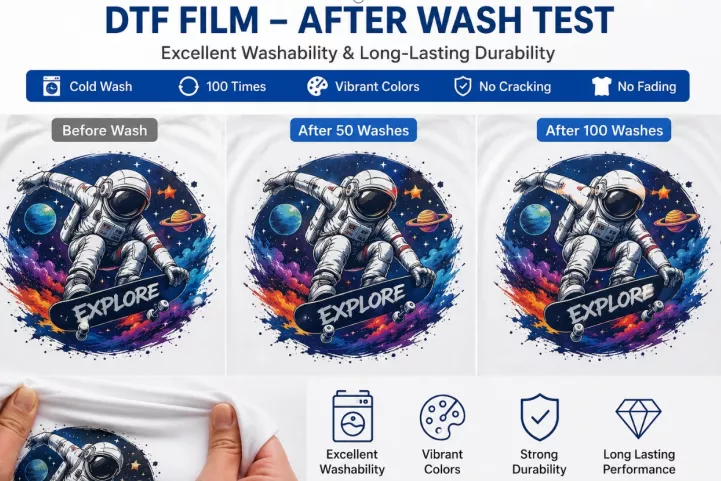
Press Release Jun-26-2026DTF Film Wash Durability Test: How Many Washes Can a Transfer Survive?
Industry-standard DTF transfers are typically rated for around 30 wash cycles before noticeable cracking, fading, or edge lifting occurs. Our water-based, eco-friendly DTF film extends that figure to 50+ washes under the same rigorous test protocol — without compromising on environmental safety. This article explains exactly how that number is measured, what causes a transfer to fail, and how our formulation closes the gap between durability and sustainability. -
 Blog
Press Release Jun-26-2026
Blog
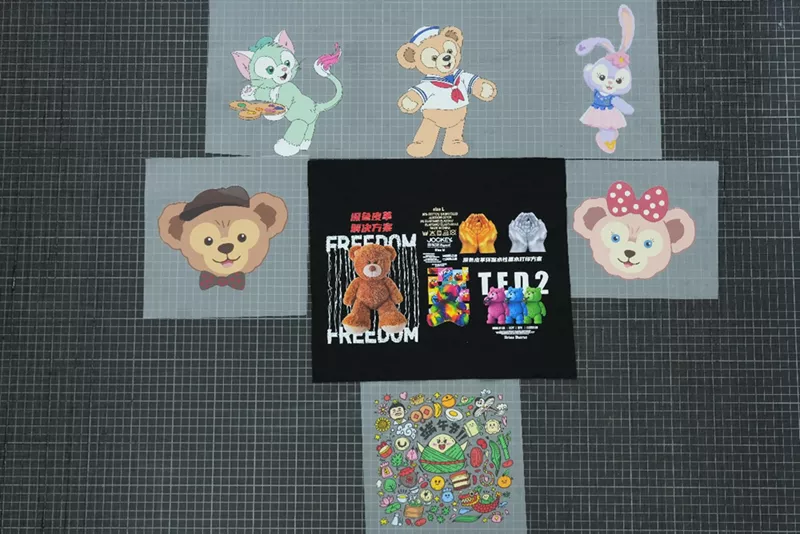
Press Release Jun-26-2026What Are the Differences Between Various DTF Printers and Films?
Master DTF printer and film compatibility. Explore how ink chemistry, ICC profiles, coatings, and curing impact your print quality and washability. -
 Blog
Press Release Jun-26-2026
Blog
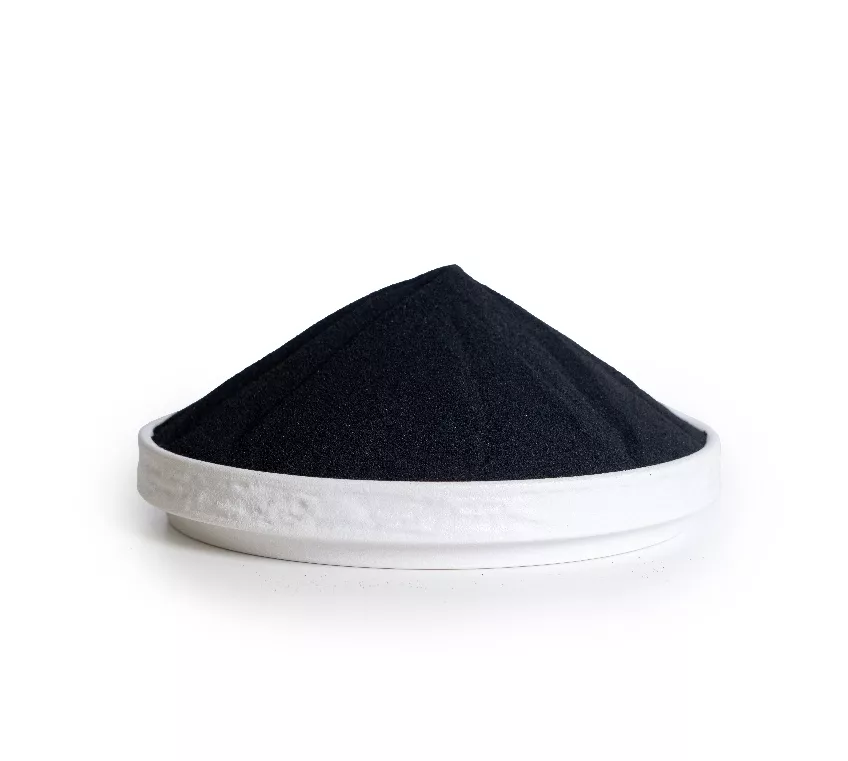
Press Release Jun-26-2026Can I use black DTF powder on different types of fabrics?
Yes. Black DTF powder isn't just a color variant — it's a fundamentally different adhesive choice that directly affects how your transfer looks on dark and light fabrics. Understanding which powder belongs on which garment is one of the most underestimated decisions in DTF production.

contact
Tel: +86 17706217416
Add: Building L2A, No. 520, Lane 1588, Zhuguang Road, Hongqiao World Center, Qingpu District, Shanghai, China
follow us: