
 English EN
 French FR
 German DE
 Portuguese PT
 Spanish ES
 Russian RU
 Japanese JA
 Korean KO
 Arabic AR
 Greek EL
 Turkish TR
 Italian IT
 Polish PL
 Hindi HI
 中国 CN
中国 CN
Can I use black DTF powder on different types of fabrics?
Yes. Black DTF powder isn't just a color variant — it's a fundamentally different adhesive choice that directly affects how your transfer looks on dark and light fabrics. Understanding which powder belongs on which garment is one of the most underestimated decisions in DTF production.
Hot Melt Powder: The Variable Nobody Talks About Enough
Most DTF discussions focus on printer specifications, ink quality, and film selection. Hot melt powder — the adhesive layer that bonds the transfer to the fabric — is frequently treated as an afterthought. But for anyone producing DTF prints across a range of garment colors and fabric types, powder selection is a critical decision with direct, visible consequences on every finished piece.
The central question this article addresses: can you use black DTF powder on different types of fabrics, and when should you choose it over white or transparent powder? The answer involves understanding the physical behavior of each powder type during the curing and heat-pressing process — and why the choice matters most on dark-colored garments.
The Two DTF Powder Types — and What Each One Does
DTF hot melt powder functions as the adhesive bridge between the printed ink layer on the film and the fabric surface. When heated in the curing tunnel, the powder melts and bonds chemically with both the ink above and the fabric below. The powder type you choose determines how visible the adhesive layer is after melting, how strong the final bond is, and how the print behaves on different fabric colors.
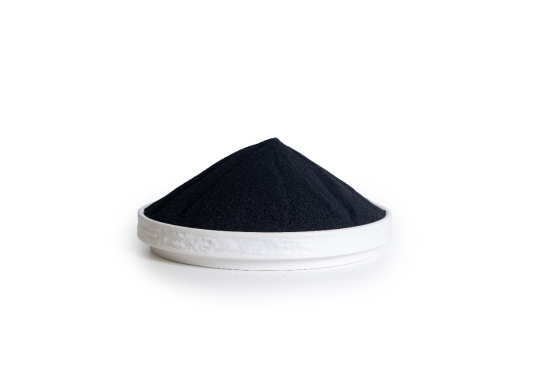
Black Powder · Black Hot Melt Adhesive
Invisible on dark fabrics after pressing
No halo or edge show-through on dark garments
Strong adhesion on cotton, polyester, blends
Maintains wash durability equivalent to white powder
Visible on light or white fabrics — not recommended
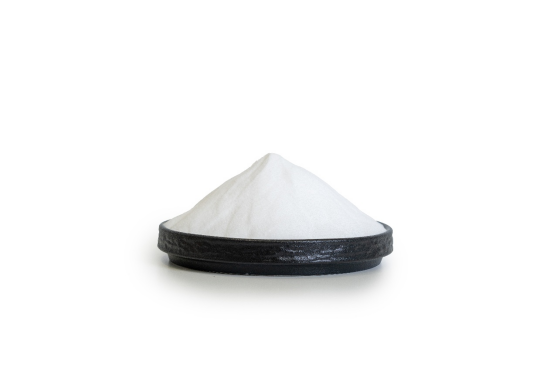
White Powder · White Hot Melt Adhesive
Standard choice for white and light-colored fabrics
High adhesion strength across most fabric types
Does not fully conceal fabric color after melting on dark garments
Slight translucency visible along transfer edges
Thin ink areas may show fabric bleed-through
Why White Powder Shows Through on Dark Fabrics
This is the most misunderstood aspect of DTF powder selection, and it's worth explaining the physics clearly. When white hot melt powder is applied to the printed film and cured, it forms a semi-translucent adhesive layer. On white or light fabrics, this translucency is imperceptible because the powder color and fabric color are similar. On dark or deeply saturated fabrics, however, the situation is fundamentally different.
After heat pressing, the melted white powder does not achieve full opacity. At transfer edges — where the ink layer is thinnest — and in areas of fine detail or gradient transitions, the dark fabric color bleeds visually through the semi-transparent adhesive layer. The result is a subtle but unmistakable darkening or color tinting along transfer boundaries, and a loss of crispness in fine details.
Production Note
The transparency effect of white powder on dark fabrics is most pronounced in three scenarios:
(1) transfer edges and fine-line details,
(2) gradient transitions from solid color to transparent, and (3) areas where the white ink base layer is thinner due to calibration or design factors. If your design includes any of these elements on a dark garment, black powder is the correct choice.
Black Powder Not Recommended On
Black DTF powder should not be used on white, cream, light gray, pastel, or any light-colored fabric. The black adhesive layer will be visible through thin ink areas and at transfer edges, creating a dark shadow effect that significantly degrades print quality. On light fabrics, white or transparent powder is always the correct choice.
How to Press Black DTF Transfers: Step-by-Step
Black DTF powder transfers are pressed using the same general technique as white powder, with one key operational note: the melted black adhesive is more visually forgiving on dark fabrics, but precise temperature control remains essential to ensure full cure and maximum wash durability.
1. Pre-press the garment
Place the dark garment on the heat press and apply pressure for 3–5 seconds at 120°C with a teflon sheet. This removes moisture and wrinkles, ensuring the transfer bonds to a flat, dry surface.
2. Position the black powder transfer
Place the DTF transfer printed-side up on the garment. Use heat-resistant tape to secure corners if needed. Verify alignment carefully — on dark fabrics, the black adhesive backing makes repositioning harder to judge visually.
3. Heat press: 140-160°C, 15 seconds, medium pressure
Apply the heat press. For cotton and blends: 140–160°C, 15 seconds. For polyester: reduce to 150–155°C to prevent fabric distortion. Maintain even pressure across the full transfer area.
4. Peel according to film type
Instant/Hot peel (Instant/Hot Peel film): peel immediately after pressing while still warm — results in a natural matte finish. Cold peel (Cold Peel film): wait 20–30 seconds for the transfer to cool before peeling — produces a higher-gloss surface. Always check your film specification before pressing.
5. Optional second press to seal
Cover the transfer with a teflon sheet and apply a second press for 8–10 seconds. This step improves surface smoothness, enhances edge adhesion, and increases overall wash durability — especially recommended for dark garments that will see frequent laundering.



News & Events
learn more-
 Blog
Press Release Jun-05-2026
Blog
Press Release Jun-05-2026Can I Use DTF Transfer Sheets for Sublimation Hacks ?
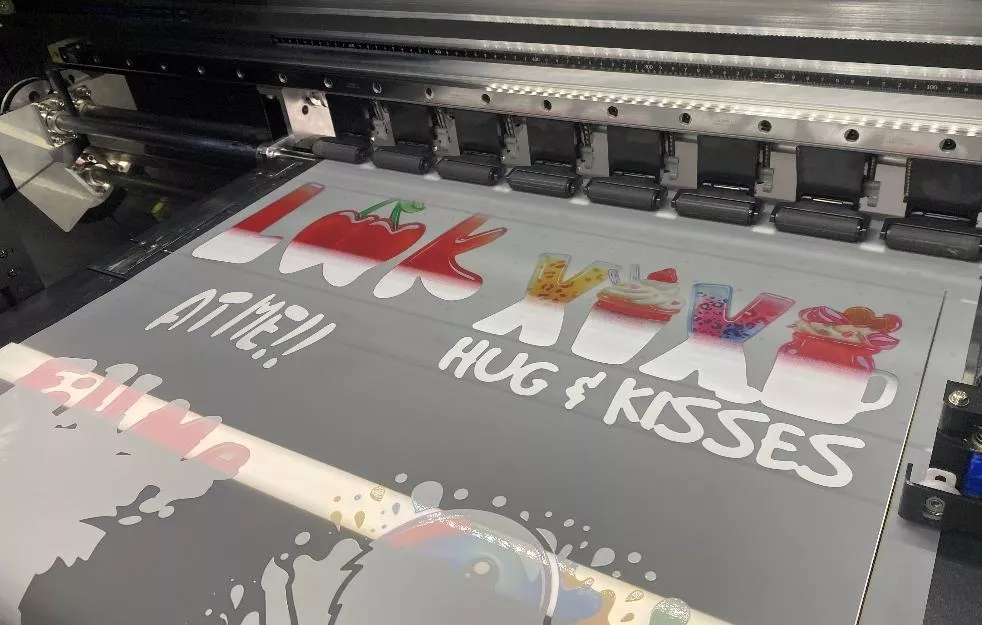
DTF (Direct-to-Film) transfer sheets are not compatible with sublimation ink — and sublimation ink cannot be used in DTF workflows. These are two entirely separate printing technologies with different inks, different film/paper types, different chemical processes, and different application methods. Confusing them can damage your printer, waste materials, and produce failed prints. -
 Blog
Press Release Jun-05-2026
Blog
Press Release Jun-05-2026How to Make and Apply DTF Transfers to T-Shirts: A Step-by-Step Guide
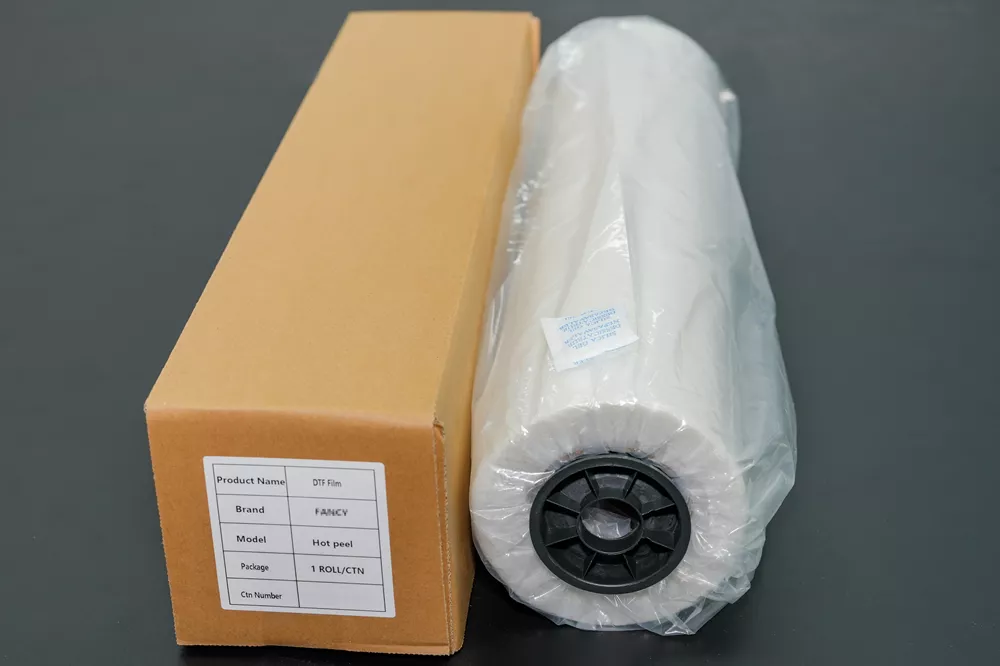
DTF (Direct-to-Film) printing is a modern garment decoration method where designs are printed onto a special PET transfer film, coated with hot-melt adhesive powder, cured, and then heat-pressed onto fabric. It works on virtually any textile — cotton, polyester, nylon, blends — without pre-treatment, making it one of the most versatile and efficient print-on-demand solutions available today. -
 Blog
Press Release Jun-05-2026
Blog
Press Release Jun-05-2026Premium vs Economic DTF Film: How to Choose the Right Grade
Understanding the differences can help you choose the right DTF transfer film and improve your printing efficiency.

contact
Tel: +86 17706217416
Add: Building L2A, No. 520, Lane 1588, Zhuguang Road, Hongqiao World Center, Qingpu District, Shanghai, China
follow us: