
 English EN
 French FR
 German DE
 Portuguese PT
 Spanish ES
 Russian RU
 Japanese JA
 Korean KO
 Arabic AR
 Greek EL
 Turkish TR
 Italian IT
 Polish PL
 Hindi HI
 中国 CN
中国 CN
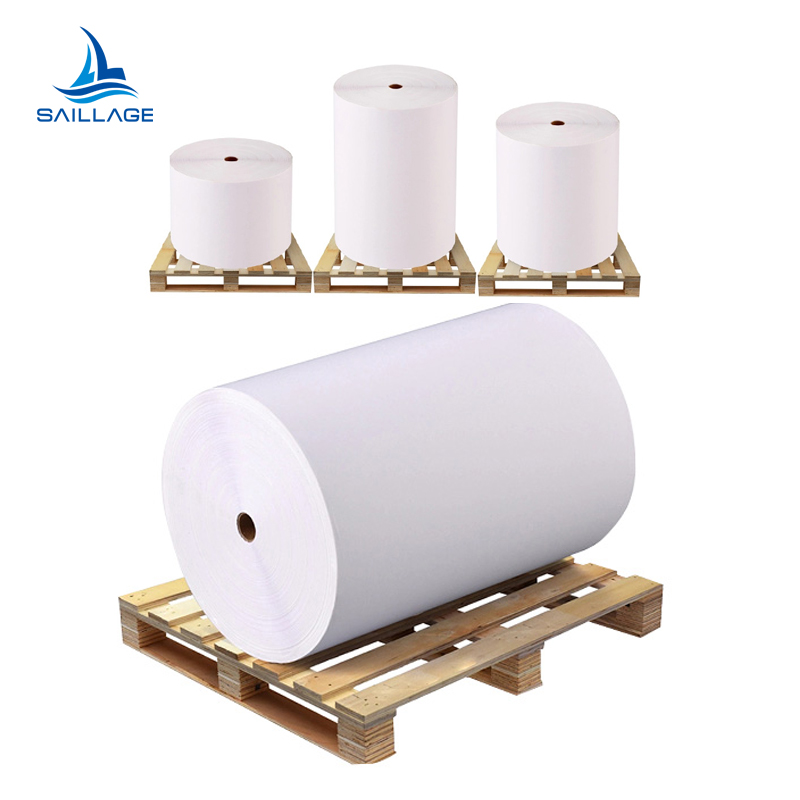
What Are the Differences Between Various DTF Printers and Films?
"DTF Compatible" Is Not a Standard — It's a Claim
Unlike industries with formal compatibility certifications, DTF printing has no universal standard that defines what "compatible" means between a printer and a film. Every printer manufacturer formulates ink for specific printhead chemistries and absorption layers. Every film manufacturer coats PET with specific formulations tuned to specific ink types and curing profiles. When a printer and film come from different manufacturers, "compatible" is often an assumption — not a verified fact.
This article examines the specific technical points where printer-film pairs align — and where they diverge. Understanding these points lets you evaluate any printer-film combination on its actual merits, rather than on label claims alone.
Four Technical Layers Where Differences Originate
Printer-film differences are not random. They trace back to four specific technical layers, each of which can independently cause a mismatch even if the other three are perfectly aligned.
Ink Chemistry
Pigment particle size, viscosity, and surface tension are formulated for specific printhead types (Epson, Ricoh, etc.) and specific film absorption coatings. Ink designed for one chemistry may not cure, bond, or saturate correctly on a film designed for another.
ICC Color Profiles
Color profiles map RGB/CMYK values to actual printed color output for a specific ink + film + printhead combination. A profile calibrated for one film's coating reflectance will produce inaccurate colors on a film with different optical properties.
Film Coating Formulation
The absorption coating on PET film is engineered to absorb a specific ink viscosity at a specific rate. Too-fast absorption causes dot gain and blurred edges; too-slow absorption causes pooling, smearing, and color bleed.
Curing Temperature Profile
Powder melting point, film thermal tolerance, and printer-tunnel synchronization must all align within a narrow temperature window. A film optimized for a 165°C profile may under-cure at 155°C or warp at 175°C.
Where Printers and Films Successfully Match
When a printer and film are genuinely compatible — whether from the same manufacturer or independently verified — the following points align correctly. Each represents a specific, testable outcome.
Color Saturation Matches Preview
Printed colors on film closely match the design file's intended values, without the need for manual color correction or repeated test prints.
Sharp Edges at Fine Detail
Text below 6pt, thin lines, and halftone gradients reproduce with clean edges — no dot gain, feathering, or bleed.
Full Cure at Spec Temperature
Hot-melt powder fully fuses within the film's specified curing range, producing strong adhesion without requiring temperature adjustments beyond the standard range.
Consistent Peel Behavior
Hot peel or cold peel timing behaves predictably batch after batch, with no variation in how cleanly the film releases from the cured print.
White Ink Opacity as Specified
White underbase achieves the opacity level stated in the printer's specifications on the corresponding film, with no additional white passes required.
Stable Output Across Batches
Film from different production lots produces visually identical results without requiring re-calibration of printer settings.
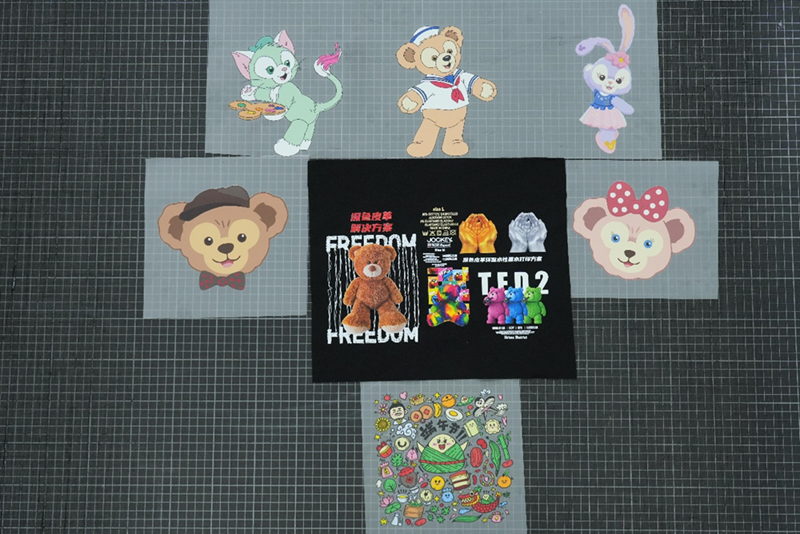
Six Symptoms of a Printer-Film Mismatch
When a printer and film are mismatched — even subtly — the symptoms typically appear gradually, often only becoming clear after a production run rather than during initial test prints. Recognizing these symptoms early can save weeks of failed troubleshooting.
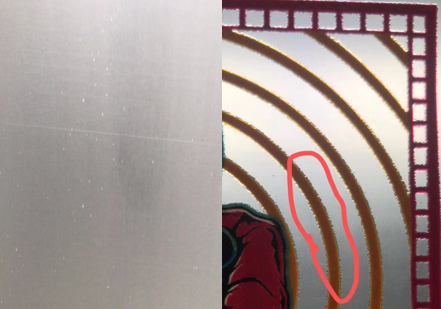
Color Drift in Specific Hue Ranges
Colors look correct in most of the design but shift noticeably in specific ranges — often reds, oranges, or skin tones — because the ICC profile was calibrated for a different film's reflectance characteristics.
Edge Halo or Feathering on Fine Detail
Thin lines and small text develop a soft, blurred edge because the film's absorption coating absorbs ink at a rate the ink formulation wasn't designed for — either too fast (dot gain) or too slow (bleed).
Registration Drift Across a Production Run
Early prints align correctly, but later prints in the same batch show slight misalignment — caused by the film's dimensional response to the printer's curing tunnel temperature differing from its design specification.
Adhesion Failure After Few Washes
The print looks correct immediately after pressing but cracks or peels after 5–10 washes — indicating the hot-melt powder did not fully fuse because the film's actual curing behavior differs from the printer's calibrated temperature output.
White Underbase Looks Gray or Translucent
White ink that should be fully opaque on the film appears thin or grayish — the film's surface texture or coating thickness doesn't hold the white ink droplet volume the printer was calibrated to deposit.
Inconsistent Peel — Sometimes Clean, Sometimes Not
The same peel timing produces clean release on some prints and incomplete, patchy release on others — a sign that film thickness or coating consistency varies in ways the printer's curing profile doesn't account for.
Eliminating the Compatibility Variable Entirely
Rather than asking customers to cross-check specifications between independently sourced products, we design and test our printers and films as a single integrated system. The compatibility table above is, for our customers, already resolved before the equipment ships.
Co-Developed ICC Profiles
Color profiles built specifically for our printer + film pairing — ΔE < 2 from print #1, no manual correction needed.
100% Pure PET Base
Zero calcium carbonate fillers. No post-cure yellowing, no haze, no shrinkage inconsistency regardless of curing tunnel settings.
Matched Curing Profile
Film's curing range and tunnel's PID-controlled output overlap by design — full cure, every batch, without temperature guesswork.
Ink Formulated for Our Printheads
Pigment particle size and viscosity matched to printhead chemistry — including dual anti-clog white ink design.
Full Test Documentation
Every printer-film pairing is validated through a 72-hour production-load test before export, with documentation available on request.
7×24h Engineer Support
If an issue does arise, one accountable team — not two finger-pointing suppliers — resolves it.



News & Events
learn more-
 Blog
Press Release Jun-12-2026
Blog
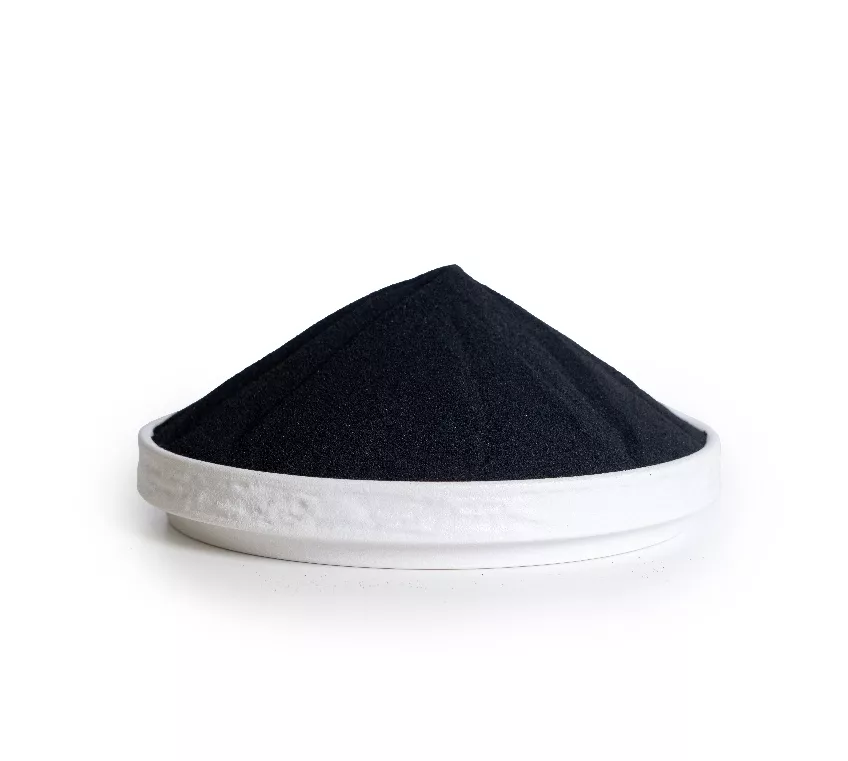
Press Release Jun-12-2026Can I use black DTF powder on different types of fabrics?
Yes. Black DTF powder isn't just a color variant — it's a fundamentally different adhesive choice that directly affects how your transfer looks on dark and light fabrics. Understanding which powder belongs on which garment is one of the most underestimated decisions in DTF production. -
 Blog
Press Release Jun-12-2026
Blog
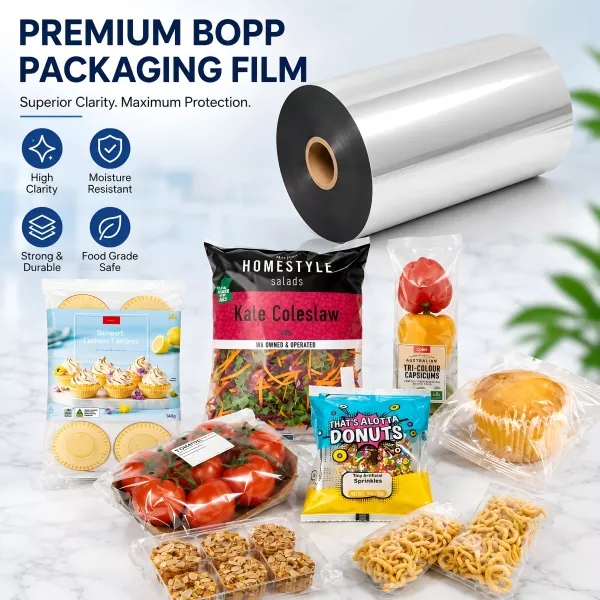
Press Release Jun-12-2026How to Test the Quality of BOPP Packaging Films
Learn how to test BOPP packaging film quality. Discover key methods like tensile strength, thickness, and moisture barrier testing from top BOPP film manufacturers. -
 Blog
Press Release Jun-12-2026
Blog
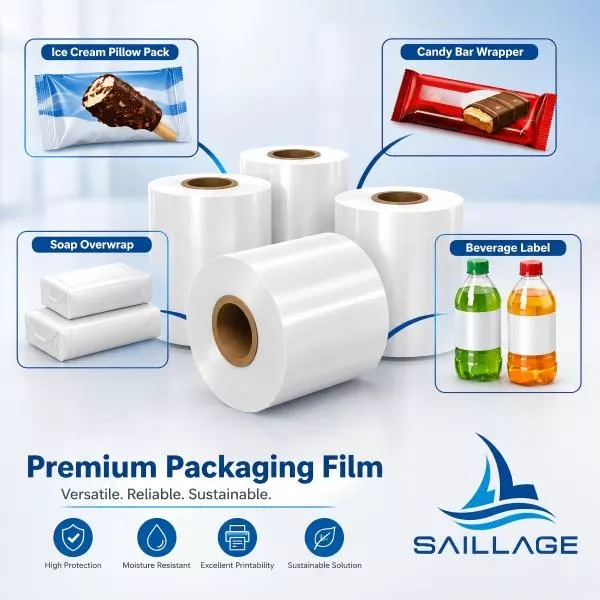
Press Release Jun-12-2026What Is Pearlised BOPP Film
Pearlised BOPP film is a specialized type of biaxially oriented polypropylene film widely used in the packaging industry. Known for its glossy pearl-like appearance, excellent moisture resistance, and lightweight structure, pearlised BOPP film has become a preferred material for modern flexible packaging solutions. Many businesses source these materials from reliable china bopp film manufacturers because of their competitive pricing and advanced production technologies.

contact
Tel: +86 17706217416
Add: Building L2A, No. 520, Lane 1588, Zhuguang Road, Hongqiao World Center, Qingpu District, Shanghai, China
follow us: