
 English EN
 French FR
 German DE
 Portuguese PT
 Spanish ES
 Russian RU
 Japanese JA
 Korean KO
 Arabic AR
 Greek EL
 Turkish TR
 Italian IT
 Polish PL
 Hindi HI
 中国 CN
中国 CN
.webp)
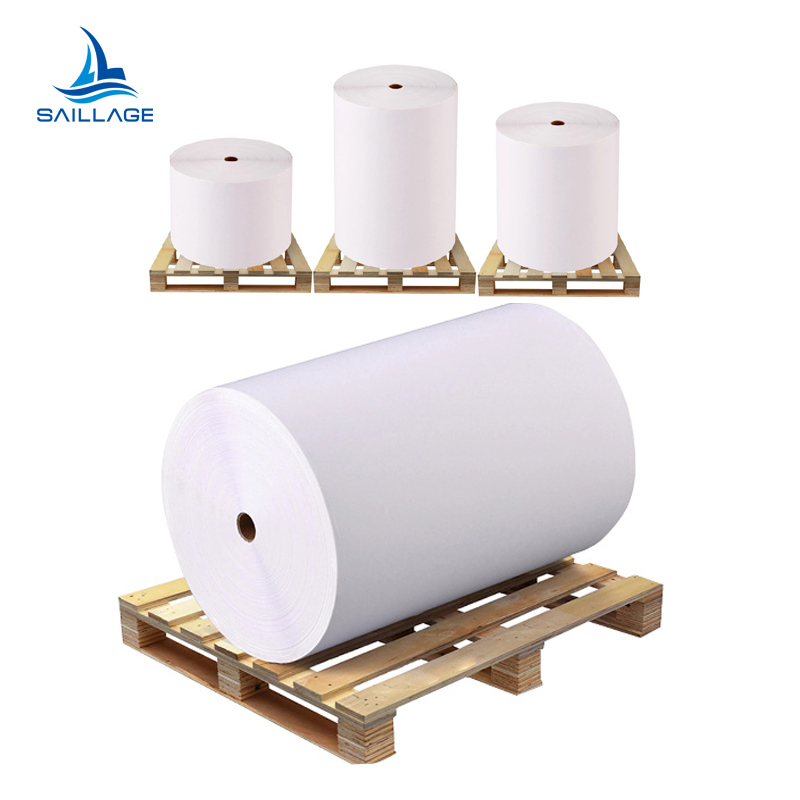
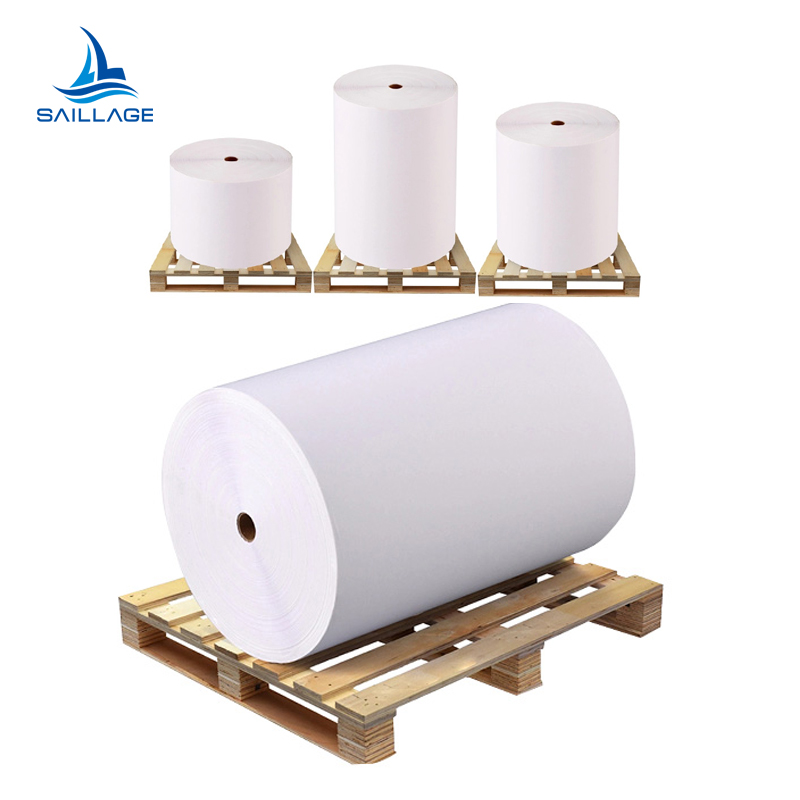
What Are The Differences Between Various Printers And Films In Dtf Printing
In fact, there are significant differences among DTF Printers, DTF Films, DTF Inks, and Hot Melt Powders produced by different manufacturers.Color channels, batch-stable output, precision temperature-controlled curing, dual-layer white ink anti-clog design, built-in smoke absorption, and cross-brand film incompatibility — every specification gap shows up on finished garments.
The DTF Market Has Exploded. So Has the Quality Gap.
Direct-to-Film (DTF) printing has reshaped the custom apparel industry. No screens, no minimums, full-color output on virtually any fabric — the technology's advantages are real and significant. But as the number of printer and film manufacturers multiplied, a quieter problem emerged: the gap between the best and worst products on the market has never been wider, and most buyers don't discover this until they're already in production.
This guide covers every major variable — including one rarely disclosed upfront: DTF printers from one manufacturer are not guaranteed to be compatible with films from another. Understanding these differences before purchasing can save weeks of calibration time, thousands in wasted consumables, and — most importantly — your clients' trust.
“The real cost of buying the wrong DTF setup isn't the machine price — it's the weeks of recalibration, wasted film, and client complaints that follow.”
Color Channels: The Difference Between Vivid an Flat
The color channel count determines how wide a gamut a DTF printer can reproduce. Entry-level machines rely on 4-color CMYK or simplified CMYK + White setups. While adequate for simple logos and text, these systems show clear limitations with smooth gradients, accurate skin tones, and vibrant fashion colors — producing visible banding, color drift, and a flat appearance on fabric.
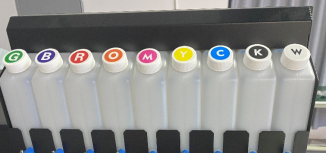
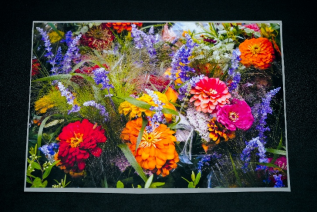
Our printers support up to 9 color channels, adding Orange, Green, Light Cyan, and Light Magenta alongside the standard base. Pantone-matched brand colors can be reproduced to within ΔE < 2 — below the threshold of human perceptibility. For high-end fashion, licensed merchandise, and export-grade production, this level of color fidelity is a requirement, not a luxury.
Batch Stability: Consistent Quality Across Every Run, Every Day
A common but underreported problem in DTF production is batch inconsistency — the same design printed in the morning looks different from the afternoon run, or varies across a bulk order.
Our machines are engineered for stable batch-to-batch output. Curing temperature management, consistent feed mechanisms, and rigorous pre-production calibration protocols ensure that the 500th print in a run matches the first. This operational consistency is the backbone behind our zero-negative-review track record.
Dual Anti-Clog Design: Ink Formula and Machine Both Engineered to Prevent Sedimentation
White ink is essential for making colors pop on dark fabrics — but its high titanium dioxide content makes it far more prone to sedimentation than any other ink type. Settled pigment clogs nozzles, degrades print quality, and ultimately destroys printheads — the single most expensive consumable in any DTF setup.
Most manufacturers address this with hardware alone. We go further: both our ink formulation and our machine hardware independently combat white ink sedimentation. The ink uses a specially stabilized suspension formula that resists settling under normal operating and storage conditions. The machine adds a built-in automatic circulation system that continuously agitates white ink during idle periods — eliminating residual sedimentation risk with zero manual intervention required from the operator.
Precision Temperature-Controlled Curing Tunnel: Complete, Uniform Cure — Every Sheet, Every Batch
After printing, the hot-melt powder must be fully and evenly cured before heat pressing. Under-curing — even slightly — causes adhesion failure after washing. Over-curing distorts the film and shifts colors. Inconsistent curing temperatures across a batch mean two shirts from the same order may wash out differently after just a few cycles.
Our machines feature an independent curing tunnel with precision temperature control. Maintain a stable and precise temperature profile throughout the entire drying tunnel length — ensuring every point on every sheet receives exactly the right heat exposure. The curing process runs in full synchronization with the print engine, enabling continuous high-volume production without interruption or compromised cure quality.
1. No Integrated Tunnel
Printing and curing fully decoupled. Throughput bottlenecked by oven volume. Poor temperature uniformity creates batch variation that worsens under high production loads.
2. Basic Integrated Tunnel
Reduces decoupling but lacks precise temperature control. Thermal drift during extended runs causes partial under-curing in later batches. No zone-level monitoring or adjustment.
3. Independent Precision-Controlled Curing Tunnel
Zoned heating. Constant thermal profile from entry to exit. Synchronized with print engine for uninterrupted production. Every sheet fully and uniformly cured — guaranteed consistent adhesion and wash performance across the entire batch.
Built-In Smoke Absorption: Protecting People and Market Access Simultaneously
The hot-melt powder curing process in lower-grade DTF machines generates visible fumes containing volatile organic compounds (VOCs) and fine particulate matter. In enclosed production environments, prolonged exposure poses documented risks to the respiratory health and skin of operators. Beyond the human cost, these emissions create real compliance risks for factories supplying markets where occupational health and chemical safety standards are rigorously enforced — particularly the EU and North America.
Our machines incorporate a built-in smoke absorption system that captures and filters curing fumes at the point of generation — before they can disperse into the working environment. This is an engineering solution, not a ventilation workaround. It supports compliance with EU REACH regulations, RoHS directives, and OSHA workplace safety standards.
Cross-Brand Incompatibility: The Problem Nobody Warns You About Before Purchase
This is one of the most common and costly problems in the DTF industry, and one of the least discussed before purchase: a DTF printer from Manufacturer A is not guaranteed to perform optimally with film from Manufacturer B. Ink chemistry, absorption coating formulation, hot-melt powder specifications, and ICC color profiles are all interdependent. When sourced separately from different manufacturers, each optimized for their own system, these variables can interact in unpredictable ways that produce color shifts, adhesion failures, and inconsistent peel behavior.
Our approach eliminates this problem at the source. Our films are formulated and calibration-tuned specifically for our printers. ICC profiles, ink formulation, and absorption coating are co-developed as an integrated system — not two separate products that happen to be compatible. The result: accurate, predictable color from the first print, no cross-supplier calibration loop, and a single accountable partner for hardware and consumables alike.
Our Complete Solution vs. Industry Standard
Every point below represents a specific engineering decision or verified quality commitment.
Our Solution
✅️ Up to 9-color output — vivid, accurate color on any design
✅️ Batch-stable output — consistent quality across every production run
✅️ Dual anti-clog: stabilized white ink formula + built-in auto circulation
✅️ Independent precision curing tunnel — complete uniform cure, every sheet
✅️ Built-in smoke absorption system — clean environment, export compliant
✅️ 100% pre-export QC testing — batch-stable quality, zero negative reviews
✅️ Film calibration-tuned for our printers — accurate from print one, no guesswork
✅️ 7×24h professional engineer support — real people, real resolutions
✅️ Full machine warranty + stable long-term spare parts supply chain
Industry Norm
4-color standard — visible banding in gradients and saturated colors
Inconsistent batch output — clients notice quality differences between orders
Standard ink + manual maintenance only — high clog risk, costly downtime
External oven or basic tunnel — production bottleneck, batch variation
Visible fumes during curing — health risks, compliance and audit risk
Inconsistent pre-shipment QC — quality variance, dispute risk
Film and printer from different brands — weeks of calibration, no accountability
Slow or absent technical support — unresolved issues delay production
Vague warranty terms, spare parts availability risk
Ready to work with a system built to last?
From machine selection and film matching to 24-hour technical support — our team is built around one principle: you should never have to wonder if your equipment will perform.



News & Events
learn more-
 Blog
Press Release May-15-2026
Blog
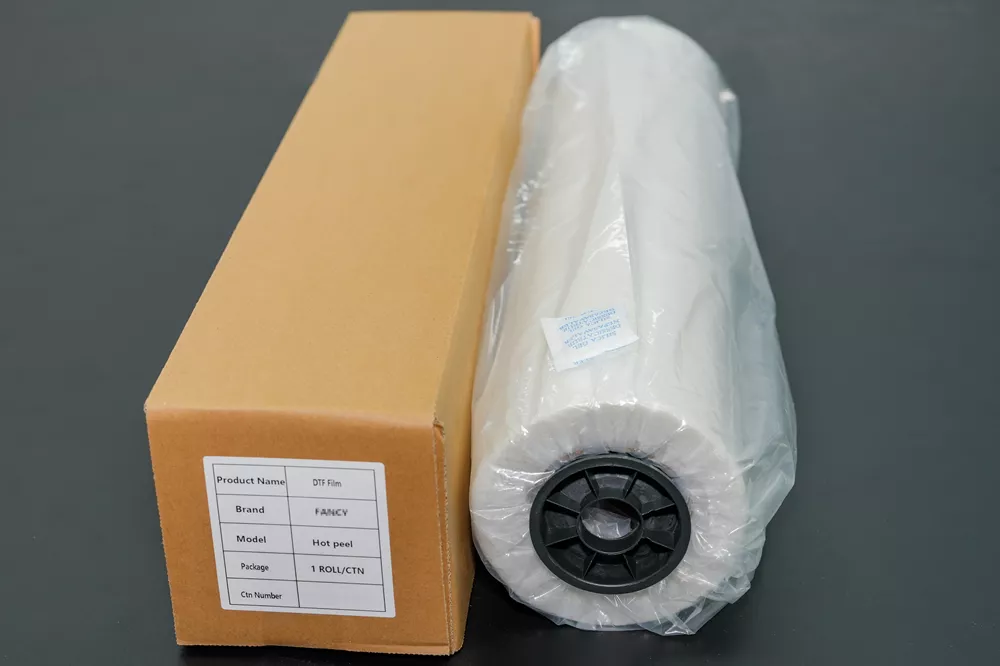
Press Release May-15-2026Premium vs Economic DTF Film: How to Choose the Right Grade
Understanding the differences can help you choose the right DTF transfer film and improve your printing efficiency. -
 Blog
Press Release May-15-2026
Blog
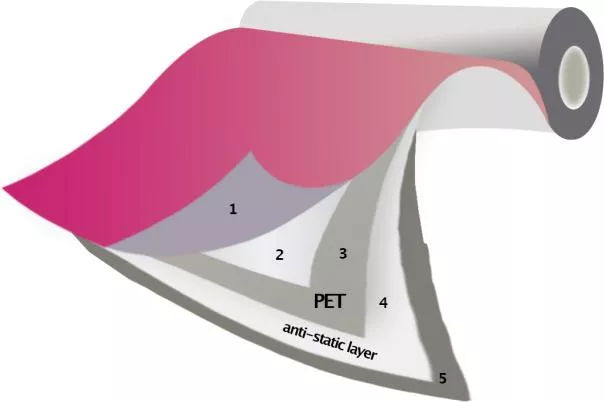
Press Release May-15-2026How to Avoid Static Problems in DTF Printing
Static electricity is one of the most common but easily overlooked problems in DTF printing. For many print shops, static issues may appear as powder sticking to the back of the film, unstable film feeding, dust attraction, ink mist, or poor transfer results. These problems not only reduce printing efficiency but also increase material waste and production costs. -
 Blog
Press Release May-15-2026
Blog
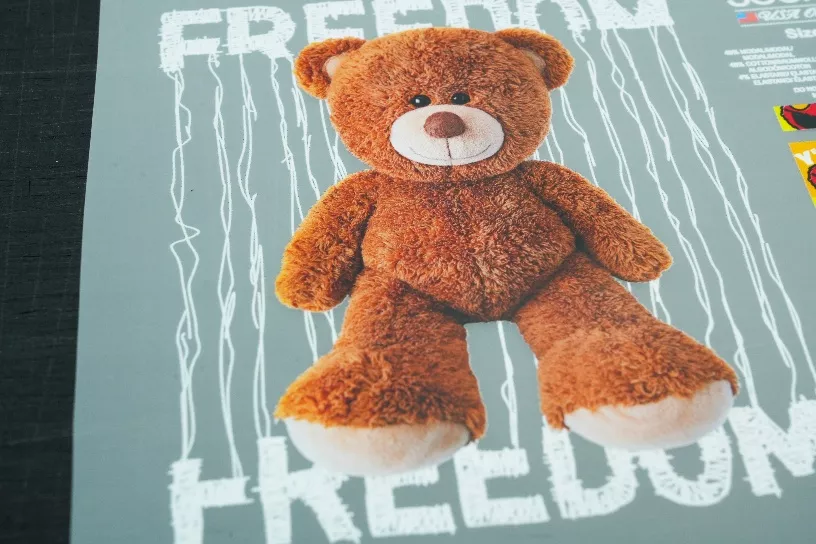
Press Release May-15-2026New Instant Peel DTF Film with 0.5pt Detail Transfer
In this blog, we’ll dive deep into how our unique combination of technologies solves the biggest pain points for DTF printers, from blurry fine details to slow production times.

contact
Tel: +86 17706217416
Add: Building L2A, No. 520, Lane 1588, Zhuguang Road, Hongqiao World Center, Qingpu District, Shanghai, China
follow us: