
 English EN
 French FR
 German DE
 Portuguese PT
 Spanish ES
 Russian RU
 Japanese JA
 Korean KO
 Arabic AR
 Greek EL
 Turkish TR
 Italian IT
 Polish PL
 Hindi HI
 中国 CN
中国 CN
.webp)
How to Make 3D Logos with TPU Film
Introduction
A flat printed logo can reproduce color accurately, but it does not always create the dimensional appearance that premium apparel brands want. Conventional transfers may also face problems when the decoration is repeatedly folded, stretched, washed, or rubbed against other surfaces. The challenge is not simply to make a logo thicker. The structure must combine visual depth, controlled hardness, flexibility, edge stability, and wash resistance without making the garment feel rigid.
3D UV DTF TPU film is increasingly being evaluated for this type of application because TPU provides a useful balance between elasticity and mechanical strength. Instead of relying only on printed ink to create the visual effect, the TPU layer becomes part of the physical structure of the logo.
For customized apparel manufacturers, sportswear producers, footwear factories, bag manufacturers, and companies producing branded labels, the most important question is therefore not “Can TPU create a 3D effect?” but whether the complete film, printing, curing, and transfer system can maintain that 3D structure during industrial production and repeated use.
Key Takeaways
TPU provides physical body and resilience, while the printed layers provide color, texture, and surface effects.
Good 3D logos require a controlled balance between hardness and elasticity. Too soft can reduce edge definition; too hard can increase cracking risk.
High-quality production depends on the entire system: film, ink, printing resolution, curing, transfer temperature, pressure.
Wash durability should be verified with a defined test protocol rather than judged only by an initial hand-feel test.
When sourcing from a 3D UV DTF TPU film manufacturer, buyers should request measurable technical data, not only visual samples.
1. Technical Core: How 3D UV DTF TPU Film Creates a Raised Logo
TPU Is the Structural Layer, Not Just a Carrier
Thermoplastic polyurethane (TPU) is a polymer whose structure contains both softer and harder molecular segments. By adjusting formulation and processing conditions, manufacturers can modify elasticity, hardness, rebound, tear resistance, and surface feel. Commercial TPU materials are widely used where a flexible material still needs mechanical strength, because properly formulated grades can combine elasticity with abrasion resistance, tear resistance, and elastic recovery.
For a 3D apparel logo, this balance is critical. A material that is excessively soft may lose dimensional definition, deform around sharp lettering, stretch unevenly during application, or create rounded rather than precise edges. A material that is excessively hard may feel uncomfortable on lightweight fabric, resist garment stretch, create stress concentration around corners, or become more vulnerable to cracking after repeated folding.
The correct TPU structure provides controlled rigidity with elastic recovery.
The 3D Effect Comes from Layer Construction
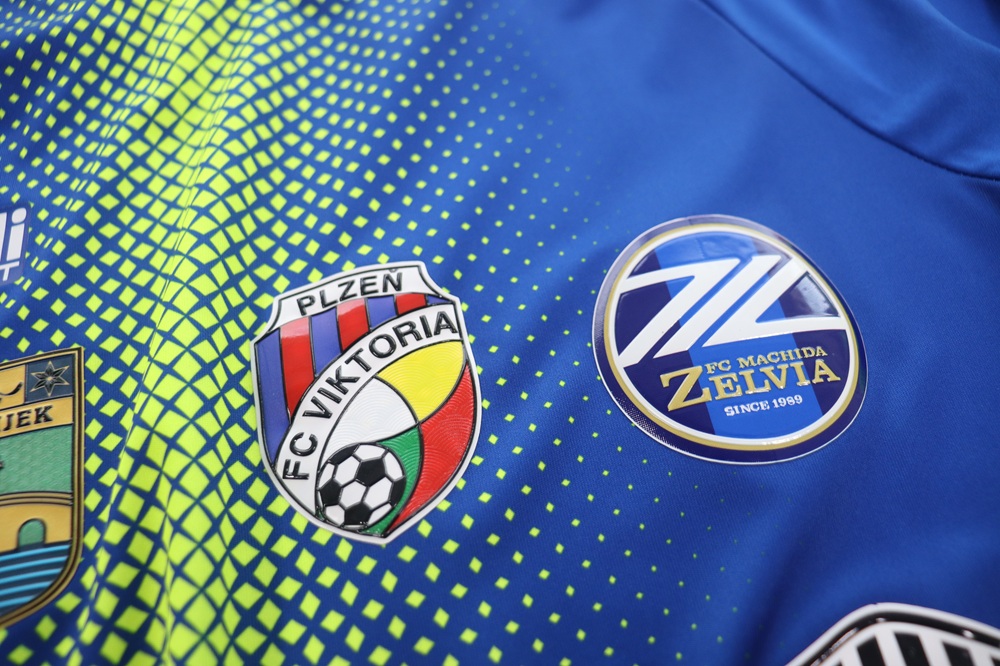
In this article, 3D UV DTF TPU film refers to a TPU-based film system designed to receive UV-printed graphics and form a raised decorative element that can be transferred to apparel or other compatible substrates.
A typical structure involves several functional elements:
TPU film layer — provides thickness, flexibility, toughness, and dimensional support.
Printable surface or coating — controls color and adhesion of UV ink.
Varnish or texture layer, depending on the system — controls gloss, tactile feel, and part of the dimensional appearance.
Transfer or bonding layer — connects the finished logo to the textile.
PET release layer — controls cutting performance and waste discharge performance.
The exact construction varies between suppliers. Buyers should therefore avoid comparing products only by the term “TPU film.” Two films with similar appearance can behave differently because of differences in TPU formulation, thickness tolerance, coating chemistry, surface tension, hardness, adhesive layer, thermal response, and ink compatibility.
A Practical Production Workflow
A controlled apparel-decoration workflow normally follows this sequence: artwork preparation → UV printing → cutting → transfer → final.
The artwork should be prepared at the final production size. Fine lettering, small gaps, sharp corners, and thin lines must be checked before printing because dimensional decoration makes edge defects more visible than flat printing.
During UV printing, the goal is not simply maximum ink density. Excessive ink build can introduce poor curing, brittle printed areas, uneven surface height, loss of fine detail, or weak interfaces between layers. The printer, ink system, film coating, and UV curing energy must therefore be qualified together.
2. Application & Solutions: Building a Production-Ready 3D Logo System
2.1 Premium Apparel Branding
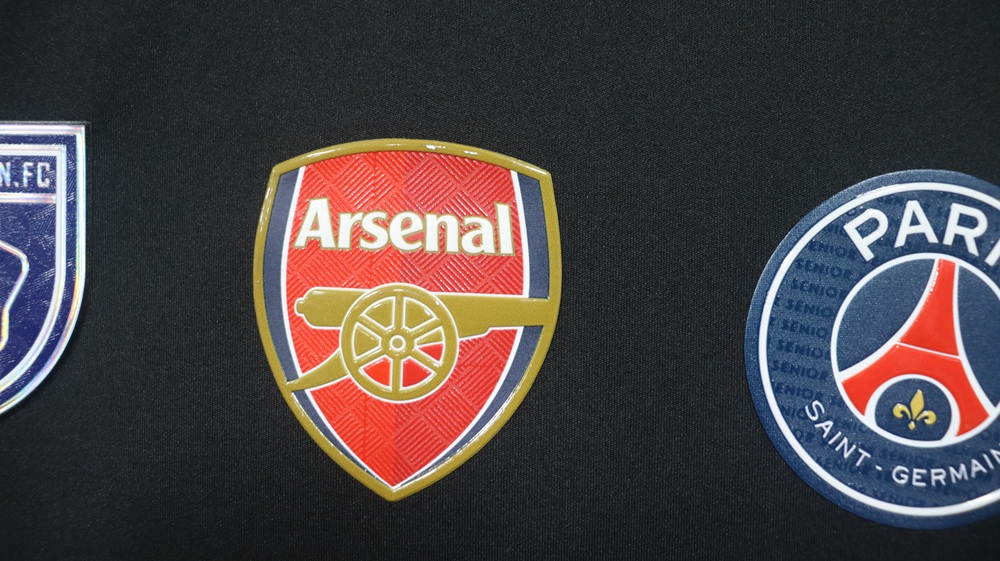
On hoodies, jackets, T-shirts, polo shirts, and fashion garments, traditional printed decoration often looks visually flat even when color reproduction is excellent. A TPU-based 3D logo can introduce visible height, stronger edge definition, metallic or glossy effects, soft-touch surfaces, embossed-style lettering, and higher tactile contrast between the garment and the logo.
This is especially useful for chest logos, sleeve branding, neck labels, limited-edition graphics, and small premium brand marks. The design should not simply copy artwork intended for screen printing. Very narrow gaps and extremely thin unsupported details can create weaknesses during cutting, transfer, or washing.
A practical design review should evaluate:
Radius of sharp internal corners
Total logo thickness
Stretch direction of the garment
Position relative to seams and folds
Required surface finish: matte, gloss, metallic, holographic, or soft-touch
2.2 Sportswear and Stretch Fabrics
Sportswear adds a second requirement: the logo must move with the textile. TPU is attractive because properly formulated grades can stretch and recover instead of behaving like a rigid plastic plate. The actual result depends heavily on formulation, thickness, and the interaction between the TPU, printed layers, adhesive, and fabric.
A logo for a cotton T-shirt and a logo for polyester/elastane sportswear should not automatically use the same construction. For stretch fabrics, test the finished decoration at normal condition, under moderate manual stretch, after repeated flexing, after washing, and after complete drying.
Watch the interface between the TPU decoration and fabric. If failure begins at the edge, the problem may be bonding rather than the TPU itself. If cracking appears inside the printed image while the TPU remains intact, the weakness may instead be the ink or varnish layer. That distinction is important during troubleshooting.
2.3 Polo Shirts, Workwear, Bags, Caps, and Footwear
Structured fabrics such as pique knit, coated polyester, canvas, synthetic leather, and footwear textiles behave differently from smooth jersey. A raised logo may bridge over surface texture rather than conforming completely to it. The transfer process must create enough contact for bonding without flattening the 3D structure.
Pressure sensitivity — too little pressure can reduce bonding; excessive pressure can distort the logo.
Temperature window — the process should activate the bonding system without damaging the fabric or changing the TPU surface.
Dwell time — longer pressing is not automatically better. Excessive thermal exposure can change surface finish or dimensional stability.
2.4 Standard Flat Transfer vs. 3D UV DTF TPU Film
The key point is not that one technology replaces the other. Flat DTF remains appropriate for large graphics, lightweight designs, and price-sensitive production. 3D UV DTF TPU film is more suitable when the logo itself is intended to become a physical branding element.
| Evaluation Point | Standard Flat Transfer | 3D UV DTF TPU Film | Recommended Qualification Method |
|---|---|---|---|
| Visual profile | Primarily 2D | Raised, tactile structure | Measure total decoration thickness |
| Edge definition | Depends on print and adhesive spread | Can produce highly defined raised edges when correctly processed | Inspect small text and sharp corners |
| Flexibility | Varies by ink/adhesive system | TPU structure can provide elastic recovery | Bend and stretch finished garment repeatedly |
| Surface toughness | Highly formulation-dependent | TPU can improve mechanical support and abrasion resistance | Rub and flex test |
| Hardness control | Limited by ink/adhesive structure | Can be adjusted through TPU formulation and film construction | Compare hardness and hand feel |
| Wash performance | Can be excellent when correctly cured | Potentially strong when TPU, ink, and bonding system are matched | Conduct controlled repeated wash testing |
| 3D appearance | Low | High | Visual and thickness inspection |
| Material cost | Usually lower | Usually higher | Compare cost per finished logo |
| Premium branding value | Functional | Strong tactile and visual differentiation | Evaluate on final garment, not loose film |
2.5 Wash Resistance Must Be Tested as a System
“Washable” is too vague for B2B purchasing. The buyer should define washing temperature, detergent, machine type, drying method, number of cycles, and pass/fail criteria.
ISO 6330:2021 provides standardized domestic washing and drying procedures for textile testing and can be used as a framework when customers require controlled comparison between samples. It defines washing and drying procedures rather than guaranteeing a specific product lifetime.
A practical internal qualification program might inspect samples after 5 cycles for early bonding problems, 10 cycles for edge stability, 20 cycles for cracking, lifting, and surface change, and 30+ cycles for extended durability evaluation. These numbers should be treated as qualification checkpoints, not universal durability claims.
Inspect edge lifting, cracking, delamination, color change, gloss change, permanent deformation, and adhesive migration. The same film should be tested on the actual fabric used in production. A cotton jersey result cannot automatically be applied to polyester pique, nylon, coated fabric, or synthetic leather.
2.6 How to Select the Right TPU Film Before Mass Production
Before approving a supplier, run a structured sample test:
Test your actual artwork — do not test only the supplier’s demonstration logo. Include fine text, large solid areas, sharp corners, gradients, and detailed graphics.
Use your normal production equipment — changing printer, UV power, press, ink, or adhesive during evaluation makes comparison less meaningful.
Evaluate both appearance and mechanics — a visually attractive logo that cracks after folding is not production-ready.
Test multiple fabrics — at minimum, test the main substrates used by your customers.
Check batch consistency — for industrial purchasing, one successful sample is not enough. Ask how the manufacturer controls thickness, coating, surface performance, and roll-to-roll consistency.
The most reliable 3D UV DTF TPU film manufacturer should be able to discuss process compatibility and failure modes rather than simply promising that the film “works with all printers.”
FAQ
What makes TPU better suited to 3D apparel logos than a rigid plastic film?
TPU can combine flexibility, elastic recovery, tear resistance, and abrasion resistance in one material system. This allows the logo to maintain physical structure while still tolerating garment movement. The exact performance depends on TPU formulation, thickness, printed layers, and bonding system.
Can 3D UV DTF TPU film be washed?
Yes. The wash resistance of Saillage 3D UV DTF TPU film is rated above 40 wash cycles.
Why do some 3D logos crack after several washes?
Common causes include excessive film hardness, incomplete UV curing, excessive ink thickness, poor adhesion between layers, incompatible transfer parameters, or a mismatch between logo stiffness and fabric stretch. Examine where the failure begins before changing materials.
What information should I request from a TPU film supplier?
Ask for film construction, thickness, hardness data where available, recommended ink system, transfer conditions, storage requirements, wash-test information, application samples, and production consistency data. For high-volume programs, request multiple rolls or different production batches before final approval.
See the full range before you specify: UV TPU film for 3D, UV DTF film A/B, and the complete DTF film series.
Conclusion & B2B Action Guide
A successful 3D logo is not created by thickness alone. The finished decoration must balance visual depth, TPU toughness, controlled hardness, elastic recovery, ink adhesion, textile bonding, and wash durability.
For customized apparel, branded labels, sportswear, caps, bags, footwear, and premium garment collections, 3D UV DTF TPU film offers a practical route to producing logos that function as both graphics and physical design elements.
Before moving into bulk production, qualify the film with your own printer, artwork, fabrics, transfer equipment, and wash protocol. If you are evaluating a new 3D UV DTF TPU film manufacturer, request technical samples first and compare the results under identical production conditions. For project-specific applications, ask the Saillage technical team to recommend the appropriate TPU surface, thickness, hardness balance, and transfer structure before placing a production order.



News & Events
learn more-
 Blog
Press Release Aug-14-2026
Blog
Press Release Aug-14-2026What Is UV TPU 3D DTF Film? 3D Texture Transfer Guide
What is UV TPU 3D DTF film? Learn its structure, production process, 3D texture advantages, and applications in apparel, footwear, leather goods and custom products. -
 Blog
Press Release Aug-14-2026
Blog
Press Release Aug-14-2026How Humidity and Temperature Affect BOPP Film During Storage and Transit
How temperature and humidity degrade BOPP films in storage and transit - corona decay, blocking, core deformation - plus safe storage limits, a controlled vs ambient comparison, and test methods. -
 Blog
Press Release Aug-14-2026
Blog
Press Release Aug-14-2026DTF Heat Transfer Film: Sheet (A3/A4) or Roll (30cm/60cm) — Which Format Fits Your Printing Volume?
In the fast-growing world of DTF printing (Direct To Film Printing), choosing the right DTF Heat Transfer Film format is not only about size — it directly affects your production efficiency, material cost, printing speed, and final transfer quality.

contact
Tel: +86 17706217416
Add: Building L2A, No. 520, Lane 1588, Zhuguang Road, Hongqiao World Center, Qingpu District, Shanghai, China
follow us: