
 English EN
 French FR
 German DE
 Portuguese PT
 Spanish ES
 Russian RU
 Japanese JA
 Korean KO
 Arabic AR
 Greek EL
 Turkish TR
 Italian IT
 Polish PL
 Hindi HI
 中国 CN
中国 CN
.webp)
Bubble-Free UV DTF Stickers on Curved Products | Guide
For companies producing customized drinkware, promotional products, and personalized accessories, application quality directly affects production efficiency and customer satisfaction. Air bubbles, weak adhesion, and edge lifting are common issues when decorative transfers are applied to curved surfaces. The performance of UV DTF FILM is one of the key factors influencing the appearance, durability, and reliability of finished products.
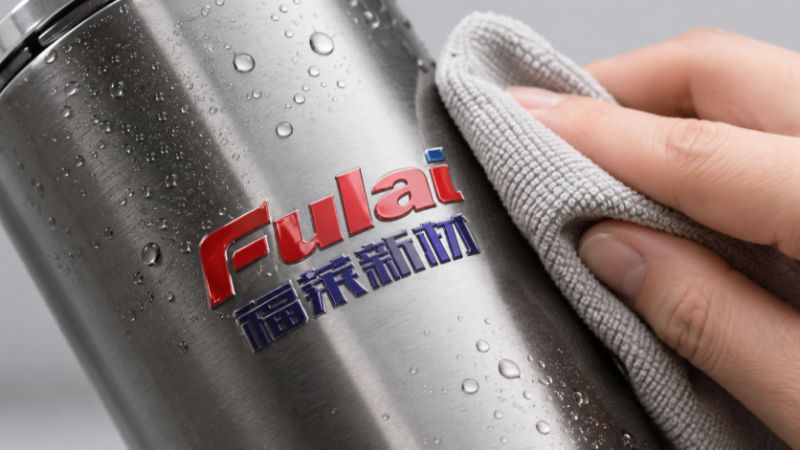
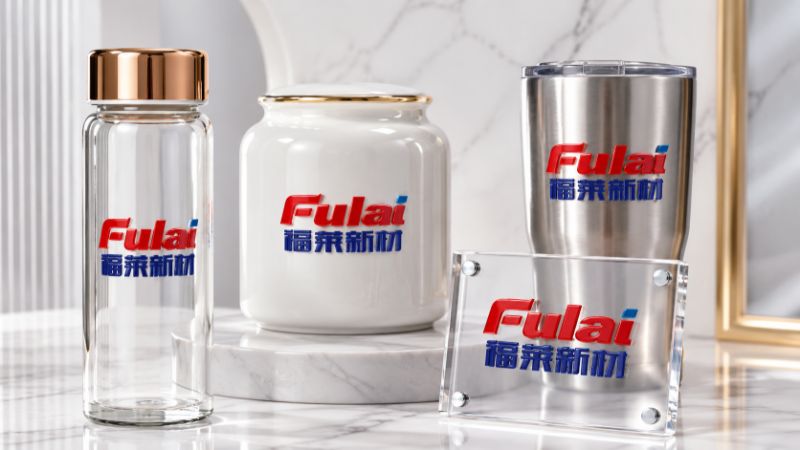
Compared with flat products, tumblers, bottles, and irregular containers create additional technical challenges because their curved surfaces affect film contact, adhesive bonding, and installation pressure. A transfer that performs well on a flat panel may experience problems when applied around cylindrical or complex shapes.
3D UV DTF Stickers offer customization businesses an efficient method for producing detailed decorative designs with textured effects. However, achieving consistent results requires proper material selection, surface preparation, and standardized application methods.
Key factors include:
Choosing suitable UV DTF FILM and UV AB FILM materials.
Applying controlled pressure during installation.
Preparing surfaces carefully before transfer.
Maintaining consistent production procedures.
Technical Principles of Bubble Prevention
UV DTF technology uses a multi-layer transfer structure that moves printed graphics from a carrier film onto the final product surface. The system combines printed ink layers, adhesive components, and transfer films to create durable decorative effects.
UV AB FILM is an important part of this process. The A film generally serves as the printing carrier, while the B film helps transfer the completed design onto the target surface. The quality and compatibility of these layers influence transfer accuracy, release performance, and final adhesion.
Film flexibility is critical when applying transfers to curved products. A suitable UV DTF FILM must provide enough flexibility to follow product contours while maintaining dimensional stability. Excessively rigid films may create stress during application, while insufficient strength may affect transfer quality.
Adhesive performance also determines long-term reliability. Bonding depends on surface cleanliness, substrate characteristics, pressure, and environmental conditions. Dust, oil, fingerprints, and moisture can reduce contact between the adhesive layer and the product surface.
Another important factor is pressure control. Many bubbles are caused by applying the entire transfer too quickly. A gradual installation method allows air to escape and improves contact between the film and the surface.
Application Solutions
For tumblers, operators should clean the surface with suitable materials, ensure the product is dry, position the transfer accurately, and apply pressure gradually from the center toward the edges.
For bottles and narrow containers, flexibility becomes more important because smaller diameters create greater film stress. Businesses should select UV DTF FILM suitable for curved applications and conduct sample testing before large production runs.
For irregular curved products, compatibility testing between the transfer system and the substrate is recommended. Different coatings and materials may affect adhesive performance.
Compared with traditional adhesive labels, UV DTF FILM with 3D UV DTF Stickers provides better adaptability for curved products, supports more customized visual effects, and is suitable for personalized and small-batch production.
Production Optimization
Selecting the correct UV AB FILM system helps improve production stability. Businesses should evaluate adhesive consistency, substrate compatibility, release performance, and storage conditions before purchasing materials.
Surface preparation should be included in standard operating procedures. Removing dust, grease, fingerprints, and moisture before application can significantly reduce failures.
Environmental control is also important. Temperature, humidity, and dust levels can influence adhesive behavior and application results. Consistent working conditions help maintain stable quality in large-scale production.
Quality inspection procedures should include visual checks, adhesion evaluation, water resistance testing, and batch comparisons.
FAQ
Why do 3D UV DTF Stickers develop bubbles after application?
Bubbles usually result from trapped air, uneven pressure, contamination, or unsuitable film flexibility. Proper cleaning and gradual application can reduce this problem.
Can UV DTF FILM be used on all bottles and tumblers?
No. Performance depends on substrate material, surface coating, and surface energy. Testing before mass production is recommended.
How long should UV DTF stickers rest before washing?
The adhesive bond generally becomes stronger after application. The required time depends on the film system, substrate, and environment.
Why do sticker edges lift after several days?
Common causes include poor cleaning, incompatible surfaces, excessive film stress, or insufficient pressure during application.
Conclusion
High-quality customized products depend on the combination of material technology and production control. Selecting suitable UV DTF FILM, using reliable UV AB FILM, and following standardized application procedures can help customization businesses reduce failures and improve consistency.
Companies seeking to expand curved-surface customization can improve efficiency through technical testing, material evaluation, and cooperation with experienced UV DTF suppliers.



News & Events
learn more-
 Blog
Press Release Sep-17-2026
Blog
Press Release Sep-17-2026DTF Transfer Film Wholesale Guide | 9 Specs to Compare
Compare nine essential DTF transfer film specifications, including PET thickness, coating uniformity, peel performance, heat resistance, storage stability, and supplier quality control. -
 Blog
Press Release Sep-17-2026
Blog
Press Release Sep-17-2026How to Make 3D Logos with TPU Film
Learn how to create premium, durable 3D logos for apparel using 3D UV DTF TPU film. Explore technical workflows, wash testing, and B2B supplier selection. -
 Blog
Press Release Sep-17-2026
Blog
Press Release Sep-17-2026Differences Between PU and TPU UV Printing Films for 3D Apparel Labels
Learn the key differences between PU and TPU UV printing films for 3D apparel labels: softness, elasticity, heat resistance, printing quality and wash durability.

contact
Tel: +86 17706217416
Add: Building L2A, No. 520, Lane 1588, Zhuguang Road, Hongqiao World Center, Qingpu District, Shanghai, China
follow us: