
 English EN
 French FR
 German DE
 Portuguese PT
 Spanish ES
 Russian RU
 Japanese JA
 Korean KO
 Arabic AR
 Greek EL
 Turkish TR
 Italian IT
 Polish PL
 Hindi HI
 中国 CN
.webp)
A Guide to DTF Film Peeling: Cold, Hot, Instant and All-Time
1. Introduction: Peeling Is Part of the Transfer Process
In Direct-to-Film (DTF) printing, the quality of a finished transfer is influenced by more than the printer, ink, and hot-melt adhesive powder. The moment when the PET carrier is removed after heat pressing is also important. Removing it immediately, while it is still hot, or after it has cooled can affect image definition, surface finish, edge quality, and the pace of production.
This makes peeling method an important consideration for apparel producers, custom-print businesses, and promotional-product manufacturers. Cold Peel, Hot Peel, Instant Peel, and All-Time Peel films are designed for different release conditions, and each has its own processing requirements.
Film selection should be supported by clear guidance from the manufacturer. Recommendations need to take account of the release coating, compatibility with the adhesive, and the conditions under which the film has been tested.
Quick Overview of the Four Film Types
Cold Peel: the transfer is allowed to cool completely before the PET carrier is removed; this method can provide clean definition and vivid colors.
Hot Peel: the carrier is taken off soon after pressing, while the transfer is still hot.
Instant Peel: the carrier is removed immediately after the heat-press cycle.
All-Time Peel: the film is designed to accommodate a broader peeling window, with immediate or delayed removal depending on its specifications.
The fastest-peeling film is not automatically the best choice. The right option is the one that performs consistently in the actual production setup.
2. What Happens During DTF Peeling?
2.1 The Main Components of a DTF Transfer
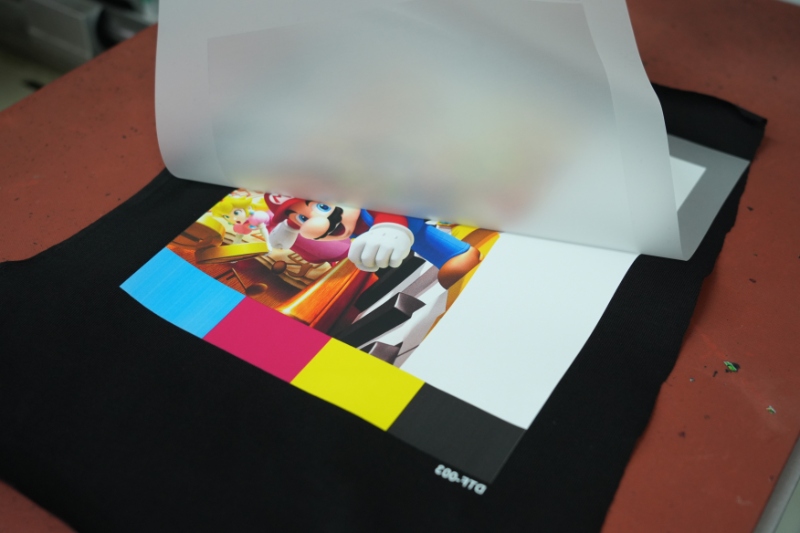
DTF printing uses heat to transfer a printed design from a carrier film to fabric. A typical transfer structure includes four functional layers:
PET carrier film – provides support and dimensional stability while the design is printed, handled, and transferred.
Release coating – manages the adhesion between the PET carrier and the printed transfer layers.
Printed ink layer – contains the color image and white ink that forms the visual base of the design.
Hot-melt adhesive powder – creates the bond between the printed image and the textile when heat and pressure are applied.
During pressing, the adhesive powder softens and forms a bonding interface with the fabric. After pressing, the PET film must be separated while leaving the ink and adhesive layers intact on the textile. The release coating is therefore essential: its surface properties and release behavior influence how easily the carrier can be removed at different temperatures.
2.2 The Characteristics of Each Peeling Method
Cold Peel DTF Film
Cold Peel requires the transfer to reach room temperature or cool completely before the carrier is removed. This waiting period gives the transfer layers time to stabilize before separation.
Peeling takes place only after the transfer has cooled completely.
Can produce clean image definition and vivid color appearance.
The carrier can be removed later, giving operators flexibility in scheduling the finishing step.
Suitable for production where appearance is prioritized over immediate processing speed.
Hot Peel DTF Film
Hot Peel is intended for removal while the transfer remains hot. The carrier is normally lifted within a short, specified interval after pressing.
Must be peeled within the recommended hot-peel window; the comparison in this article uses approximately two seconds.
Can help maintain a relatively fast production sequence.
Release behavior is influenced by the coating formulation and heat-press conditions.
With some formulations, a delay beyond the recommended interval may affect release performance.
Instant Peel DTF Film
Instant Peel is developed for immediate carrier removal at the end of the specified heat-press cycle. It does not require an additional cooling stage.
Remove the PET carrier immediately after pressing.
Removes the waiting period between pressing and finishing.
Can support efficient workflows in high-volume production.
Accurate control of peeling time and adhesive activation remains important.
All-Time Peel DTF Film
All-Time Peel is designed to provide a wider interval for carrier removal. Subject to the particular product specification, peeling can take place immediately after pressing or after a longer delay.
Offers flexibility in the timing of carrier removal.
Places less emphasis on exact operator timing.
Allows more adaptable production scheduling.
Can be useful where order volumes, operators, or production routines vary.
The permitted peeling window is product-specific. Always refer to the manufacturer's technical information and confirm the recommended process through application testing.
2.3 How Temperature and Peeling Time Affect the Result
The result of peeling depends on the relationship between temperature, adhesive behavior, and adhesion at the transfer interface. Heat causes the hot-melt adhesive to soften and bond with the textile. As the transfer temperature changes, the adhesive's viscosity and mechanical properties change as well. Meanwhile, the release coating interacts with the printed transfer layers.
Four factors need to work together:
Carrier release force – the force required to separate the PET film from the transferred image.
Adhesive bonding strength – the ability of the adhesive to form a stable bond with the textile.
Ink-layer integrity – the ability of the printed image to remain intact during peeling.
Pressing temperature and dwell time – conditions that influence adhesive activation and the release interface.
When these factors are properly balanced, the transfer is more likely to retain clean edges, clear details, and reliable adhesion.
3. Selecting a Film and Applying It in Production
3.1 Which Peeling Method Fits Which Workflow?
Cold Peel is an option for businesses that value vivid colors, clean image definition, and flexibility in when finishing takes place.
Hot Peel is suited to workflows in which the carrier is removed shortly after the heat-press operation.
Instant Peel can benefit high-volume garment printing by reducing the interval between pressing and finishing.
All-Time Peel can suit operations that need flexibility in peeling time, especially where several operators or production batches are involved.
The final selection should consider the fabric, adhesive powder, printing system, and the appearance expected from the finished transfer.
3.2 Comparative Test: Pressing Conditions and Observed Results
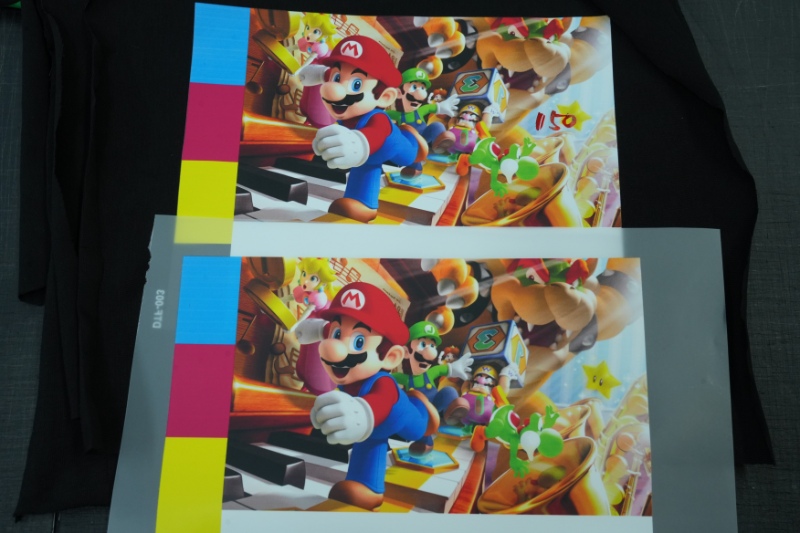
To compare release behavior, four film types—Cold Peel, Hot Peel, Instant Peel, and All-Time Peel—were tested using the same heat-press setup: 300°F (approximately 149°C) and 4 bar pressure. The times and observations below describe this particular test only; they should not be treated as universal processing instructions.
| Film type | Pressing time | Peeling time | Observed result |
|---|---|---|---|
| Cold Peel | 8–10 seconds | After full cooling | Clean and vivid color appearance |
| Hot Peel | 6–8 seconds | About 2 seconds after pressing | Good release within the specified interval; slight lifting may occur if delayed |
| Instant Peel | 5–6 seconds | Immediately after pressing | Designed for immediate release; delay may cause sticking |
| All-Time Peel | Approximately 4 seconds | Immediately or after an extended wait | Flexible peeling window, good detail definition, and smooth surface finish in the test |
Interpreting the Comparative Results
Cold Peel: Clean, Vivid Image Appearance
In this comparison, Cold Peel delivered clean transfers with vivid colors. Allowing the transfer to cool fully before removing the carrier helped produce a stable and visually neat result. The method also offers scheduling flexibility: if the product specification permits, the carrier may be left in place for several hours before peeling.
Hot Peel: Follow the Recommended Timing
The Hot Peel sample released well when peeled approximately two seconds after pressing. A longer interval was associated with slight lifting in the test. This result underlines the need to follow the specified peeling window and avoid unnecessary delays.
Instant Peel: Immediate Removal Is Required
For the Instant Peel sample, the carrier needed to be removed as soon as the heat-press cycle ended. Under the tested conditions, waiting before peeling caused sticking and made removal more difficult. Operators should therefore keep the timing consistent.
All-Time Peel: Flexible Timing and Fine Detail
All-Time Peel showed the broadest peeling flexibility among the tested films. The carrier could be removed immediately or left for a longer period—including several weeks—without a loss of release performance being observed in this test. The sample also showed sharper details and a smoother finish than the other films in the comparison, particularly on thin lines and delicate graphic elements.
These characteristics may be useful for artwork containing intricate logos, small lettering, and fine design details.
Testing note: The observations apply to the particular film, ink, adhesive powder, fabric, heat-press equipment, and operating conditions used. They do not guarantee identical results with every DTF film or production setup. Validate the recommended pressing and peeling conditions with the supplier before commercial production.
3.3 Instant Peel, Hot Peel and All-Time Peel: A Side-by-Side Review
| Evaluation point | Instant Peel | Hot Peel | All-Time Peel |
|---|---|---|---|
| When to peel | Immediately | Within a short hot-peel interval | Immediately or later, according to specification |
| Cooling needed | No extra cooling | Does not require full cooling | Flexible |
| Workflow | Fast but timing-sensitive | Fast but timing-sensitive | More flexible |
| Operator timing | Immediate action required | Timing must be controlled | Less dependent on exact timing |
| Fine-detail result | Depends on formulation | Depends on formulation | Strong result in the tested application |
| Main feature | Immediate processing | Hot separation | Wider peeling window |
Cold Peel remains a relevant choice when color appearance and a workflow that allows cooling time are the main priorities.
3.4 Five Conditions That Influence the Final Transfer
Release-coating formulation. The coating needs to separate from the printed transfer without disturbing the image. Inconsistent release properties can contribute to uneven peeling, partial ink lifting, or residue.
Heat-press temperature and dwell time. These settings affect adhesive activation and bonding. Different film types may need different settings, so the same parameters should not automatically be applied to every peeling method.
Pressure consistency. Uneven pressure can lead to differences in adhesive activation across the design. Check platen alignment, pressure distribution, and fabric thickness.
Fabric composition. Cotton, polyester, cotton-polyester blends, and performance textiles have different surface characteristics. Settings that work on cotton may need adjustment for polyester or coated fabrics.
Durability after pressing. An initially clean transfer does not by itself establish long-term durability. Wash testing should check cracking, peeling, edge lifting, color retention, and adhesion after repeated laundering.
3.5 A Practical Process for Optimizing DTF Transfers
Identify the film specification. Confirm whether the film is designed for Cold Peel, Hot Peel, Instant Peel, or All-Time Peel.
Standardize printing conditions. Use the same printer, ink, white-ink settings, adhesive powder, and curing process when comparing film samples.
Observe the specified peeling interval. Record release behavior and look for ink lifting, adhesive residue, or incomplete separation.
Inspect the finished design. Review fine lettering, small graphic elements, solid-color sections, edges, and larger printed areas.
Check wash durability. Keep the fabric, wash program, detergent, temperature, and drying conditions consistent.
Evaluate the complete transfer system. Select the film that offers the best balance of release consistency, appearance, adhesion, and production efficiency.
For companies evaluating FULAI DTF FILM, controlled comparisons under consistent conditions provide a sounder basis for selection than peeling speed alone.
4. Frequently Asked Questions
Should I choose Instant Peel instead of Cold Peel DTF film?
There is no single best option for every business. Instant Peel is intended to shorten the process, whereas Cold Peel requires the transfer to cool completely before the carrier is removed. Cold Peel can provide clean, vivid colors; Instant Peel is useful when faster production is the priority.
What may cause ink to lift during DTF film removal?
Ink lifting may be related to excessive release force, inadequate adhesive activation, unsuitable heat-press settings, or incompatibility among the film, ink, and adhesive powder. Review the supplier's peeling recommendations and check the complete transfer system.
Can All-Time Peel film handle fine or detailed artwork?
It can be suitable for detailed graphics when release behavior and adhesive compatibility are properly controlled. In the comparative test in this article, All-Time Peel produced sharper details and a smoother finish, especially on thin design elements.
What should I consider when choosing a DTF film?
Check release consistency, print quality, fabric compatibility, transfer adhesion, and wash durability in your own production conditions. Request samples from a qualified DTF film manufacturer and conduct a controlled comparison before purchasing in bulk.
5. Conclusion: Match the Peeling Method to Your Production Needs
Cold Peel, Hot Peel, Instant Peel, and All-Time Peel provide different combinations of peeling flexibility, production speed, and finished appearance. Cold Peel is a dependable option for clean, vivid colors. Hot Peel and Instant Peel can help shorten production steps when their specified peeling intervals are followed. All-Time Peel allows a wider range of peeling times and, in the comparative test described here, showed particularly sharp details and a smooth finish on fine designs.
FULAI supplies DTF transfer film solutions for a range of printing and production requirements. Apparel manufacturers, printing businesses, and distributors can contact the FULAI technical team for product specifications, sample evaluation, and support in choosing a suitable film.
Contact FULAI to request DTF film samples and discuss the peeling solution that best fits your production process.



News & Events
learn more-
 Blog
Press Release Nov-06-2026
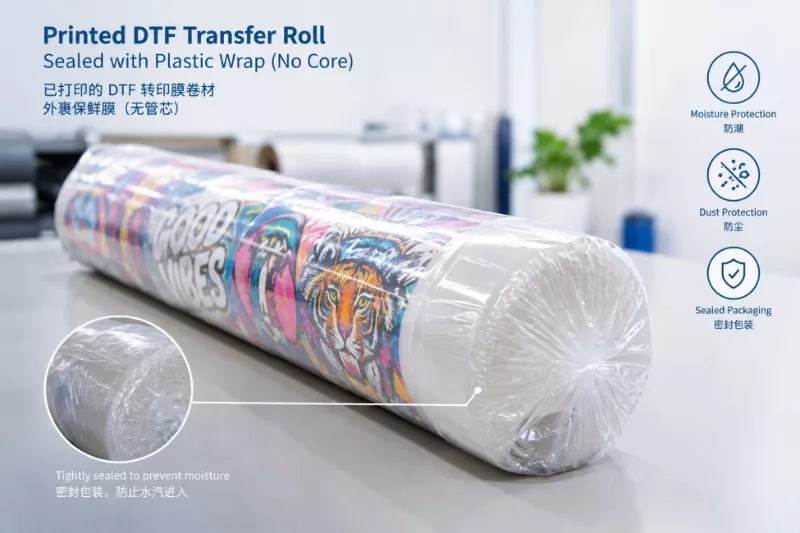
DTF Transfer Problems Before Heat Pressing: How to Check for Oiling, Moisture and Film Defects
Learn how to inspect stored DTF transfers for oiling, moisture, coating damage and other film defects before committing to a full heat-press run. -
 Blog
Press Release Nov-06-2026
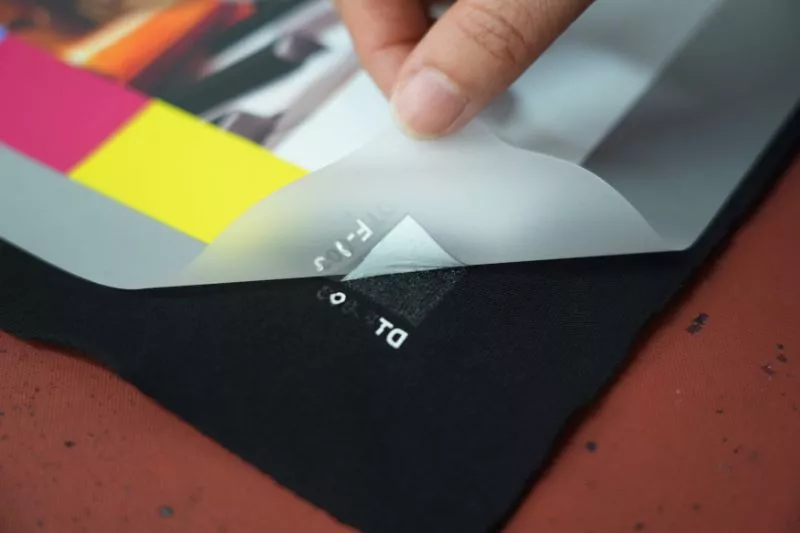
10 Common DTF Film Problems and Practical Solutions
Explore ten common DTF film problems, including powder sticking, curling, dull colors, media drift, peeling issues, humidity sensitivity and batch variation. -
 Blog
Press Release Nov-06-2026
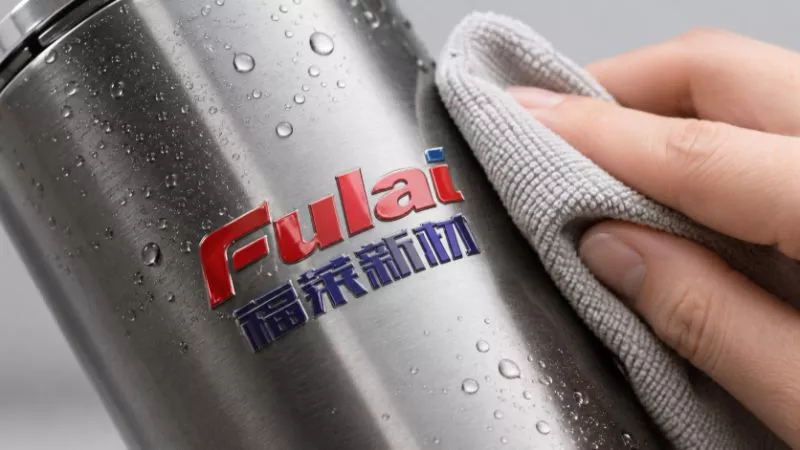
Bubble-Free UV DTF Stickers on Curved Products | Guide
Learn how to apply UV DTF stickers to tumblers, bottles and curved products without bubbles, weak adhesion or lifted edges using proper preparation and pressure control.

contact
Tel: +86 17706217416
Add: Building L2A, No. 520, Lane 1588, Zhuguang Road, Hongqiao World Center, Qingpu District, Shanghai, China
follow us: