
 English EN
 French FR
 German DE
 Portuguese PT
 Spanish ES
 Russian RU
 Japanese JA
 Korean KO
 Arabic AR
 Greek EL
 Turkish TR
 Italian IT
 Polish PL
 Hindi HI
 中国 CN
中国 CN
.webp)
DTF Film vs Heat Transfer Vinyl (HTV): Which Is Better for Your Garment Business?
If you run a garment business, you've probably faced this choice: DTF film or heat transfer vinyl (HTV)? Both are popular shirt press transfers used to decorate custom apparel—but choosing the wrong one can hike up your costs, slow down production, or leave customers unhappy with peeling prints.
This guide compares DTF film and HTV across cost, use cases, and print quality—and answers the most common questions garment decorators ask. We'll also explain how these methods compare to other options like iron-on transfer paper and inkjet shirt transfers, so you can make the best decision for your setup.
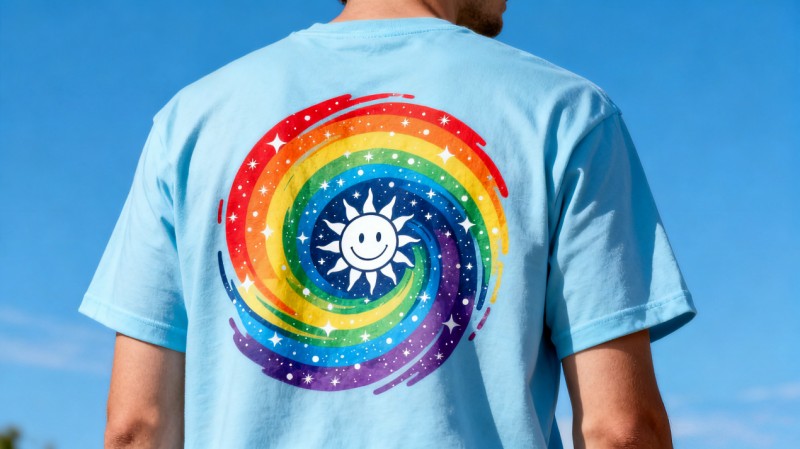
What Are Shirt Press Transfers? (DTF Film vs HTV vs Transfer Paper)
Before diving into the comparison, it helps to understand the three main types of heat-applied shirt transfers:
DTF Film (Direct-to-Film):
A design is printed onto a special PET film using DTF inks, coated with hot-melt adhesive powder, cured, then heat pressed onto the garment. The result peels clean and bonds directly to the fabric.
Heat Transfer Vinyl (HTV):
A colored vinyl sheet is cut into a design using a cutting machine, then pressed onto fabric with a heat press. Each color layer requires a separate cut-and-weed step.
Transfer Paper (Iron-On / Inkjet Shirt Transfer):
A design is printed onto special transfer paper using a regular inkjet or laser printer, then ironed or pressed onto the shirt. Options include inkjet shirt transfer paper, laser transfer paper, and sublimation paper.
Each method has its place—but for businesses printing more than a handful of shirts per week, DTF film and HTV are the two most relevant choices.

DTF vs Heat Press Vinyl: Cost Comparison
Cost is often the deciding factor—and DTF film wins by a wide margin for most garment businesses.
Material Cost:
A roll of DTF film (60cm × 100m) costs around $28 and covers approximately 500 T-shirt prints. Heat transfer vinyl sheets cost roughly $0.70 per A4 sheet (enough for one shirt), totalling $350 for 500 shirts. DTF cuts material costs by about 25%.
For businesses sourcing heat press vinyl wholesale, bulk HTV rolls reduce per-unit costs—but still can't match DTF film economics when designs are complex or multi-color.
Labor Cost:
DTF is a two-step process (print + press) that one person can handle for 200 shirts per day. HTV requires cutting each design—up to 30 minutes for complex patterns—before pressing. One person can realistically complete only 50 shirts per day with HTV. That's a 300% efficiency gap.
Real Client Example:
One of our custom garment factory clients switched from HTV to DTF last year. Their monthly production costs dropped from $7,000 to $1,400—an 80% reduction—without reducing order volume.
Use Case Comparison: When to Choose Each Method
DTF and HTV excel in different scenarios. Match the method to your order type:
Design Complexity
DTF Film handles gradients, photorealistic artwork, multi-color logos, and intricate patterns (cartoon characters, fine text, watercolor effects) with no cutting required.
HTV requires you to cut and weed each color separately. Complex designs have a 15% average waste rate due to misalignment between layers. For heat transfer vinyl logos with more than two colors, production time escalates quickly.
For heat transfer logos for clothing with simple shapes and bold lines—wordmarks, two-color team logos—HTV still performs reliably.
Fabric Compatibility
High Quality DTF Film bonds to 90% of fabric types: cotton, polyester, cotton-poly blends, nylon, canvas, fleece, and denim.
HTV on denim is a known weak point. The rigid weave creates poor adhesion for standard vinyl. While specialized HTV products are marketed for denim use, our testing shows cracking and edge-lifting after 10–15 washes on heavyweight denim (failure rate: ~60%). DTF film on denim achieves a 5% failure rate at the same wash count, making it the clear choice for heat transfer vinyl for denim applications if quality matters.
Similarly, HTV on stretchy knits tends to crack because vinyl doesn't flex with the fabric. DTF prints flex without cracking.
Order Volume
DTF Film: No minimum order. Print 1 shirt or 10,000 with the same workflow. Ideal for small-batch custom orders, print-on-demand, and limited editions.
HTV: Makes sense for batches of 500+ pieces of simple designs on stable, non-stretch fabrics. Below that threshold, setup time kills efficiency.

Print Quality: Handfeel, Durability & Wash Fastness
Your customers notice how prints feel and how long they last. Here's how the two methods compare:
Handfeel
DTF prints are soft and low-profile—they flex with the fabric and are comfortable for everyday wear. HTV leaves a rubbery, raised surface that some wearers find stiff, especially on lightweight jerseys or performance fabrics.
Durability
DTF prints withstand 50+ washes without peeling or fading (tested to EU standard EN ISO 105-C06). HTV typically begins lifting at the edges after 20 washes under the same conditions, especially on fabrics with any stretch or texture.
For premium brands focused on customer retention and fewer returns, DTF's durability advantage directly reduces long-term costs.
Heat Printed Finish: Visual Appearance
DTF produces photorealistic, high-detail output including gradients and spot colors—indistinguishable from screen print at normal viewing distance. HTV produces a flat, solid-color finish that looks clean on simple designs but cannot replicate gradients or photo-quality artwork.

What Is High Density Heat Transfer?
High density heat transfer is a specialty technique where a thick, raised ink layer creates a 3D or embossed effect on the garment—mimicking the look of embroidery or puff printing. It's typically applied using silicone-based inks or specialty DTF films with a thicker adhesive layer.
Is it DTF or HTV? High density effects are now achievable with both DTF and screen-print-style transfers. Specialty DTF films with high-density adhesive powder create a textured, raised finish. Standard HTV is flat and does not produce a high-density effect.
If high density heat transfer is a required finish for your orders—common in sportswear, streetwear, and branded corporate apparel—ask your DTF film supplier whether their product supports high-density powder options.

Transfer Paper vs DTF Film: What's the Difference?
Many small decorators start with inkjet shirt transfer paper or printer iron-on kits before investing in a DTF setup. Here's how they compare:
Feature | Transfer Paper (Inkjet/Laser) | DTF Film |
Equipment needed | Inkjet/laser printer + iron or heat press | DTF printer + heat press |
Cost per shirt | $0.50–$1.50 | $0.05–$0.10 |
Wash durability | 10–20 washes (cracking, fading) | 50+ washes |
Fabric compatibility | Light fabrics only (most paper transfers) | 90% of fabrics |
Color vibrancy | Good on white, poor on dark | Excellent on any color |
Best for | Home crafters, 1–5 shirts | Small to large businesses |
T-shirt print paper (also sold as printing transfer paper t-shirt kits) is an entry-level option. It works well for occasional personal projects but isn't suitable for commercial production—durability is limited, the handfeel is plasticky, and production speed is slow.
Best iron-on transfers for home use include brands like Avery and Simplicity. For professional garment businesses, DTF film replaces these entirely.
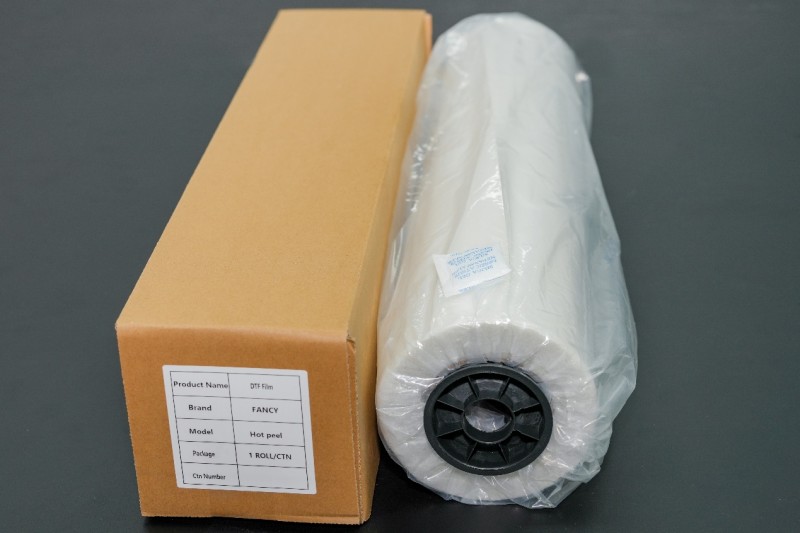
Vinyl Heat Transfer Sheets: Wholesale Buying Guide
If HTV still fits part of your workflow—simple logo tees in large batches—here's what to look for when sourcing vinyl heat transfer sheets or buying heat press vinyl wholesale:
Types of HTV to know:
· Standard calendered HTV: Lowest cost, least durable. Best for flat, stable fabrics.
· Cast HTV: More conformable, better for curved or textured surfaces.
· Glitter/Foil HTV: Decorative finishes for fashion apparel.
· Stretch HTV: Designed to flex with knit and athletic fabrics without cracking.
Wholesale sourcing tips:
· Buy in rolls (15m, 50m, 100m) rather than sheets to reduce per-unit cost.
· Check minimum wash guarantees—reputable suppliers specify 30+ washes.
· For heat transfer vinyl for denim specifically, request stretch or elastomeric HTV, not standard calendered vinyl.
For DTF film wholesale, roll widths of 30cm, 60cm, and A3/A4 sheets are available depending on your printer size. Larger rolls dramatically reduce cost per print.
People Also Ask: Quick Answers
Q: What is the difference between DTF and HTV?
DTF (Direct-to-Film) prints designs onto a film that is heat-pressed onto fabric—no cutting required, works on any color garment, and handles complex multi-color artwork. HTV (Heat Transfer Vinyl) is a colored vinyl sheet that must be cut to shape before pressing. HTV works best for simple, bold designs in few colors.
Q: Is DTF better than heat transfer vinyl?
For most garment businesses, yes. DTF is faster, more cost-effective at scale, more durable, and works on a wider range of fabrics. HTV remains practical for very large runs of simple designs on stable fabrics.
Q: Can you use heat transfer vinyl on denim?
Standard HTV performs poorly on denim—cracking and peeling typically begin after 10–15 washes. Stretch or elastomeric HTV products perform better, but DTF film is the more reliable choice for denim garments.
Q: What is high density heat transfer printing?
High density heat transfer creates a raised, 3D effect on the garment surface, similar to puff printing or embroidery. It requires specialty DTF films or silicone-based transfer inks. Standard HTV does not produce a high-density finish.
Q: What's the difference between DTF film and transfer paper?
Transfer paper (inkjet or laser iron-on) is printed with a consumer printer and applied with a home iron or entry-level press. It typically lasts 10–20 washes and has a stiff handfeel. DTF film requires a dedicated DTF printer but produces commercial-grade prints lasting 50+ washes with a soft, flexible finish.
Q: Is heat transfer vinyl or DTF better for logos?
For simple, bold logos in 1–2 colors: HTV produces clean, vibrant results. For multi-color logos, gradients, or fine detail: DTF is significantly better—no registration issues, no weeding, and better edge definition.
Q: What is the best iron-on transfer for shirts?
For home crafters printing 1–10 shirts: inkjet iron-on transfer paper is the most accessible option. For small businesses printing 20+ shirts per week: DTF film offers better durability, lower cost per print, and more professional results.
Conclusion: Which Should You Choose?
Choose DTF Film if you:
· Print varied batch sizes (1–500+ pieces)
· Work with complex, multi-color, or photorealistic designs
· Print on diverse fabric types including denim, knits, and blends
· Want the best durability and lowest per-shirt cost
Choose HTV if you:
· Print 500+ pieces of simple, bold designs (text logos, 1–2 colors)
· Work primarily with flat, stable cotton or cotton-poly fabrics
· Want a matte, premium finish on basic designs without a DTF printer investment
Consider Transfer Paper if you:
· Are a home crafter or hobbyist printing fewer than 5 shirts at a time
· Don't want to invest in a heat press or DTF printer setup
Want to calculate how much you could save switching to DTF film? Click WhatsApp below—we'll run the numbers based on your current order volume and send free DTF film samples so you can test the quality yourself before committing.



News & Events
learn more-
 Blog
Press Release Nov-25-2025
Blog
Press Release Nov-25-2025Saillage DTF: How to Boost Profit with Wholesale T-Shirt Printing in 2026
For small print shops and creators, 2026 is shaping up to be the year of wholesale t-shirt printing—and at Saillage, we know DTF is the secret to turning this opportunity into real profit. Custom apparel demand is booming: businesses need branded merch, creators launch clothing lines daily, and consumers crave personalized pieces. The key? Bulk printing that cuts costs without sacrificing quality—and our DTF solutions are built to make that happen. -
 Blog
Press Release Nov-25-2025
Blog
Press Release Nov-25-2025Saillage DTF Film: Solve Holiday Apparel Headaches & Boost Sales
Whether you’re drowning in Black Friday orders or scrambling for Christmas designs, Saillge DTF film has your back. Below are easy fixes for top holiday struggles—designed to make your work pop, speed up production, and keep customers happy. -
 Blog
Press Release Nov-25-2025
Blog
Press Release Nov-25-2025Custom Jerseys, T-Shirts & Hoodies for Teams | SAILLAGE DTF Film
Sports are all about unity—and nothing fuels team pride like custom jerseys, tees, and hoodies that look and feel professional. But creating those standout pieces? It used to mean relying on pricey printers or settling for blurry, generic designs. Enter SAILLAGE DTF Film: the game-changer that lets you craft pro-level team apparel yourself, whether you’re outfitting a youth soccer league or an adult softball crew.

contact
Tel: +86 17706217416
Add: Building L2A, No. 520, Lane 1588, Zhuguang Road, Hongqiao World Center, Qingpu District, Shanghai, China
follow us: