
 English EN
 French FR
 German DE
 Portuguese PT
 Spanish ES
 Russian RU
 Japanese JA
 Korean KO
 Arabic AR
 Greek EL
 Turkish TR
 Italian IT
 Polish PL
 Hindi HI
 中国 CN
中国 CN
.webp)
How to Avoid Static Problems in DTF Printing
Static electricity is one of the most common but easily overlooked problems in DTF printing. For many print shops, static issues may appear as powder sticking to the back of the film, unstable film feeding, dust attraction, ink mist, or poor transfer results. These problems not only reduce printing efficiency but also increase material waste and production costs.
In DTF printing, static is often caused by friction between the PET film, printer rollers, powder shaker, and the working environment. When the air is too dry or the film surface lacks proper anti-static treatment, static electricity can build up quickly. As a result, the film may attract dust, absorb excess powder, or move unevenly during printing.
One of the most visible static problems is powder sticking to the non-printing side of the Saillage DTF film. This can make the final transfer look dirty and may affect the smoothness of the garment surface. In some cases, static can also cause the film to shift slightly during printing, leading to misalignment, blurred edges, or inconsistent patterns.
To avoid static problems in DTF printing, the first step is to control the printing environment. A humidity level of around 45%–60% is usually helpful for reducing static buildup. If the workshop is too dry, especially in winter or in air-conditioned rooms, using a humidifier can greatly improve production stability.
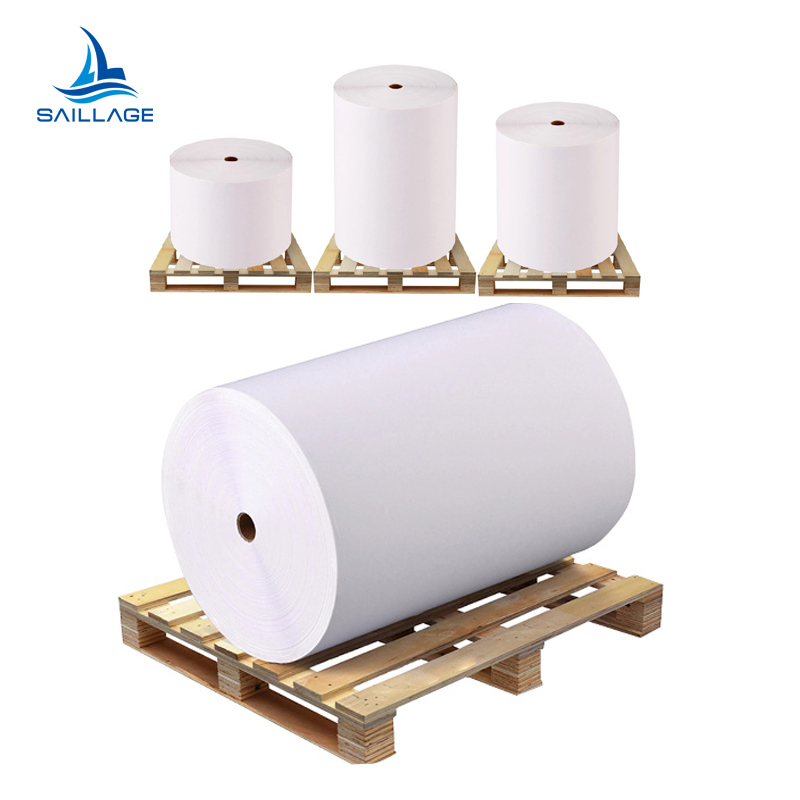
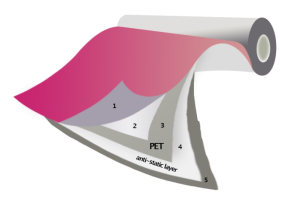
Second, it is important to choose a high-quality anti-static DTF film. A good DTF film should have a stable back coating that helps reduce friction and static electricity during printing and powder shaking. This is especially important for high-speed printers and automatic powder shaker systems, where film movement is continuous.
Third, regular equipment maintenance is necessary. Printer rollers, feeding systems, and powder shaker parts should be kept clean. Dust, powder residue, and worn rollers can increase friction and make static problems worse. Operators should also check whether the film is properly grounded during the production process.
Another useful method is to store DTF film correctly. The film should be kept in a clean, dry, and temperature-controlled environment. After opening the package, it is better to reseal the unused film to prevent moisture imbalance and dust contamination.
For distributors and print shops, static control is not only a technical detail but also a key factor in stable production. If your customers frequently complain about powder sticking, dirty film backs, or unstable printing, the root cause may be poor anti-static performance.
SAILLAGE DTF FILM is designed with a stable coating system and anti-static back coating to help reduce powder sticking and improve printing smoothness. With consistent quality control and strong batch stability, it helps print shops achieve cleaner transfers, lower waste, and more reliable production.
Choosing the right DTF film can make static problems much easier to control. A stable, anti-static DTF film is not just a material choice — it is a practical way to improve efficiency, reduce complaints, and deliver better printing results.



News & Events
learn more-
 Blog
Press Release Apr-30-2026
Blog
Press Release Apr-30-2026What Kind of Printing Process Can Fast-Dry Matte White PP Synthetic Paper Be Applied To?
To achieve the best results, it is important to choose the right printing process. Among the most suitable methods are flexo printing film and laser printing film, each offering distinct benefits for specific use cases. -
 Blog
Press Release Apr-30-2026
Blog
Press Release Apr-30-2026New Instant Peel DTF Film with 0.5pt Detail Transfer
In this blog, we’ll dive deep into how our unique combination of technologies solves the biggest pain points for DTF printers, from blurry fine details to slow production times. -
 Blog
Press Release Apr-30-2026
Blog
Press Release Apr-30-2026Why is DTF Film Quality Unstable? 4 Causes of Batch Inconsistency
Since its development in 2019, DTF film has gone through seven years of growth, yet batch-to-batch quality inconsistency remains the biggest pain point in the entire industry. Many manufacturers, including several leading players, still have not effectively solved this problem. Today, we will analyze the causes of batch quality instability from a production perspective.

contact
Tel: +86 17706217416
Add: Building L2A, No. 520, Lane 1588, Zhuguang Road, Hongqiao World Center, Qingpu District, Shanghai, China
follow us: