
 English EN
 French FR
 German DE
 Portuguese PT
 Spanish ES
 Russian RU
 Japanese JA
 Korean KO
 Arabic AR
 Greek EL
 Turkish TR
 Italian IT
 Polish PL
 Hindi HI
 中国 CN
中国 CN
.webp)
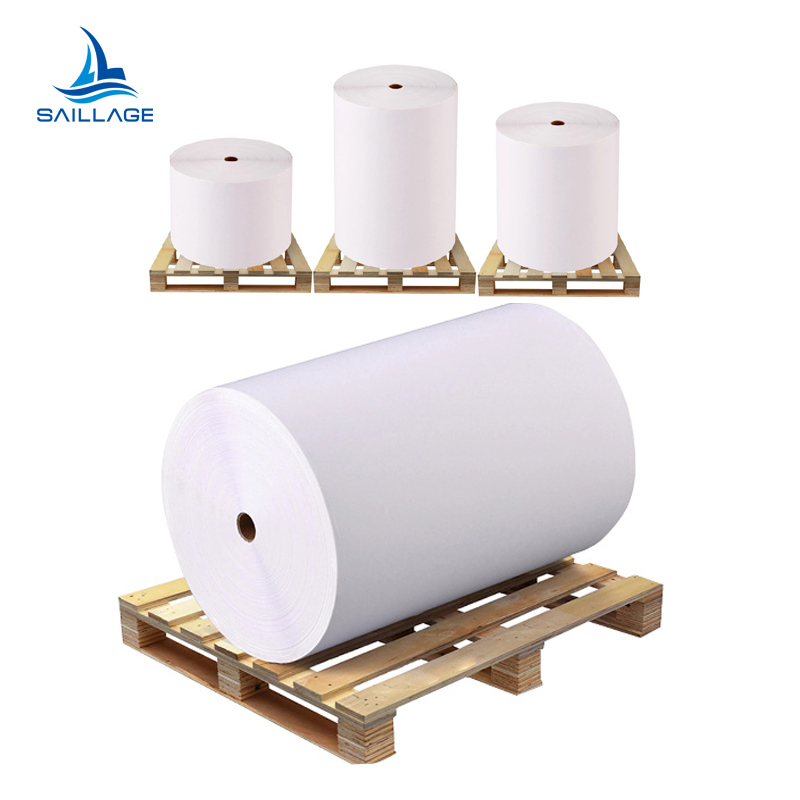
Differences Between PU and TPU UV Printing Films for 3D Apparel Labels
Introduction
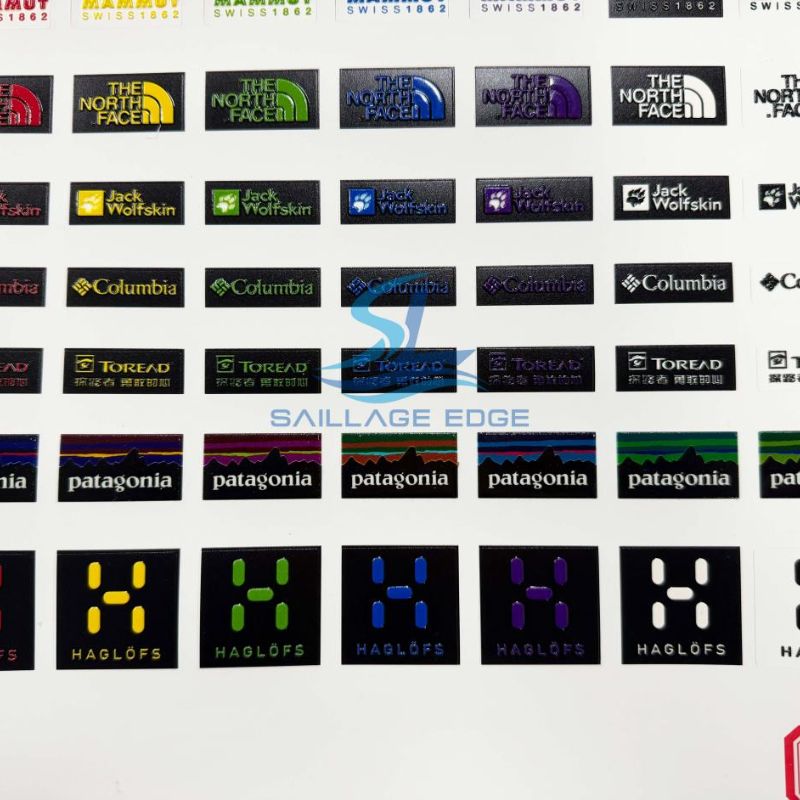
With the rapid development of personalized apparel, sportswear, footwear, and fashion accessories, three-dimensional (3D) apparel labels have become increasingly popular due to their premium appearance, strong visual impact, and excellent brand recognition. Compared with traditional flat labels, 3D labels require higher requirements for material stability, printing performance, elasticity, heat resistance, and long-term durability.
Among various materials used for UV printing films, TPU (Thermoplastic Polyurethane) and PU (Polyurethane) are two commonly discussed options. Both materials belong to the polyurethane family and share similar chemical characteristics, but they have significant differences in molecular structure, processing behavior, mechanical properties, and final application performance.
Understanding these differences helps brands and manufacturers select the most suitable material for different label applications.
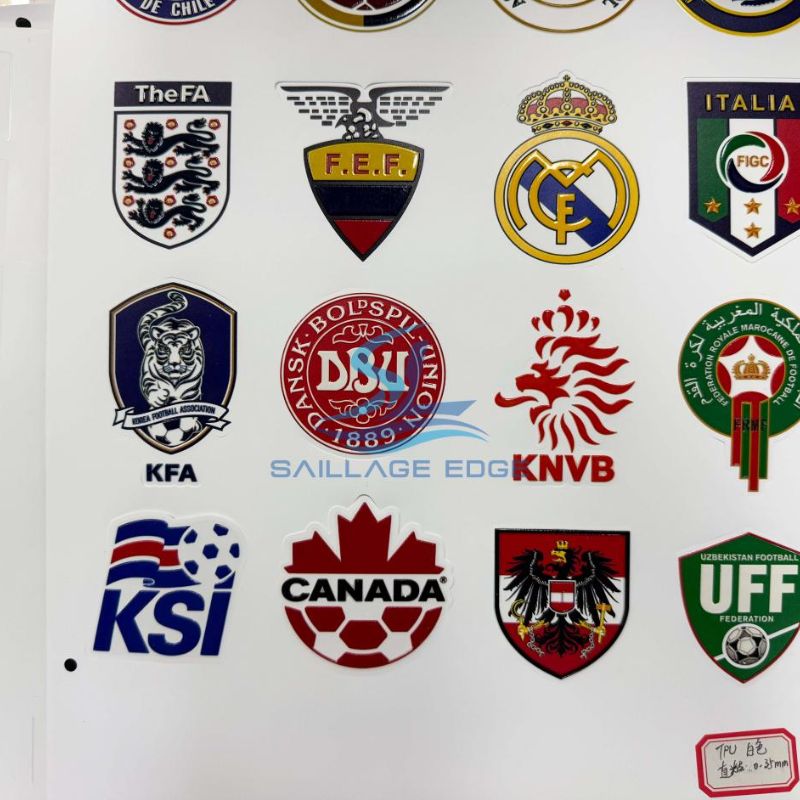
1. Material Structure and Basic Characteristics
PU Film (Polyurethane Film)
PU refers to polyurethane-based materials. It is widely used in textile applications because of its softness, elasticity, and comfortable hand feel.
Traditional PU films are usually formed through a chemical cross-linking process, creating a flexible material with good softness and surface smoothness. Due to its soft structure, PU films are often preferred for applications where comfort and flexibility are the primary requirements.
Typical characteristics of PU film include:
Soft and smooth hand feel
Good flexibility
Good adhesion to fabrics
Comfortable wearing experience
Excellent suitability for soft labels and fashion applications
However, because of its softer molecular structure, PU may have limitations in high-temperature stability, dimensional control, and long-term mechanical durability.
2. Hand Feel and Softness
Hand feel is one of the most important factors in apparel label applications, especially for products that directly contact the skin.
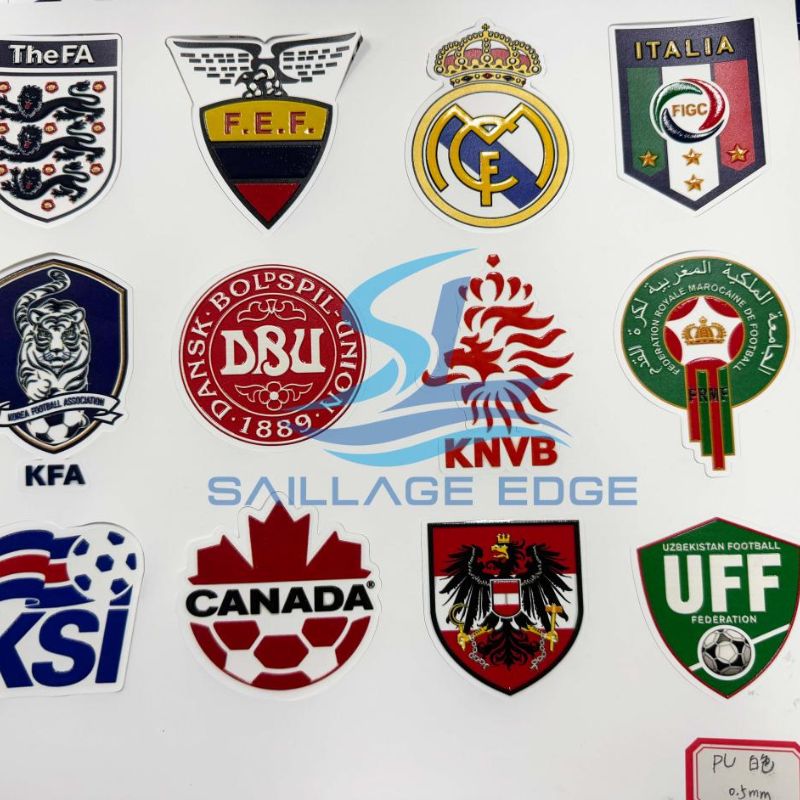
PU: Softer and More Comfortable
PU film is usually softer than TPU. Its flexible structure provides a smooth, leather-like feeling, making it comfortable when attached to garments.
For applications such as:
Fashion labels
Underwear branding
Children's clothing
Premium casual wear
PU can provide a softer and more comfortable user experience.
TPU: Balanced Softness and Structural Support
Although TPU is generally slightly firmer than PU, it still maintains excellent elasticity and flexibility.
The advantage of TPU is that it provides a better balance between softness and structural stability.
For 3D apparel labels, TPU can maintain:
Sharper edges
Clearer raised effects
Better three-dimensional shape retention
Therefore, when the design requires a stronger embossed effect or more premium appearance, TPU is usually more suitable.
3. Elasticity, Toughness, and Mechanical Performance
For apparel labels, especially sportswear and outdoor clothing, materials must withstand stretching, bending, friction, and repeated deformation.
PU Performance
PU has good flexibility and can easily follow fabric movement.
However, under long-term mechanical stress or repeated high-temperature processing, PU may experience:
Slight deformation
Reduced recovery ability
Surface fatigue over time
TPU Performance
TPU generally performs better in mechanical properties.
Its advantages include:
Better Elastic Recovery
Higher Tear Resistance
Better Abrasion Resistance
TPU can return closer to its original shape after stretching, which helps maintain the integrity of 3D labels. TPU also has stronger resistance against tearing and cracking, especially during repeated bending. For applications such as sportswear, shoes, and luggage, TPU labels usually provide longer service life.
Therefore, for products requiring high durability, TPU has a clear advantage.
4. Heat Resistance and Dimensional Stability
Heat resistance is a critical factor for UV printing films because the production process may include:
UV ink curing
Film lamination
Heat pressing
High-temperature bonding processes
PU Film Behavior Under Heat
Because PU is softer, it is more sensitive to temperature changes.
During high-temperature processing, PU may experience:
Slight shrinkage
Edge deformation
Reduced dimensional accuracy
For simple designs, this may not create obvious problems. However, for fine patterns, small text, and precision 3D structures, these changes may affect final quality.
TPU Film Advantages
TPU usually provides better dimensional stability during thermal processing.
Benefits include:
Lower shrinkage
Better shape retention
More accurate edge definition
More stable production performance
For high-end 3D labels requiring:
Sharp corners
Fine details
Consistent thickness
High repeatability
TPU is generally easier to control.
5. UV Printing Performance and Appearance Quality
UV printing requires a film surface with good ink compatibility, stable surface energy, and consistent coating performance.
PU Printing Characteristics
PU has good printability, but because of its softer surface, printing consistency may sometimes be affected by:
Surface deformation
Coating uniformity
Environmental conditions
For simple logos and designs, PU performs well.
TPU Printing Characteristics
TPU generally offers a more stable printing surface.
Advantages include:
Better ink adhesion
More consistent color reproduction
Higher pattern accuracy
Better control of gloss and matte effects
For 3D apparel labels featuring:
Small text
Complex graphics
Metallic effects
High-definition images
TPU is often preferred.
6. Wash Resistance and Long-Term Durability
A good apparel label must maintain appearance and adhesion after multiple washing cycles.
PU Durability
PU provides good washing performance in normal applications.
However, after long-term exposure to:
Water
Detergents
Heat
Mechanical friction
some PU materials may show gradual aging.
TPU Durability
TPU generally provides better:
Hydrolysis resistance
Abrasion resistance
Flexibility retention
Washing durability
This makes TPU especially suitable for:
Sportswear
Outdoor apparel
Workwear
High-frequency washing garments
7. Environmental and Application Considerations
With increasing environmental requirements in the textile industry, both PU and TPU films are developing toward more sustainable solutions.
Many manufacturers are now focusing on:
Solvent-free production technologies
Low VOC materials
Recyclable TPU solutions
Improved durability to extend product lifetime
TPU, as a thermoplastic material, has advantages in recycling and processing flexibility, making it increasingly attractive for sustainable apparel applications.
8. Cost Difference
Cost is also an important factor when selecting materials.
PU Film
Advantages:
Lower material cost
Good softness
Suitable for large-volume applications
Common applications:
Promotional clothing
Basic fashion labels
Cost-sensitive projects
TPU Film
Advantages:
Higher performance
Better durability
More stable processing
Common applications:
Premium brands
Sportswear
Luxury apparel
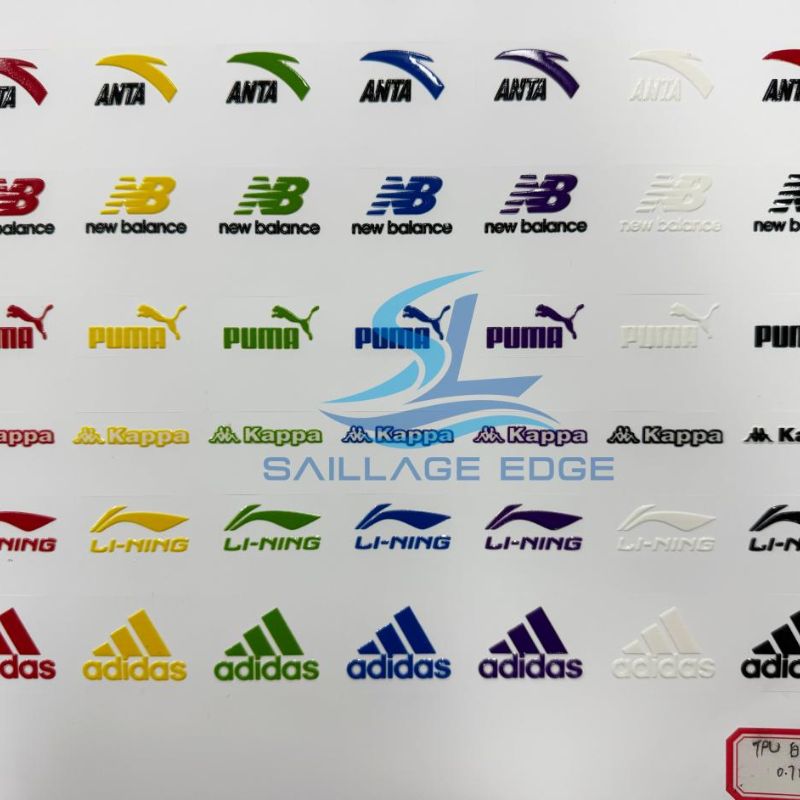
High-end 3D logos
Although TPU usually has a higher cost, its improved durability and appearance quality can provide better overall value for premium products.
Simple Comparison Summary
| Performance | TPU Film | PU Film |
|---|---|---|
| Softness | ⭐⭐⭐⭐ | ⭐⭐⭐⭐⭐ |
| Elasticity | ⭐⭐⭐⭐⭐ | ⭐⭐⭐⭐ |
| Heat Resistance | ⭐⭐⭐⭐⭐ | ⭐⭐⭐ |
| Dimensional Stability | ⭐⭐⭐⭐⭐ | ⭐⭐⭐ |
| Printing Consistency | ⭐⭐⭐⭐⭐ | ⭐⭐⭐⭐ |
| 3D Shape Retention | ⭐⭐⭐⭐⭐ | ⭐⭐⭐ |
| Wash Durability | ⭐⭐⭐⭐⭐ | ⭐⭐⭐⭐ |
| Cost Advantage | ⭐⭐⭐⭐⭐ | ⭐⭐⭐ |
How to Choose the Right Material for 3D Apparel Labels?
Choose PU Film When:
A softer hand feel is the top priority
The label needs to feel comfortable on skin
The application is fashion-oriented
Cost control is important
PU provides excellent softness and flexibility for comfortable apparel applications.
Choose TPU Film When:
Strong 3D effects are required
High-definition printing is needed
The product requires repeated washing
Heat processing stability is important
Long-term durability is a key requirement
TPU provides better overall performance, making it ideal for premium and demanding apparel label applications.
Conclusion
Both PU and TPU UV printing films have their own advantages. PU focuses more on softness, flexibility, and comfort, while TPU focuses more on stability, durability, precision, and performance.
For traditional soft apparel labels, PU remains a practical and cost-effective choice. However, for modern 3D apparel labels requiring sharp structures, premium appearance, high-definition printing, and long-term durability, TPU is becoming the preferred material choice.
Choosing the right film material ultimately depends on the product positioning, production process, and performance requirements of the final application.



News & Events
learn more-
 Blog
Press Release Sep-02-2026
Blog
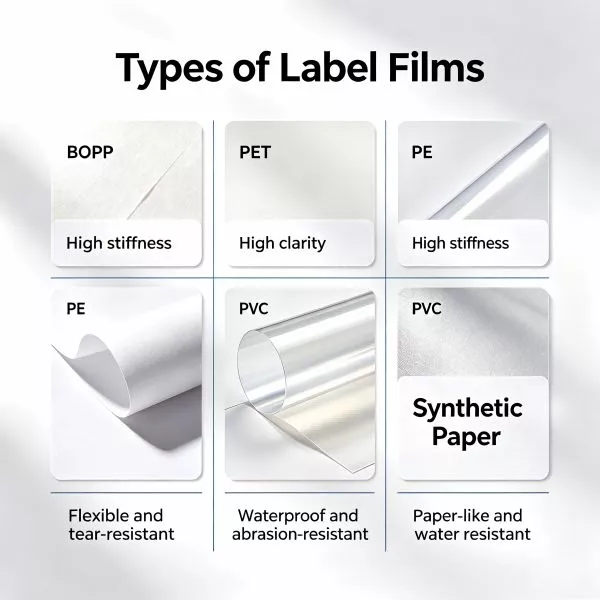
Press Release Sep-02-2026Types of Label Films Explained: How to Choose the Right Facestock (BOPP, PET, PE, PVC, Synthetic Paper)
Learn how to choose the right label film facestock. Compare BOPP, PET, PE, PVC and synthetic paper for printing process, container geometry, appearance and environmental resistance. -
 Blog
Press Release Sep-02-2026
Blog
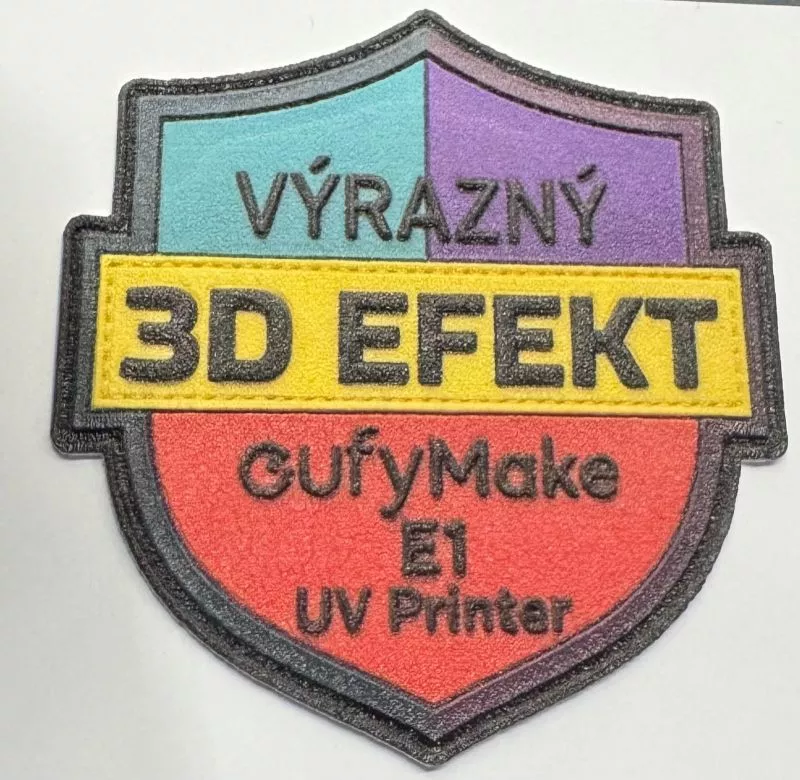
Press Release Sep-02-2026TPU Film vs Silicone Labels: Which Is Better for 3D Logos?
Compare 3D TPU UV DTF film and silicone labels for 3D logos: material structure, production routes, customization flexibility, hardness, wash durability, and distributor business models. -
 Blog
Press Release Sep-02-2026
Blog
Press Release Sep-02-2026Why Density Matters for Pearlized BOPP Labels: Label Yield, Cost per Square Metre and Float-Sink Recyclability
Reduce packaging costs by understanding pearlized BOPP density. Compare low-density vs standard-density BOPP label films for optimal yield and machinability.

contact
Tel: +86 17706217416
Add: Building L2A, No. 520, Lane 1588, Zhuguang Road, Hongqiao World Center, Qingpu District, Shanghai, China
follow us: