
 English EN
 French FR
 German DE
 Portuguese PT
 Spanish ES
 Russian RU
 Japanese JA
 Korean KO
 Arabic AR
 Greek EL
 Turkish TR
 Italian IT
 Polish PL
 Hindi HI
 中国 CN
中国 CN
.webp)
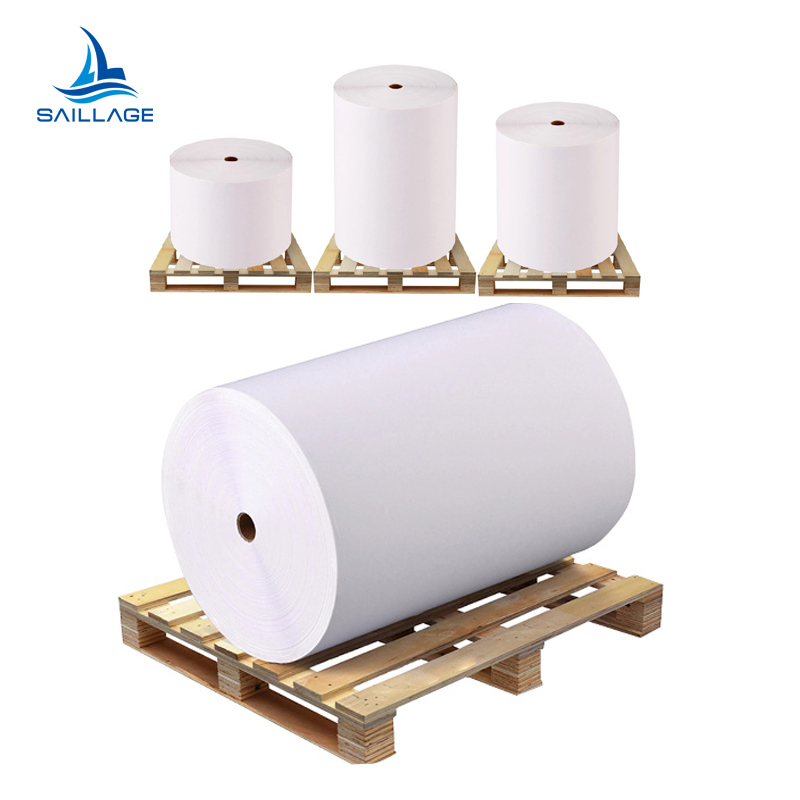
TPU Film vs Silicone Labels: Which Is Better for 3D Logos?
Introduction
For apparel branding, the difficult part of a 3D logo is not creating thickness. The real challenge is maintaining sharp edges, controlled hardness, flexibility, adhesion, wash resistance, and a premium tactile finish without making production unnecessarily slow or expensive.
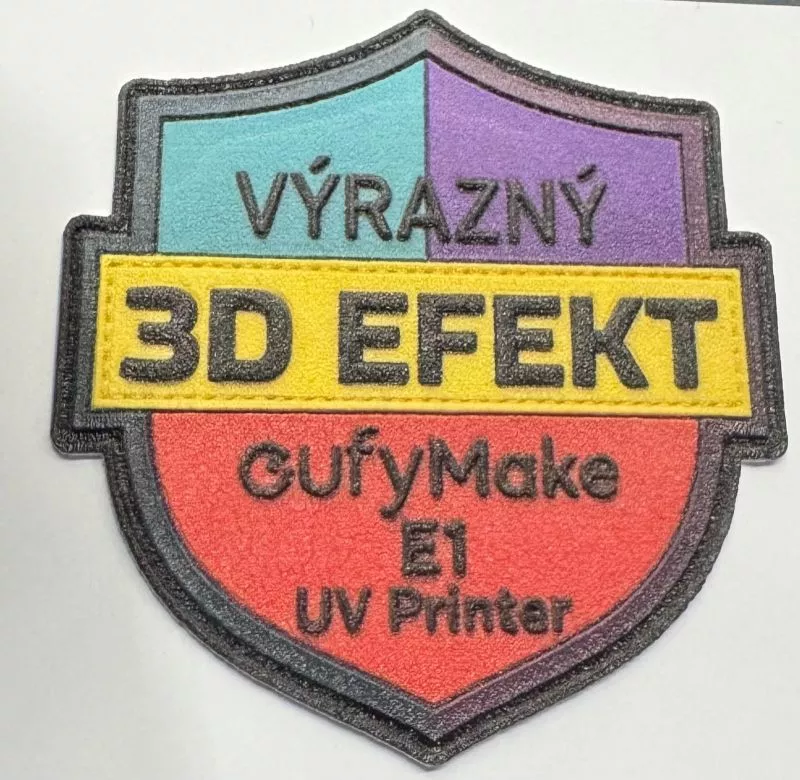
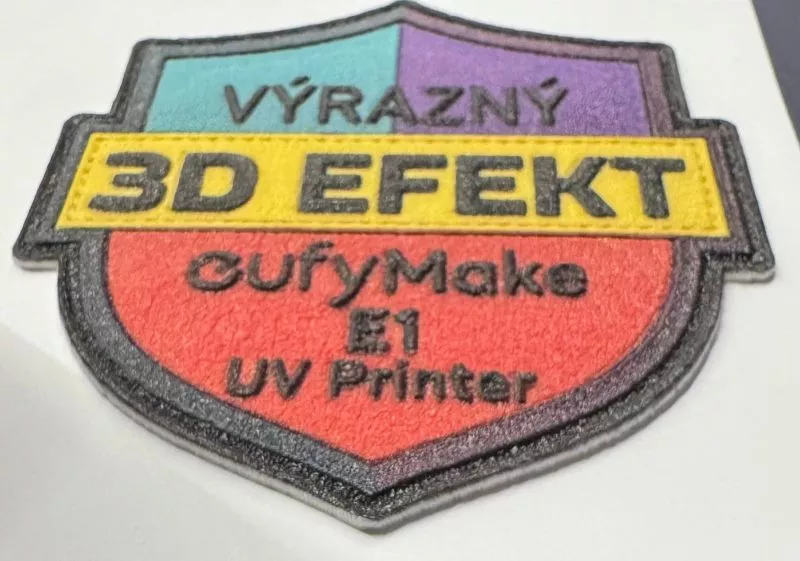
This is why 3D TPU UV DTF film is increasingly being considered alongside conventional silicone labels for garment logos, sportswear branding, footwear, bags, caps, and other textile applications. Both materials can create raised graphics, but their material behavior and manufacturing routes are fundamentally different.
TPU is a thermoplastic polyurethane: it softens under heat and can be processed as a flexible film. Silicone labels are generally based on cured silicone elastomers, where polymer chains are crosslinked into a three-dimensional network. That difference affects processing, elasticity, thermal behavior, customization efficiency, and production economics. TPU films are widely used in textile applications because of their elasticity, mechanical strength, abrasion resistance, and suitability for bonding and hot-melt applications.
Key Takeaways
3D TPU UV DTF film is generally more suitable for digitally customized, high-mix and shorter-run 3D logo production.
Silicone labels remain attractive where a molded rubber-like feel, high thermal stability, or a very specific silicone hand feel is required.
TPU provides a useful combination of elasticity, toughness, tear resistance, surface design flexibility, and relatively efficient conversion into customized logos.
Silicone is a cured elastomer rather than a thermoplastic film, so its production route often requires different molding, screen-printing, curing, or transfer processes.
The better choice should be based on the final garment, logo geometry, order quantity, required surface effect, washing conditions, and production workflow - not simply on which material feels softer.
Technical Core: TPU Film and Silicone Labels Work Differently
What Is 3D TPU UV DTF film?
TPU, or thermoplastic polyurethane, is an elastomeric thermoplastic that combines rubber-like flexibility with the processing characteristics of a thermoplastic material.
Commercial TPU materials are available with high elasticity, extensibility, abrasion resistance, tear resistance, and mechanical strength. BASF lists abrasion resistance, tensile strength, tear resistance, flexibility, and elastic behavior among key TPU properties, while Covestro supplies TPU films specifically for textile applications, labels, hot-melt emblems, and textile bonding.
In a 3D TPU UV DTF film system, the TPU film provides the physical body of the logo. UV printing or a compatible digital decoration process provides the required color, pattern, metallic effect, texture, or graphic detail.
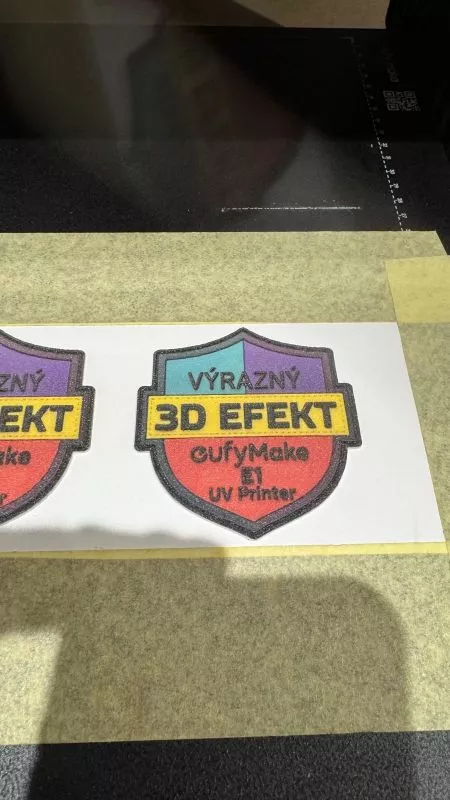
Typical production concept: Design → UV printing → curing → cutting or separation → positioning → thermal transfer/bonding → finished 3D logo
The exact layer structure differs between manufacturers. "3D TPU UV DTF film" is a commercial product category rather than a single standardized material specification, so buyers should confirm the actual TPU thickness, surface coating, adhesive construction, printing compatibility, transfer parameters, hardness, and wash performance with the supplier.
How Silicone Labels Are Different
Silicone elastomers are created through curing or vulcanization, during which silicone polymer chains form a crosslinked three-dimensional network. Once fully cured, silicone behaves differently from a thermoplastic film and does not simply remelt in the same way as TPU. WACKER describes silicone elastomers as rubber-elastic solids produced through curing, with strong resistance to heat and aging.
For textile decoration, silicone can be:
screen printed directly or through transfer systems,
molded into three-dimensional labels,
formed using liquid silicone rubber,
produced as preformed patches or badges,
bonded to the garment using a separate adhesive system.
Commercial textile-printing silicone systems can combine soft hand feel, high elongation, and good strength. For example, Dow lists a textile-printing liquid silicone system with 31 Shore A hardness and 537% elongation as typical values for that specific grade. These values illustrate what one silicone formulation can achieve; they should not be treated as universal specifications for all silicone labels.
Key technical distinction: TPU film is thermoplastic and film-based. Silicone labels are usually cured elastomer structures.
Application & Solutions: Which Technology Fits Your 3D Logo Program?
1. Customized Apparel and Short-Run Branding
For customized T-shirts, hoodies, fashion collections, promotional garments, personalized names, limited-edition logos, and frequently changing artwork, production flexibility matters almost as much as material performance.
A digital UV DTF TPU-film workflow can be particularly effective because graphic variation is largely controlled through the artwork file. A garment decorator may need to produce 20 pieces of one logo, 50 pieces in another color, personalized names, multiple customer brands, seasonal metallic designs, or small trial orders.
In these conditions, the value of 3D TPU UV DTF film is not simply its physical performance. The real advantage is the ability to combine digital artwork flexibility with a physical raised film structure.
Consider TPU film when:
designs change frequently;
customers request low or medium quantities;
multiple colors or effects are required;
variable data or customized logos are common;
fast sample development is important;
This makes TPU particularly interesting for DTF distributors looking for an additional consumable category. Instead of selling only standard DTF PET film, ink, and powder, a distributor can offer customers a separate route into dimensional branding.
2. Premium Silicone Labels for Stable High-Volume Designs
Silicone labels remain a strong option for stable branded programs where the same logo is produced repeatedly in large quantities. Liquid silicone rubber can be processed through automated manufacturing methods. WACKER notes that LSR can be injection molded on automated equipment and is suitable for high-volume production of complex, precise geometries.
For a sportswear brand ordering the same chest badge season after season, tooling and process setup can therefore be spread over a large production volume. Silicone may be attractive when the buyer requires:
a distinctive rubber-like hand feel;
thick molded structures;
deeply embossed or debossed geometry;
highly repeatable molded dimensions;
Silicone elastomers are particularly recognized for heat resistance and retention of mechanical properties across a broad temperature range. Specialized silicone products can tolerate prolonged exposure to temperatures far above normal apparel service conditions. Those figures should not be automatically applied to a garment label, but they demonstrate the inherent thermal capability of silicone chemistry.
3. Comparing TPU Film and Silicone Labels
There is no useful universal statement that "TPU lasts X washes and silicone lasts Y washes." Wash durability depends on the complete decoration system: film or label material, ink, adhesive, fabric, pressure, temperature, curing, washing chemistry, and drying method. The more useful comparison is based on manufacturing behavior.
| Evaluation Point | Conventional Silicone Label | 3D TPU UV DTF Film |
|---|---|---|
| Material structure | Crosslinked silicone elastomer | Thermoplastic polyurethane film |
| Typical production route | Molding, silicone screen printing or transfer production | Digital printing + film conversion + transfer |
| 3D effect | Excellent, especially molded geometry | Excellent for raised film-based graphics |
| Artwork changes | May require process or tooling changes depending on construction | Primarily digital; easier to change artwork |
| Small-batch efficiency | Often less attractive for molded custom parts | Well suited to high-mix, lower-volume customization |
| Large-volume repeat orders | Very suitable once process is established | Suitable, especially where flexible SKU production is required |
| Fine printed detail | Depends on molding/printing process | Strong potential with high-resolution digital printing |
| Metallic / graphic effects | Possible but process-dependent | Convenient for digitally printed metallic, gradient and decorative effects |
| Elasticity | Excellent with appropriate silicone formulation | Excellent with appropriate TPU grade |
| Abrasion / toughness | Good, formulation-dependent | TPU is widely used where abrasion and tear resistance are required |
| High-temperature stability | One of silicone's major strengths | Good but highly dependent on TPU formulation |
| Tooling dependency | Can be significant for molded labels | Usually lower for digitally generated graphics |
| Design changeover | Potentially slower | Fast digital file change |
| Distributor stock model | Finished labels are often design-specific | Film can serve many end-customer designs |
| Best fit | Stable branded programs, molded tactile effects | Flexible customized 3D logo production |
TPU manufacturers including BASF and Covestro document TPU grades with high elasticity, abrasion resistance, tear resistance, flexibility, and mechanical durability, which are directly relevant to textile and emblem-type applications.
4. Why Hardness Matters More Than Many Buyers Expect
A 3D logo should not simply be "as soft as possible." If the material is too soft, small letters may lose edge definition, sharp structures can deform, the logo may look rounded rather than dimensional, and thin elements may stretch during handling. If it is too hard, garment hand feel may become uncomfortable, folding stress increases, the logo may not follow fabric movement, and rigid edges can become visually prominent.
The correct target is a controlled balance of hardness + elasticity + tear resistance + rebound + adhesive strength. Both TPU and silicone can be formulated across different hardness levels. This is why procurement specifications should not state only "soft-touch."
Ask for measurable values where available:
Shore hardness
Film thickness
Tensile strength
Elongation at break
Tear strength
Recommended transfer temperature
Recommended pressure
Wash-test conditions
A professional 3D TPU UV DTF film manufacturer should be able to explain how thickness and hardness affect the final logo rather than simply supplying a visual sample.
5. The Distributor Perspective: TPU Film Has a Different Business Model
For a DTF distributor, the choice is not only about which logo feels better. Silicone labels are often sold as finished components. The distributor needs a defined customer design before production. TPU film can be sold as a production material.
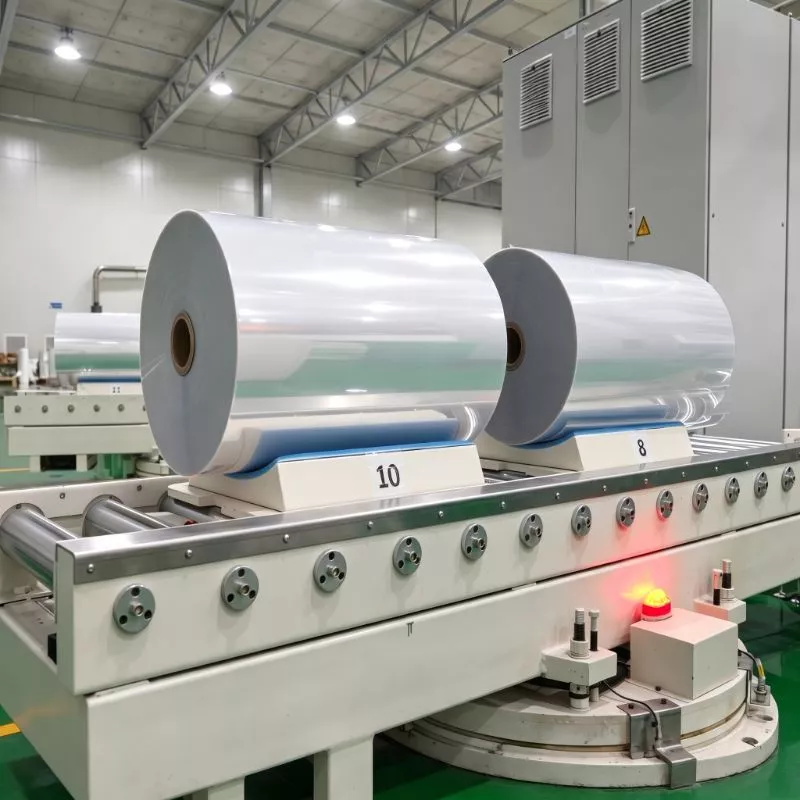
One roll can potentially serve fashion printers, sportswear decorators, cap manufacturers, footwear producers, bag factories, and branded merchandise companies. That changes inventory economics. Rather than predicting which logo the market will request, the distributor stocks the material and lets downstream customers create their own designs. For emerging 3D logo markets, this flexibility can be commercially important.
FAQ
Is 3D TPU UV DTF film More Durable Than Silicone?
Not automatically. Both materials can deliver strong durability when correctly formulated and applied. TPU is known for elasticity, abrasion resistance, tear resistance, and mechanical strength, while silicone offers excellent flexibility and thermal-aging resistance. For apparel, the weakest point is often not the base material itself. Failure can occur at the ink layer, adhesive interface, fabric coating, or edge of the decoration. Compare finished samples under the same wash and stretch conditions.
Which Is Better for Small Custom Orders?
3D TPU UV DTF film generally has the stronger manufacturing advantage for frequently changing digital designs. When artwork changes are handled digitally and no design-specific mold is required, producing multiple SKUs or short runs becomes easier. Silicone can also be printed without molds in some processes, so buyers should compare the specific silicone production route rather than assuming all silicone labels require tooling.
What Should I Ask a 3D TPU UV DTF film Manufacturer Before Ordering?
Request more than a product photo. Ask for:
TPU film thickness and tolerance;
surface finish;
hardness where available;
compatible printer and ink system;
transfer temperature, time, and pressure;
adhesive structure;
recommended substrates;
washing test conditions;
stretch and flex performance;
available metallic or decorative finishes;
roll dimensions and MOQ;
batch-consistency controls;
samples for testing on your own production line.
If the manufacturer cannot explain why a particular film thickness or hardness is recommended for your application, further technical validation is advisable before volume purchasing.
Conclusion & B2B Action Guide
Choosing between silicone labels and 3D TPU UV DTF film should start with the production model rather than the material name. Silicone remains an excellent option for molded, rubber-like branding, stable high-volume designs, and applications where silicone's thermal and aging performance is valuable. TPU film is particularly attractive where manufacturers and distributors need digital design flexibility, strong mechanical properties, raised visual effects, rapid artwork changes, and one material platform capable of serving many customized designs.
For DTF distributors, textile manufacturers, apparel decorators, and branded-label suppliers evaluating a new TPU system, the most useful next step is a controlled production trial. Request samples from a qualified 3D TPU UV DTF film manufacturer, print your actual customer artwork, transfer it onto your real production fabrics, and compare appearance, stretch, edge integrity, and wash performance under documented conditions before moving to bulk orders.




contact
Tel: +86 17706217416
Add: Building L2A, No. 520, Lane 1588, Zhuguang Road, Hongqiao World Center, Qingpu District, Shanghai, China
follow us: