
 English EN
 French FR
 German DE
 Portuguese PT
 Spanish ES
 Russian RU
 Japanese JA
 Korean KO
 Arabic AR
 Greek EL
 Turkish TR
 Italian IT
 Polish PL
 Hindi HI
 中国 CN
中国 CN
.webp)
BOPP Film Coatings Explained: Acrylic, PVdC, Heat-Seal and Top-Coated Grades
Introduction
Selecting a coated BOPP film is not simply a question of choosing a higher-performance substrate. The coating changes how the film interacts with inks, adhesives, heat, moisture, oxygen, and the final packaging process. For flexible packaging converters, a mismatch between the coating and the intended converting operation can lead to poor ink adhesion, unstable sealing, insufficient barrier performance, or unnecessary material cost.
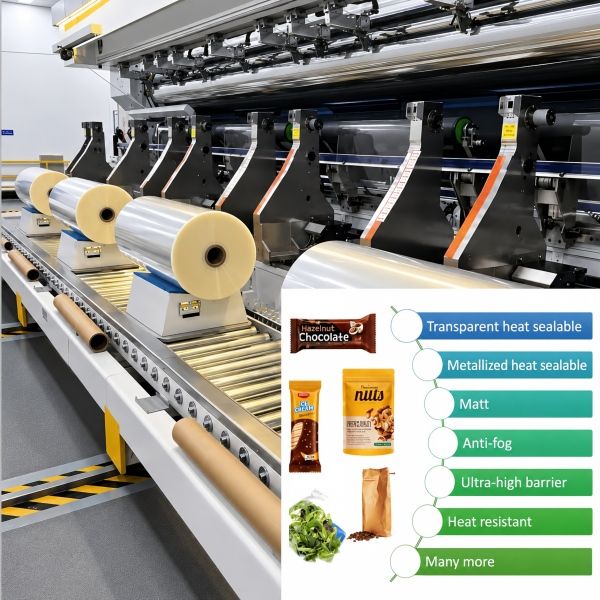
BOPP film is widely used because biaxially oriented polypropylene combines low density, useful stiffness, optical performance, moisture resistance, and efficient high-speed processing. Coating technology extends these characteristics by engineering the surface for a specific function. Acrylic, PVdC, heat-seal, and top-coated grades therefore need to be evaluated according to the final application rather than treated as interchangeable versions of the same film.
Key Takeaways:
Acrylic coated BOPP is primarily selected to modify surface functionality, including printability, barrier contribution, or surface protection depending on the coating formulation.
PVDC coated high-barrier BOPP film is considered when stronger oxygen and moisture barrier performance is required than conventional BOPP can provide alone.
Heat-seal adhesive coated BOPP film is designed to provide controlled sealing or adhesive functionality without requiring the converter to create the sealing layer independently.
Top-coated grades BOPP films can provide a controlled printable or functional surface for specific ink, coating, adhesive, or label applications.
The correct coated structure depends on coating chemistry, coat weight, surface treatment, sealing conditions, barrier requirements, and the complete package construction.
Technical Core: How BOPP Coatings Change Film Performance
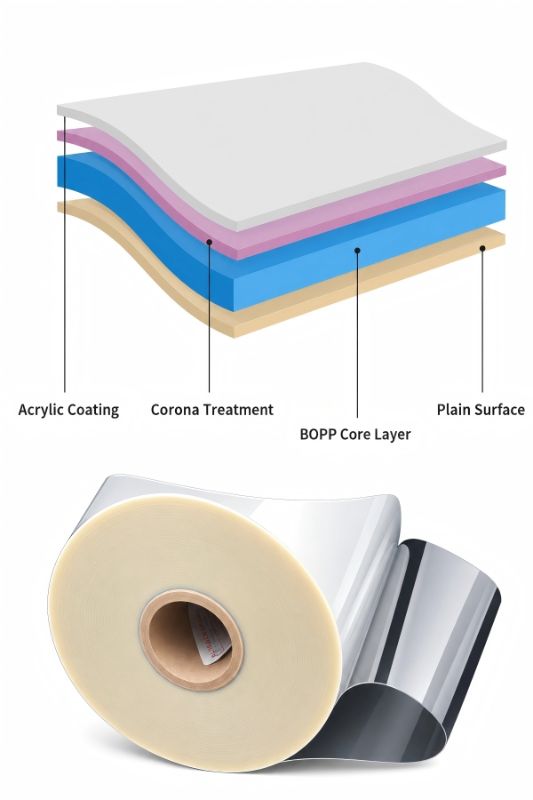
BOPP coating is a functional layer applied to one or both sides of a biaxially oriented polypropylene substrate. The coating modifies the surface rather than replacing the fundamental properties of the polypropylene film. Its performance is determined by coating chemistry, thickness, adhesion to the base film, surface energy, and the interaction between the coating and downstream materials.
The base BOPP provides the structural foundation. The coating then addresses a specific process requirement such as ink anchorage, barrier performance, heat sealing, adhesive bonding, or controlled surface characteristics. This distinction is important when comparing supplier datasheets because two films with identical nominal thickness can have substantially different converting behavior.
Acrylic Coated BOPP Film
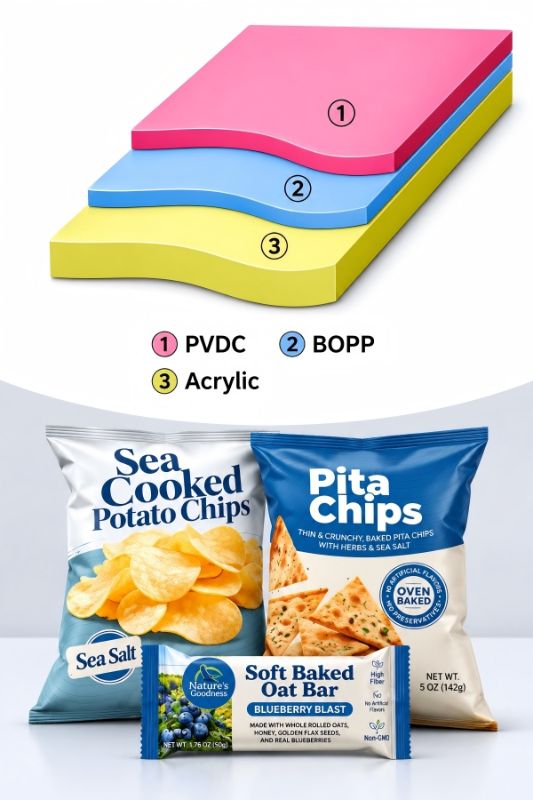
Acrylic coatings are polymer-based surface layers that can be engineered for particular combinations of printability, surface protection, optical appearance, and barrier performance. A Premium Acrylic Coated BOPP Film for Packaging may be selected when the converter needs a more functional surface than untreated or conventionally treated BOPP can provide.
The technical evaluation should focus on coating adhesion, surface energy, ink compatibility, coefficient of friction, optical properties, and the coating's behavior during slitting, laminating, and printing. Acrylic is not a single standardized formulation, so the supplier's specific coating design matters.
PVdC Coated BOPP Film
PVdC, or polyvinylidene chloride, is a polymer coating known for strong barrier characteristics. A PVDC coated high-barrier BOPP film can be used when the packaging structure requires improved resistance to the transmission of oxygen and water vapor.
Barrier performance is highly dependent on coating integrity, thickness, defects, humidity, temperature, and the complete laminate structure. Therefore, a high-barrier claim should be evaluated using measured oxygen transmission rate (OTR) and water vapor transmission rate (WVTR) under stated test conditions rather than by coating name alone.
Heat-Seal and Adhesive-Coated BOPP
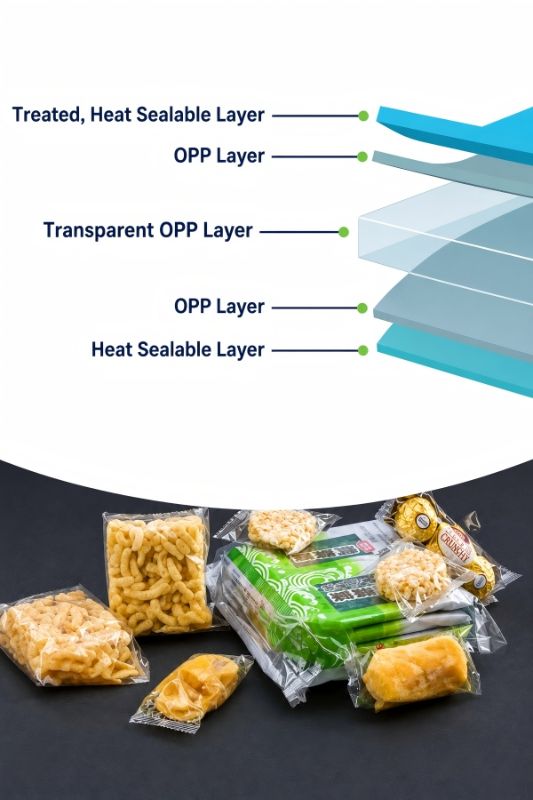
A heat-seal coating is designed to soften and form a seal under controlled temperature, pressure, and dwell time. A heat-seal adhesive coated BOPP film can simplify package construction by incorporating a functional sealing or bonding layer onto the BOPP substrate.
For Heat Sealable BOPP Film For Flexible Packaging, engineers should review seal initiation temperature, seal strength, hot tack where relevant, sealing window, COF, and compatibility with the opposite web. These parameters are more useful than simply knowing that a film is described as heat sealable.
Top-Coated Grades BOPP Films
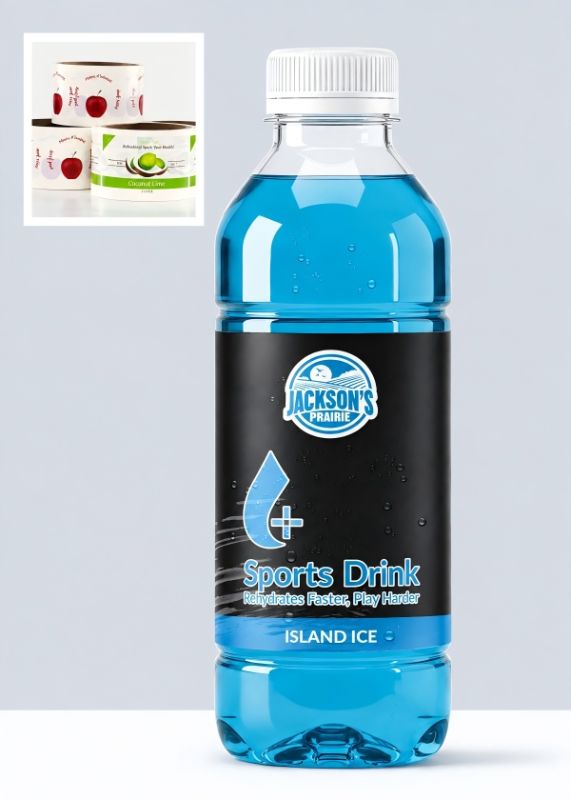
Top-coated BOPP films use an engineered surface layer to provide a controlled interface for printing, coating, adhesive application, or other downstream functions. Transparent Top-coated BOPP Film for Self Adhesive Labels, for example, may require consistent surface characteristics so that printed graphics and adhesive construction remain stable during converting.
The top coating should be evaluated together with the intended ink or adhesive system. Surface uniformity, adhesion, optical clarity, COF, and resistance to blocking or scratching can influence the final label or package performance.
Application & Solutions: Selecting the Correct Coated BOPP Grade
Coated BOPP should be selected by working backward from the final package requirement. The same substrate may require a completely different coating depending on whether it is being printed, laminated, metallized, heat sealed, or converted into a self-adhesive label.
1. Choose Acrylic Coated BOPP for Surface-Controlled Applications
Acrylic-coated structures are useful when the surface needs controlled interaction with inks, coatings, adhesives, or the surrounding environment. For printing converters, the main question is not whether acrylic is present but whether the specific coating is compatible with the selected ink system and printing conditions.
☑ Confirm the coated side and its intended printing direction.
☑ Check ink adhesion after printing rather than relying only on initial wetting.
☑ Evaluate surface energy and treatment stability during storage.
☑ Check COF and blocking behavior for high-speed rewinding and slitting.
☑ Run a production trial using the actual ink, dryer, tension, and finishing conditions.
2. Use PVdC Coated BOPP When Barrier Is a Primary Requirement
Conventional BOPP provides useful moisture resistance but is not inherently a high oxygen-barrier film. A PVDC coated high-barrier BOPP film can introduce a dedicated barrier layer into the structure.
For food and other sensitive products, converters should define the required OTR and WVTR targets first. The film should then be assessed under the temperature and relative-humidity conditions relevant to the application.
Specify OTR and WVTR test conditions before comparing suppliers.
Check whether barrier values apply to the coated film alone or to a complete laminate.
Evaluate coating uniformity and defect sensitivity.
Consider the influence of printing, lamination, flex cracking, and converting on final barrier performance.
Do not select a barrier film solely from the coating name.
3. Select Heat-Sealable BOPP According to the Sealing Window
A heat-sealable BOPP film is useful when package formation requires the film to seal reliably within a controlled temperature range. The sealing layer must interact correctly with the opposing substrate and the packaging machine.
A narrow sealing window can make production more sensitive to changes in machine speed, jaw temperature, pressure, and dwell time. A broader and well-characterized sealing window can provide more operating tolerance, but actual performance must be confirmed on the production line.
☑ Define the target seal temperature and machine speed.
☑ Measure seal strength at relevant temperatures.
☑ Evaluate hot tack when the package must remain sealed immediately after forming.
☑ Check the seal surface COF and its effect on machine handling.
☑ Confirm compatibility with PE, CPP, coated films, or other opposing webs.
4. Top-Coated BOPP for Printing and Self-Adhesive Labels
Top-coated grades BOPP films can be useful where a controlled printable surface is required. In self-adhesive label applications, the top coat may need to balance ink adhesion, optical clarity, surface smoothness, and resistance to handling.
For a Transparent Top-coated BOPP Film for Self Adhesive Labels, optical clarity becomes particularly important because haze, coating uniformity, and surface defects can be visible through the finished construction.
Converters should qualify the complete system, including film, ink, adhesive, release liner, die-cutting process, and application surface.
5. Compare Conventional BOPP With Application-Specific Coated Grades
| Selection Approach | Conventional BOPP | Application-Specific Coated BOPP |
|---|---|---|
| Printing | Relies mainly on base-film surface treatment | Coating is engineered for a defined ink/coating interaction |
| Barrier | Base BOPP provides limited inherent barrier | Dedicated coating can improve targeted barrier performance |
| Heat sealing | May require a separate sealing layer | Heat-seal surface can be integrated into the film structure |
| Surface functionality | More dependent on corona/treatment | Top coat provides controlled surface characteristics |
| Process flexibility | Broad but application dependent | Optimized for a defined converting function |
| Material cost | Typically simpler structure | Higher material complexity can be justified by process or performance requirements |
The coated option should be selected when its additional functionality solves a defined production or package-performance requirement. Otherwise, the added coating may increase cost without providing measurable value.
6. B2B Procurement and QC Evaluation
For BOPP distributors, flexible bag manufacturers, pouch manufacturers, and converters, supplier qualification should include both datasheet review and practical testing.
☑ Request the coating type, coated side, nominal coating description, and intended application.
☑ Request measured barrier data such as OTR and WVTR when barrier performance is claimed.
☑ For heat-seal grades, request seal strength, seal initiation information, and test conditions where available.
☑ For printable top-coated grades, confirm ink system compatibility and surface characteristics.
☑ Review thickness, thickness tolerance, COF, haze, gloss, tensile properties, and shrinkage together with coating-specific data.
☑ Conduct trial runs using representative production equipment before approving regular supply.
☑ Establish incoming QC limits that distinguish critical properties from informational datasheet values.
7. Cost Should Be Evaluated at the Process Level
A coated film normally costs more than an equivalent uncoated substrate because an additional functional layer and manufacturing step are involved. The relevant purchasing calculation, however, is not simply price per kilogram.
If an integrated heat-seal coating eliminates a separate sealing material or improves machine efficiency, the total package cost may be lower. If a barrier coating allows a simpler laminate structure, the coating premium may also be justified. Conversely, paying for a high-barrier or specialized top coat that is not required by the application adds cost without improving the final package.
A practical B2B evaluation should therefore compare material cost, converting yield, machine speed, scrap rate, laminate structure, package performance, and quality risk.
FAQ
What is coated BOPP film used for?
Coated BOPP film is used when the base polypropylene film needs additional surface functionality. Depending on the coating, applications can include flexible packaging, printing, lamination, barrier packaging, heat sealing, and self-adhesive labels. The specific coating should be matched to the intended process.
Is acrylic coated BOPP better than standard BOPP?
Not necessarily. Acrylic coating is beneficial when its specific surface or barrier function is required. If the application can be handled effectively with conventional BOPP surface treatment, an acrylic-coated structure may add unnecessary cost. The correct comparison should be based on measurable production and package requirements.
What is PVdC coated BOPP film used for?
PVdC coated BOPP is considered for packaging structures requiring improved oxygen and moisture barrier performance. Barrier values should be compared using OTR and WVTR under clearly stated test conditions because actual performance depends on coating integrity and the complete packaging structure.
What should I check before buying heat-sealable BOPP?
Check seal initiation temperature, seal strength, sealing window, hot tack where relevant, COF, thickness, and compatibility with the opposing substrate. Trial testing on the intended packaging machine is recommended because laboratory seal data cannot fully reproduce every production condition.
Conclusion & B2B Action Guide
The value of coated BOPP film lies in its engineered surface functionality. Acrylic, PVdC, heat-seal, and top-coated grades solve different technical problems, from ink and adhesive compatibility to barrier performance and package sealing. The correct grade is therefore determined by the complete converting process, not by coating terminology alone.
For flexible packaging engineers, purchasing managers, distributors, and BOPP converters, supplier qualification should combine technical datasheets with application trials and measurable performance targets. When evaluating a new coated BOPP film, define the required barrier, printing, sealing, optical, and mechanical properties first.
If you are sourcing coated BOPP film for flexible packaging, labels, pouches, or converting applications, provide your target film thickness, coating function, printing or sealing process, and final package requirements to a technical supplier. Request representative samples and validate them under your actual production conditions before moving to regular commercial supply.




News & Events
learn more-
 Blog
Press Release Sep-14-2026
Blog
Press Release Sep-14-2026BOPP Label Material vs Vinyl vs Paper: Which Label Facestock Should Your Product Use?
Compare BOPP label material, vinyl, and paper facestocks by moisture resistance, printability, durability, cost, and applications to choose the right label. -
 Blog
Press Release Sep-14-2026
Blog
Press Release Sep-14-2026How to Read a BOPP Film Technical Data Sheet: Thickness Tolerance, COF, Haze, Gloss, Tensile and Shrinkage
How to read a BOPP film technical data sheet: thickness tolerance, COF, haze, gloss, tensile strength, elongation and shrinkage explained for converters and buyers. -
 Blog
Press Release Sep-14-2026
Blog
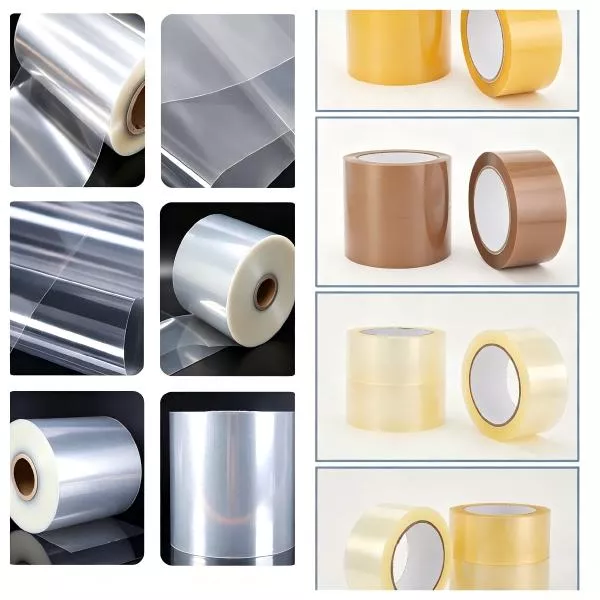
Press Release Sep-14-2026BOPP Film for Packing Tape: Thickness, Corona Treatment and Adhesive Coating Specs
When selecting materials for packaging tape production, the choice of substrate is paramount. BOPP Film for Packing Tape serves as the essential backbone of pressure-sensitive adhesive tapes used across industries worldwide. The performance of any BOPP Film adhesive tape depends on three critical specifications: thickness, corona treatment, and adhesive coating. Understanding these parameters is essential for tape manufacturers and procurement professionals seeking optimal tape grade BOPP film performance.

contact
Tel: +86 17706217416
Add: Building L2A, No. 520, Lane 1588, Zhuguang Road, Hongqiao World Center, Qingpu District, Shanghai, China
follow us: