
 English EN
 French FR
 German DE
 Portuguese PT
 Spanish ES
 Russian RU
 Japanese JA
 Korean KO
 Arabic AR
 Greek EL
 Turkish TR
 Italian IT
 Polish PL
 Hindi HI
 中国 CN
中国 CN
.webp)
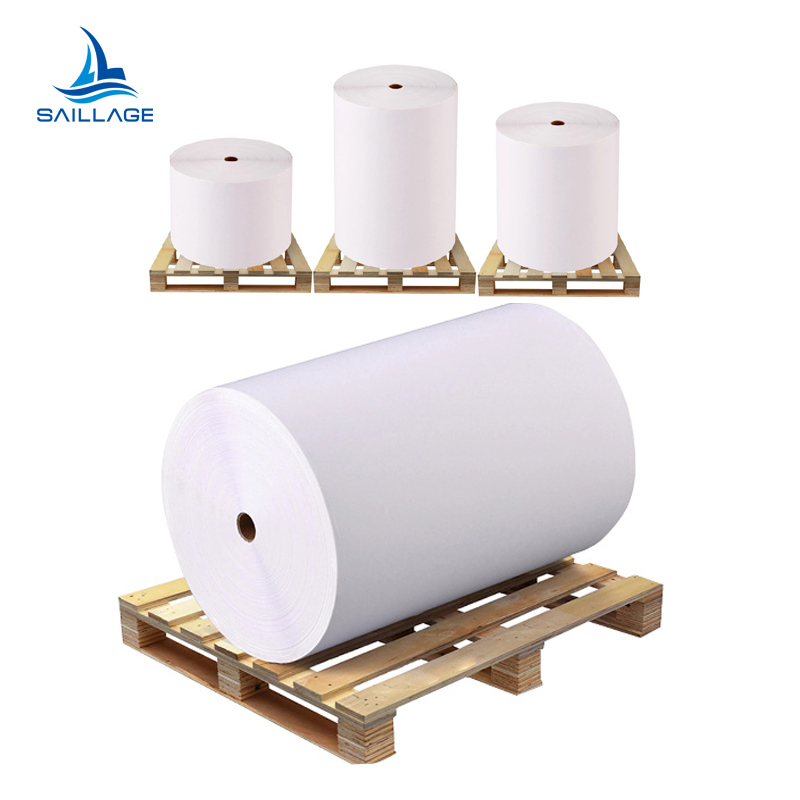
BOPP Film for Packing Tape: Thickness, Corona Treatment and Adhesive Coating Specs
Tape grade BOPP film is typically 20–58 µm thick, corona treated on one side to a surface tension of 38–42 dyne/cm, and coated with 20–25 gsm of water-based acrylic, hot-melt, or rubber adhesive to deliver a peel strength of 0.5–2.0 kg/25 mm. These three specifications — thickness, corona treatment, and adhesive coating — determine whether the finished tape holds a carton closed or fails in the warehouse.
When selecting materials for packaging tape production, the substrate is the decision that constrains everything downstream. BOPP film for packing tape is the backbone of virtually all pressure-sensitive carton sealing tape used worldwide, and its specifications set the ceiling for the adhesive tape's tensile strength, adhesion, clarity, and shelf life. This guide explains each of the three critical specifications, how to choose the right combination for your application, and how to evaluate a tape grade BOPP film supplier.
Key Takeaways
Thickness sets the mechanical limit: thinner film saves cost, thicker film prevents tape breakage on heavy or export cartons.
Corona treatment makes adhesion possible at all: untreated polypropylene is non-polar and will not anchor an adhesive layer permanently.
Coating uniformity decides consistency: coat weight variation shows up directly as inconsistent tack and peel along the jumbo roll.
Tolerances separate suppliers: premium tape grade BOPP film holds thickness variation to ±2.5% or better and maintains treatment above 38 dyne/cm across the full web width.
What Is Tape Grade BOPP Film?
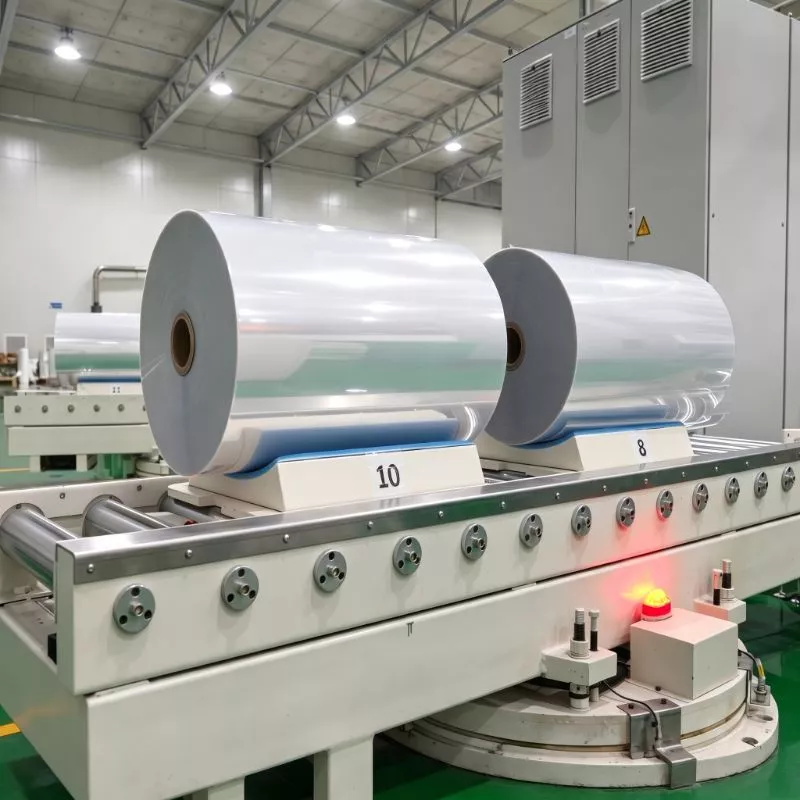
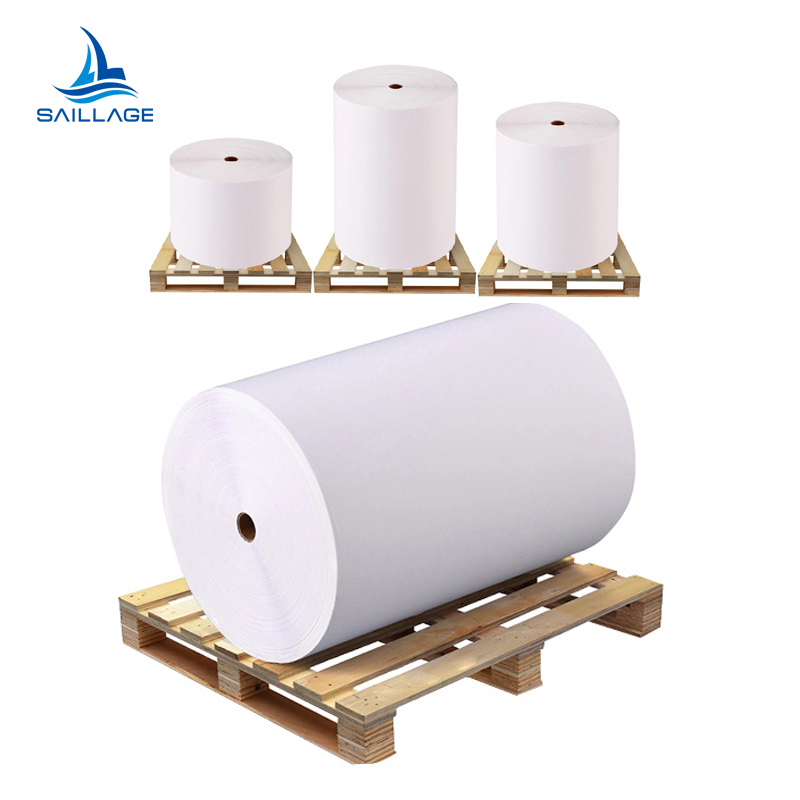
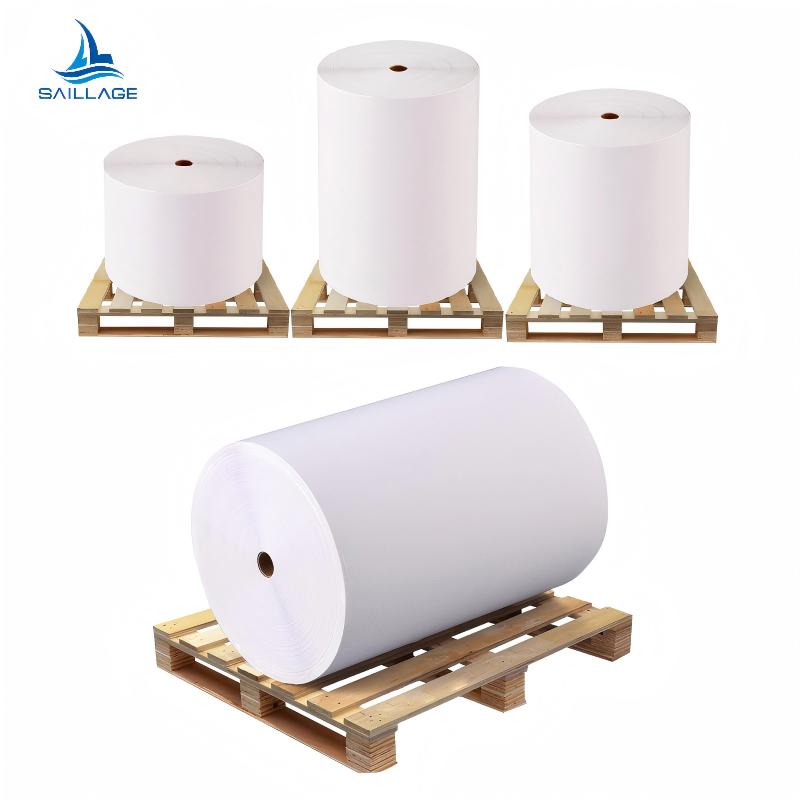
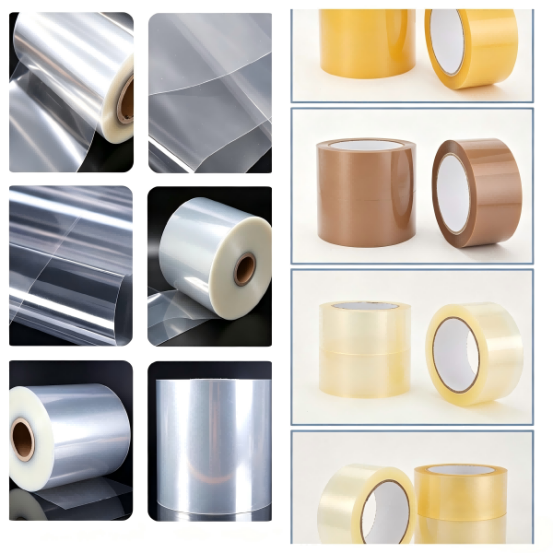
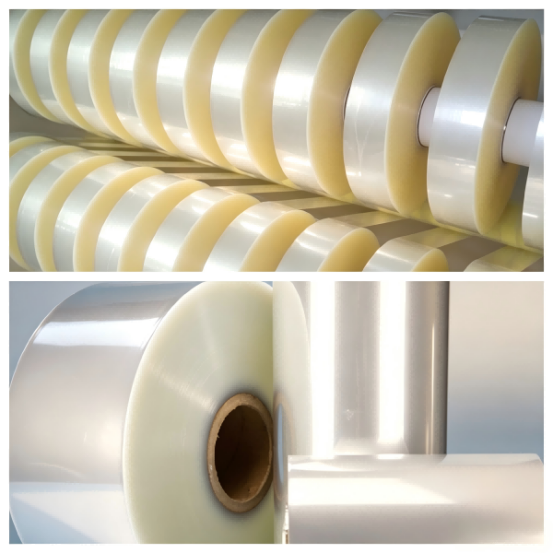
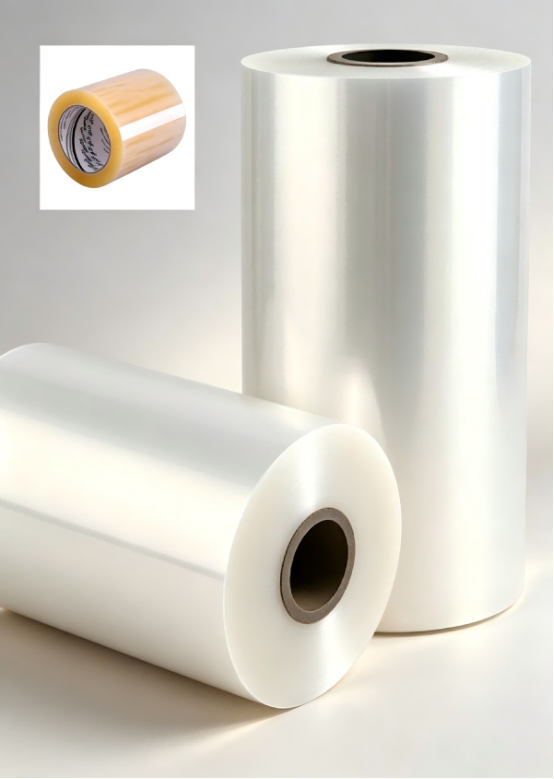
Tape grade BOPP film is a biaxially oriented polypropylene film engineered specifically as the carrier layer of pressure-sensitive adhesive tape. Unlike packaging or label grades, it is optimized for three things: high tensile strength in the machine direction so the tape does not snap under tension, a corona-treated surface that anchors adhesive permanently, and optical clarity that keeps transparent BOPP film for adhesive tape looking clean over printed cartons. It is supplied as jumbo rolls to tape converters, who coat it with adhesive and slit it into finished tape rolls.
Specification 1: Thickness — The Structural Foundation
The thickness of BOPP film for packing tape directly influences tape strength, durability, and application performance. Standard tape grade BOPP film ranges from 20 to 58 µm, with each band serving a different duty level:
| Film Thickness | Typical Application | Priority |
|---|---|---|
| 20–28 µm | Light-duty office and stationery tape | Material economy |
| 28–32 µm | Standard carton sealing | Balance of strength and cost |
| 35–50 µm | Heavy-duty packaging and export cartons | Reinforcement, break resistance |
| 50–58 µm | Specialty and high-load industrial tape | Maximum tensile performance |
Note that these figures describe the film alone. Finished tape thickness is the film plus the adhesive layer, which is why a tape sold as "45 micron" is often built on a film in the 30s.
Just as important as the nominal value is thickness consistency. Premium transparent BOPP film for adhesive tape holds thickness variation to ±2.5% or better across the web. This uniformity is what allows even adhesive coating distribution — a film with thick and thin zones will pick up different amounts of adhesive, producing tape whose tack changes along its own length.
Specification 2: Corona Treatment — Surface Activation
BOPP film does not naturally bond well with adhesives, because polypropylene has a non-polar, low-energy surface. Corona treatment solves this by exposing the film to a controlled electrical discharge that oxidizes the surface and raises its surface energy, giving the adhesive something to anchor to.
Target surface tension: tape grade BOPP film typically receives one-side corona treatment reaching 38–42 dyne/cm. Some adhesive systems and converters specify slightly higher levels; below roughly 38 dyne/cm, adhesive anchorage becomes unreliable and delamination risk rises.
Uniformity across the web: treatment must be even edge to edge. A film that measures 40 dyne/cm in the center and 34 dyne/cm at the edges will produce tape that lifts at the edges of the roll.
One side or two: single-side treatment is standard, since only the adhesive side needs activation and the release side must stay low-energy. Double-side treated film is available for specialized applications that also require printing or coating on the reverse.
Clarity preservation: over-treatment degrades the film surface and can dull optical clarity, so the discharge must be tightly controlled — especially for transparent BOPP film for adhesive tape.
Treatment decay: corona effect declines over time. Film should be stored in its original packaging in cool, dry conditions and used within the shelf life on the datasheet, with first-in-first-out rotation.
Specification 3: Adhesive Coating
The final performance of any BOPP film adhesive tape depends on the adhesive system applied to the treated surface. Modern BOPP tape coating lines apply water-based acrylic, hot-melt, or rubber-based pressure-sensitive adhesives, commonly with comma blade coaters, under precise thickness control.
Choosing an adhesive system
| Adhesive Type | Strengths | Typical Use |
|---|---|---|
| Water-based acrylic | Excellent aging and UV resistance, low odor, clear | General carton sealing, long-term storage |
| Hot-melt | High initial tack, fast bonding, strong holding power | High-speed automatic case sealing |
| Rubber-based | Aggressive tack on recycled and porous board | Recycled corrugated cartons, cold conditions |
Critical coating parameters
Coat weight uniformity: general-purpose carton tape commonly runs in the low twenties gsm. Too little adhesive fails to bond to dusty recycled board; too much oozes from roll edges in warm warehouses. What matters most is holding the chosen target consistently across width and length.
Drying temperature control: incomplete drying leaves residual solvent or water and soft adhesive; over-drying reduces tack.
Adhesive solid content: variation in solids changes the actual dry coat weight even when the wet application rate is unchanged.
Peel strength target: manufacturers typically specify 0.5–2.0 kg/25 mm depending on the application, from light stationery tape to heavy-duty sealing.
Aging resistance: the coated tape must hold its bond strength through extended storage — a specification that is only proven by accelerated aging tests, not by initial tack.
How to Choose the Right BOPP Film for Your Tape Line
Start from the carton, not the film: define the load weight, board type (virgin or recycled), and storage temperature range your tape must survive. These determine duty level before any specification is chosen.
Select thickness by duty level: use the thickness table above, then confirm the film's tensile strength and elongation values match your sealing machine's tension.
Match treatment to your adhesive: confirm the required dyne level with your adhesive supplier, and ask the film supplier for the treatment value measured at the time of production, not just the nominal spec.
Verify tolerances in writing: ask for thickness tolerance, dyne uniformity across the web, and roll length and width tolerances on the datasheet.
Run a trial before committing: coat a sample jumbo roll on your own line and test peel strength, holding power, and unwind noise before signing a supply agreement.
Common Problems Traced Back to the Base Film
Adhesive delamination or transfer: insufficient or decayed corona treatment — check the dyne level of the incoming film, not just of a fresh sample.
Tape snapping during application: film too thin for the load, or low machine-direction tensile strength.
Uneven tack across the tape width: thickness variation in the base film or uneven treatment causing uneven coating pickup.
Hazy or cloudy tape: over-treatment, contaminated film surface, or poor optical quality in the base film.
Edge ooze in storage: excessive coat weight combined with warm warehouse conditions.
Frequently Asked Questions
What thickness of BOPP film is used for packing tape?
Tape grade BOPP film generally runs from 20 to 58 µm. Light-duty office tape uses 20–28 µm, standard carton sealing uses 28–32 µm, and heavy-duty or export packaging uses 35–50 µm. Finished tape thickness is higher than the film alone because it includes the adhesive layer.
Why does BOPP film for tape need corona treatment?
Polypropylene has a non-polar, low-energy surface that adhesives cannot anchor to. Corona treatment applies a controlled electrical discharge that oxidizes the surface and raises its surface energy, so the adhesive coating bonds permanently instead of delaminating or transferring.
What dyne level is required for BOPP tape film?
A surface tension of 38–42 dyne/cm on the treated side is the common target for tape grade BOPP film, with some adhesive systems specifying higher. Just as important, the value must stay consistent across the full web width and be verified on the incoming roll, since treatment decays during storage.
Which adhesive is best for BOPP packing tape: acrylic, hot-melt, or rubber?
Water-based acrylic offers the best aging and UV resistance for long storage; hot-melt gives the highest initial tack for high-speed automatic case sealers; rubber-based adhesive grips recycled and dusty corrugated board best. The right choice depends on your carton material, line speed, and storage conditions.
Should tape grade BOPP film be treated on one side or both?
One-side treatment is standard: only the adhesive side needs activation, while the reverse side must remain low-energy so the tape unwinds cleanly. Double-side treated film is used only when the reverse side also needs printing or coating.
How long can tape grade BOPP film be stored before coating?
Follow the shelf life on the supplier's datasheet, and use first-in-first-out rotation. Corona treatment decays over time, so the longer the film sits, the lower its surface energy — measure the dyne level again before coating any film that has been in storage for an extended period.
Conclusion: Selecting the Right Tape Grade BOPP Film
BOPP film for packing tape is a precisely engineered substrate whose performance depends on the integration of correct thickness selection, controlled corona treatment, and a matched adhesive coating system. Transparent BOPP film for adhesive tape delivers excellent clarity and strength when it is manufactured to rigorous, documented tolerances — and it fails in predictable ways when it is not. As a tape grade BOPP film supplier, SAILLAGE produces films engineered for compatibility with acrylic, hot-melt, and rubber adhesive systems, with consistent thickness and treatment across every jumbo roll. Contact us for datasheets and trial rolls to qualify on your own coating line.




News & Events
learn more-
 Blog
Press Release Jul-31-2026
Blog
Press Release Jul-31-2026Rotogravure vs Flexo Printing on BOPP Film: Print Quality, Run Length and Cost Compared
Rotogravure vs flexo on BOPP film: compare print quality, run length and total cost to choose the right printing process for your packaging volume and budget. -
 Blog
Press Release Jul-31-2026
Blog
Press Release Jul-31-2026Matte vs Glossy BOPP Film for Label Printing: How Surface Finish Affects Brand Perception
In the competitive world of consumer packaged goods, every brand decision communicates value—including the seemingly subtle choice between Glossy BOPP Film and Matte BOPP Film for label printing. This surface finish decision profoundly impacts how consumers perceive product quality, price positioning, and brand personality. For packaging professionals selecting BOPP Films for Label Printing, understanding the psychological and visual implications of each finish is as critical as technical performance specifications. -
 Blog
Press Release Jul-31-2026
Blog
Press Release Jul-31-2026How to Manage BOPP Film Roll Tension and Winding Defects in Converting Operations
Maintaining the correct tension during converting operations is one of the most important factors in producing high-quality packaging materials. Every BOPP Film Roll must be wound with consistent tension to ensure smooth printing, lamination, slitting, and bag-making processes. Improper tension can lead to wrinkles, telescoping, loose winding, and web breaks, resulting in costly production downtime.

contact
Tel: +86 17706217416
Add: Building L2A, No. 520, Lane 1588, Zhuguang Road, Hongqiao World Center, Qingpu District, Shanghai, China
follow us: