
 English EN
 French FR
 German DE
 Portuguese PT
 Spanish ES
 Russian RU
 Japanese JA
 Korean KO
 Arabic AR
 Greek EL
 Turkish TR
 Italian IT
 Polish PL
 Hindi HI
 中国 CN
中国 CN
.webp)
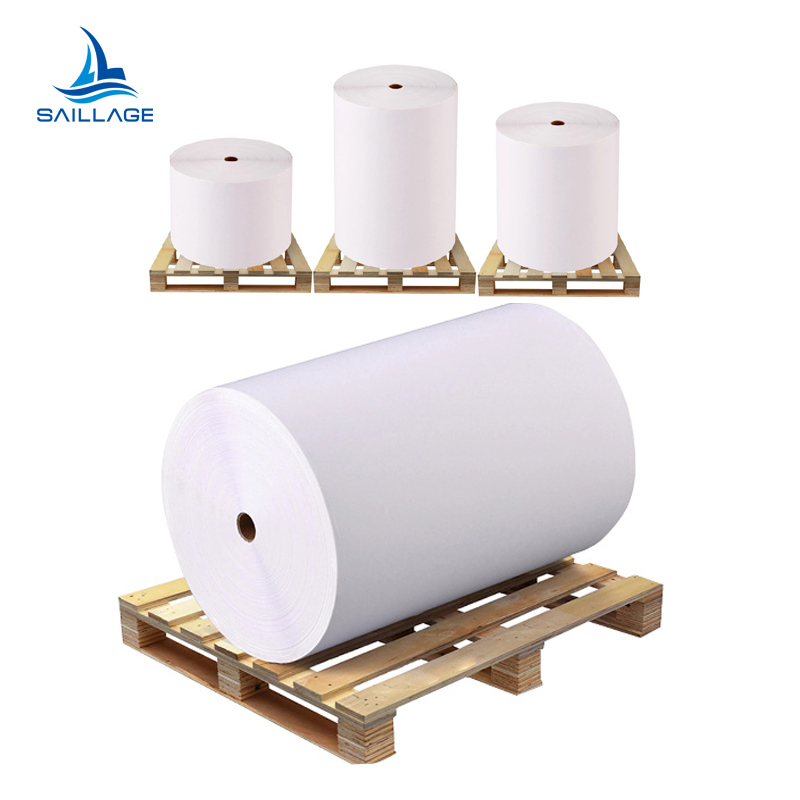
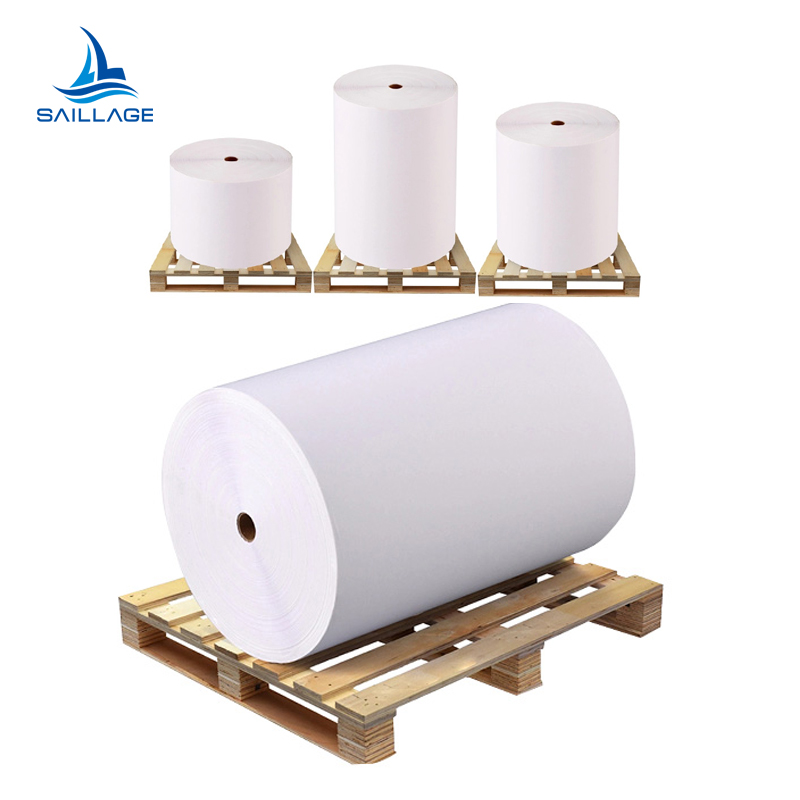
How to Choose a BOPP Label Film for Your Printing Process: Flexo, UV Inkjet, HP Indigo and Offset Compared
1. Introduction
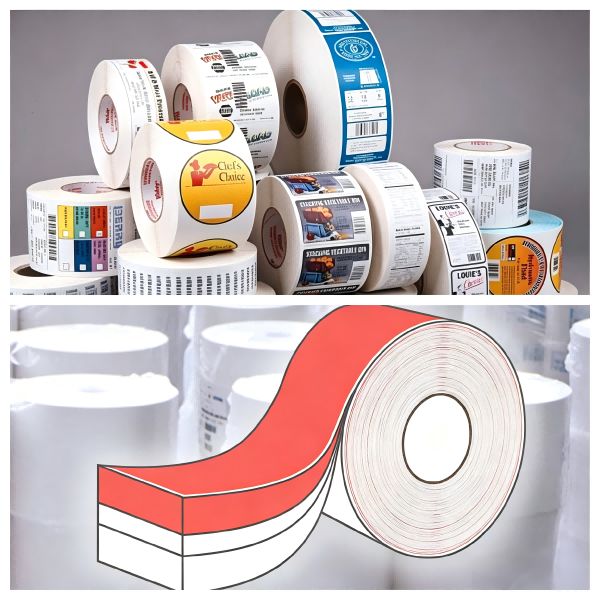
Label converters often face the same technical problem: a BOPP label film that runs well on one printing platform can show poor ink adhesion, dot gain, curl, blocking, static or insufficient image quality on another. The choice becomes more complex when a label printer handles flexo printed labels, UV Inkjet printed labels, HP Indigo jobs and offset self-adhesive sheet production on the same portfolio. The right BOPP label film therefore cannot be selected only by thickness, whiteness or price.
For procurement teams, the key is to match the BOPP based label facestock to the surface-treatment system, ink chemistry, drying or curing mechanism, converting process and final label construction. This is particularly important when sourcing hp indigo printable films, a BOPP Label Film for flexo printing, or a BOPP Film Facestock for offset printing.
Key Takeaways
Select the film according to the printing process and ink system, not simply the printer model.
Verify surface energy, coating compatibility, dimensional stability, COF and converting performance before commercial approval.
For digital applications, distinguish ordinary printable BOPP from films specifically engineered for HP Indigo or UV Inkjet.
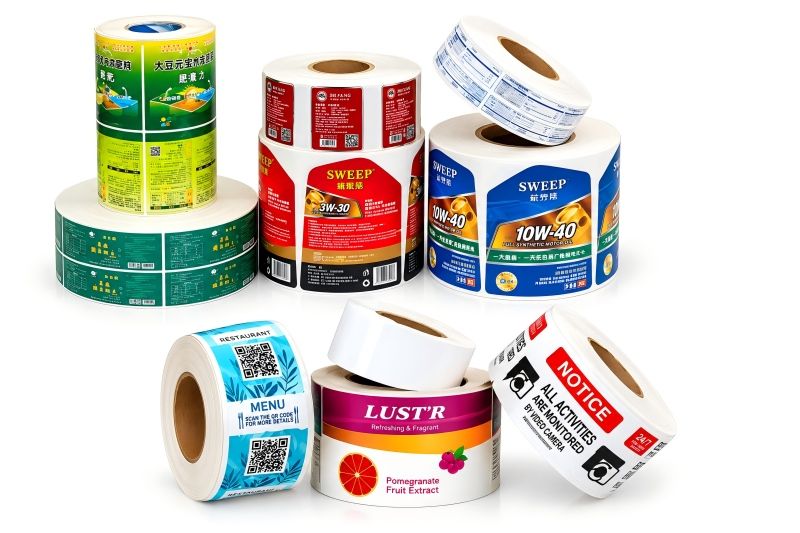
For self-adhesive labels, evaluate the complete construction: film, primer or topcoat, adhesive, liner and application surface.
2. Technical Core: What Determines Printing Compatibility?
BOPP, or biaxially oriented polypropylene, is a polypropylene film stretched in both the machine direction and transverse direction. Orientation improves tensile strength, dimensional stability and optical performance, but the untreated polyolefin surface has relatively low surface energy and is not naturally optimized for many printing inks or coatings. A printable BOPP label film therefore normally requires controlled surface treatment, coating or primer technology.
Surface energy is one useful indicator of wetting behavior. A higher and more stable treated surface can help ink or coating spread across the film, but surface-energy value alone does not guarantee adhesion. The actual result depends on the interaction between the BOPP surface, primer or topcoat, ink chemistry, curing conditions and converting process.
For flexo printing, a BOPP Label Film for flexo printing needs a printable surface that accepts the selected water-based, solvent-based or UV-curable ink system while maintaining dimensional stability during printing and drying. For UV Inkjet printed labels, the surface must also support controlled droplet wetting, curing and image anchorage. UV inkjet glossy white BOPP label film is typically selected when high-opacity white appearance and high-quality variable or short-run graphics are required.
HP Indigo printing uses a liquid-electrophotographic process, so HP indigo printing BOPP Film for Labels requires a surface engineered for the specific digital ink interaction and press conditions. A BOPP facetsock film suitable for HP Indigo printing should be qualified on the intended press rather than assumed compatible because it is simply a coated BOPP film.
Offset production introduces another set of requirements. A BOPP Film Facestock for offset printing or offset self-adhesive sheet must maintain sheet flatness, dimensional consistency and reliable ink receptivity through feeding, printing and finishing. The final construction must also work with the pressure-sensitive adhesive and liner.
The practical principle is straightforward: printability is a system property, not a single-film property.
3. Application & Solutions
3.1 BOPP Label Film for Flexo Printing
Flexographic printing remains important for high-volume labels because of its productivity and compatibility with multiple ink systems. The film selection should start with the intended ink and press configuration.
Confirm whether the process uses water-based, solvent-based or UV-curable ink.
Check whether the film has a printable topcoat or primer designed for the selected ink chemistry.
Verify corona or other surface-treatment stability after storage. A nominal treatment level at production does not replace an actual ink-adhesion test.
Check coefficient of friction and roll handling because unstable web behavior can create registration and converting problems.
Test the complete label construction after printing, lamination if applicable, die-cutting and adhesive application.
For high-speed work, dimensional stability is particularly important. Excessive thermal or mechanical deformation can affect registration between colors, die-cutting accuracy and downstream application. A BOPP based lable facestock should therefore be evaluated using the actual press speed, drying temperature and web tension expected in production.
3.2 UV Inkjet Printed Labels
UV Inkjet printed labels require a surface that controls ink spreading and supports rapid UV curing. The challenge is not simply to obtain a glossy white appearance. The film must balance opacity, whiteness, surface uniformity and ink anchorage.
UV inkjet glossy white BOPP label film is appropriate when converters need durable graphics, short runs, variable information or frequent artwork changes. Compared with conventional analog printing, digital production can reduce plate-related setup, but substrate qualification becomes more important because the inkjet process deposits droplets directly onto the surface.
Evaluate image sharpness, dot formation, color density and curing under the intended UV system.
Perform tape or other appropriate adhesion checks after curing.
Examine scratch, rub and chemical resistance when labels will face handling or exposure to cleaning agents.
Confirm whether the film remains compatible with die-cutting, matrix stripping and automatic dispensing.
3.3 HP Indigo Printing BOPP Film for Labels
HP Indigo applications need dedicated attention because the digital press process differs from flexography and UV Inkjet. A BOPP facetsock film suitable for HP Indigo printing should have a controlled surface that supports the press's electro-ink interaction and the subsequent label-converting steps.
When purchasing hp indigo printable films, ask the supplier for application evidence on the relevant HP Indigo platform or for representative printed samples. Press compatibility should be confirmed through actual testing because two films with similar thickness, gloss and surface-energy readings can behave differently in digital printing.
Check image density, solid coverage and fine-detail reproduction.
Evaluate ink adhesion and resistance after printing.
Check static behavior and sheet or web feeding stability.
Test die-cutting and matrix removal after printing.
For self-adhesive labels, evaluate the final label construction rather than the printed film alone.
The procurement specification should identify the press family, ink system, film thickness, finish, adhesive construction and required converting process. This creates a more reproducible purchasing specification than the phrase “digital printable BOPP” alone.
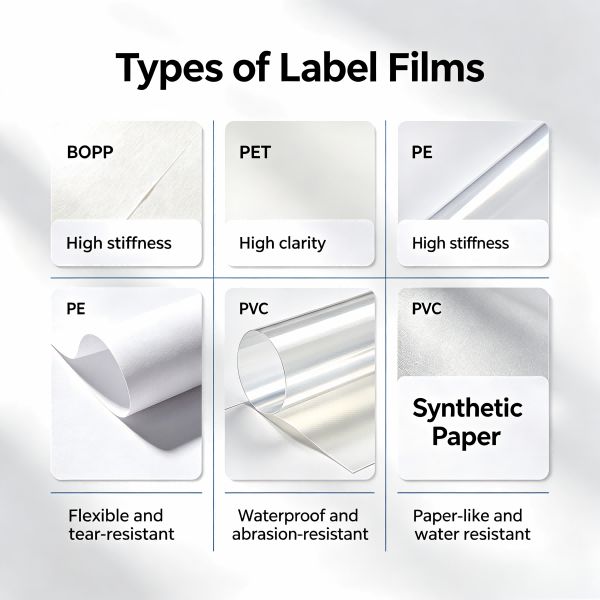
3.4 BOPP Film Facestock for Offset Printing
Offset printing is often selected for sheet-fed production where detailed graphics, process-color control and established finishing infrastructure are important. BOPP Film Facestock for offset printing must therefore be engineered for sheet handling as well as ink reception.
A film suitable for offset self-adhesive sheet applications should maintain good flatness and dimensional consistency. Curl, excessive static and poor surface receptivity can cause feeding problems, image defects or finishing instability. When the film is supplied as a self-adhesive sheet, the adhesive and liner are part of the technical system and can materially affect sheet handling.
Specify whether the product is supplied as roll stock or converted self-adhesive sheet.
Confirm offset ink compatibility and drying behavior with the actual press and ink supplier.
Check sheet flatness, edge quality and static behavior.
Test die-cutting, stripping and application after printing.
3.5 Comparing the Four Printing Routes
| Factor | Flexo | UV Inkjet | HP Indigo | Offset |
|---|---|---|---|---|
| Primary selection focus | Ink adhesion, web stability, drying | Ink wetting, curing, image quality | Electro-ink interaction, digital printability | Sheet flatness, ink receptivity, feeding |
| Typical production logic | High-volume continuous printing | Short/variable runs | Digital labels and variable work | Sheet-fed detailed graphics |
| Key substrate checks | Treatment/topcoat, COF, tension | Topcoat, wetting, curing response | Digital coating, static, feeding | Flatness, static, surface receptivity |
| Main qualification risk | Poor adhesion or registration | Spreading or incomplete cure | Inconsistent digital image or adhesion | Feeding, curl or drying behavior |
| Procurement approach | Qualify with actual ink system | Qualify with actual UV system | Request press-specific sample | Qualify complete sheet construction |
3.6 Practical Selection and Procurement Workflow
A practical purchasing workflow is:
Define the printing platform first: flexo, UV Inkjet, HP Indigo or offset.
Define the final label construction: film thickness, white or clear appearance, adhesive, liner and intended application.
Specify the ink or digital process, because “printable” is not a universal performance category.
Request technical data covering thickness, optical properties, mechanical properties, surface treatment or coating information and recommended printing process.
Conduct a representative trial using the actual press, ink, drying or curing conditions and converting equipment.
Measure adhesion, print quality, dimensional stability and converting performance after conditioning.
Approve the film only after the finished label passes application and durability requirements.
For distributors and category managers, it is useful to separate standard BOPP based lable facestock from application-specific grades. A broad standard grade may cover conventional jobs, while premium coated or digitally optimized grades can be reserved for higher-value applications.
4. Frequently Asked Questions
What is the most important specification when buying hp indigo printable films?
The most important specification is not a single number. The film must be compatible with the intended HP Indigo press and digital ink process. Request press-specific print samples and evaluate image quality, adhesion, feeding, static behavior and converting performance.
Can one BOPP Label Film for flexo printing also be used for UV Inkjet?
Sometimes, but compatibility should not be assumed. Flexo and UV Inkjet impose different requirements on surface wetting, ink interaction and curing. A film should be qualified with the actual UV inkjet system before commercial production.
What should I check for BOPP Film Facestock for offset printing?
Check sheet flatness, dimensional consistency, surface receptivity, static behavior, ink compatibility and finishing performance. For offset self-adhesive sheet, evaluate the complete film-adhesive-liner construction, not only the BOPP substrate.
Is higher surface energy always better for label printing?
No. Surface energy is an indicator of wetting potential, not a complete adhesion specification. The coating, primer, ink chemistry, treatment stability and actual printing conditions determine final performance.
5. Conclusion & B2B Action Guide
Choosing a BOPP label film should begin with the printing process and end with qualification of the finished label. Flexo, UV Inkjet, HP Indigo and offset each place different demands on surface chemistry, dimensional stability, feeding and converting. The same BOPP base film can therefore require different surface treatments or coatings for different applications.
For label printing companies, distributors and converters, the most reliable sourcing method is to define the press and ink system, specify the complete label construction, run a representative trial and verify print and converting performance. If you are evaluating a BOPP based lable facestock, BOPP Film Facestock for offset printing, or HP indigo printing BOPP Film for Labels, request application-specific technical data and samples before approving a production grade.




News & Events
learn more-
 Blog
Press Release Sep-28-2026
Blog
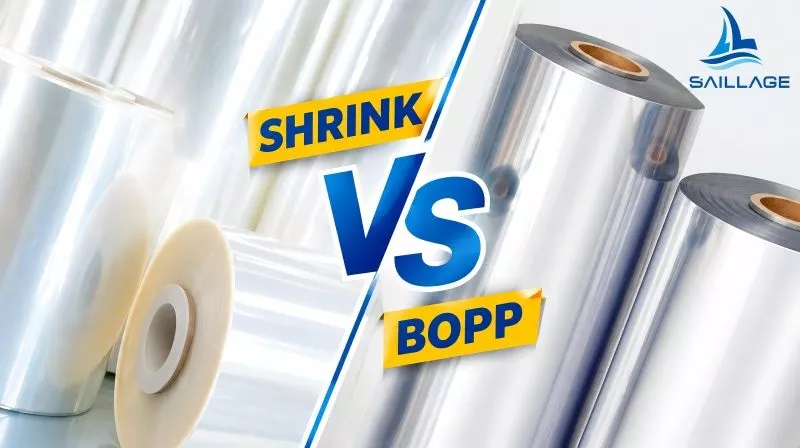
Press Release Sep-28-2026Shrink Film vs BOPP Overwrap | Packaging Film Guide
Compare shrink film, BOPP overwrap and PETG sleeve film for boxes, cosmetics and multipacks by shrink behavior, appearance, sealing and total cost. -
 Blog
Press Release Sep-28-2026
Blog
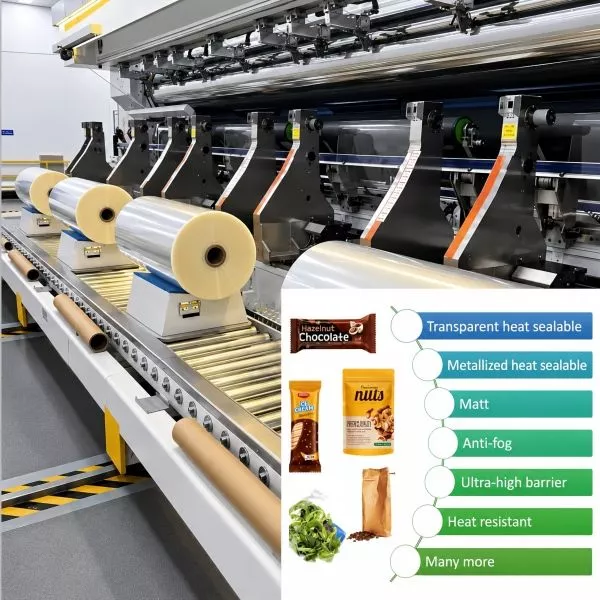
Press Release Sep-28-2026BOPP Film Coatings Explained: Acrylic, PVdC, Heat-Seal and Top-Coated Grades
Compare acrylic, PVdC, heat-seal and top-coated BOPP film grades by printability, barrier performance, sealing behavior and converting requirements. -
 Blog
Press Release Sep-28-2026
Blog
Press Release Sep-28-2026BOPP Label Material vs Vinyl vs Paper: Which Label Facestock Should Your Product Use?
Compare BOPP label material, vinyl, and paper facestocks by moisture resistance, printability, durability, cost, and applications to choose the right label.

contact
Tel: +86 17706217416
Add: Building L2A, No. 520, Lane 1588, Zhuguang Road, Hongqiao World Center, Qingpu District, Shanghai, China
follow us: