
 English EN
 French FR
 German DE
 Portuguese PT
 Spanish ES
 Russian RU
 Japanese JA
 Korean KO
 Arabic AR
 Greek EL
 Turkish TR
 Italian IT
 Polish PL
 Hindi HI
 中国 CN
.webp)
DTF Film Warehouse Storage: A Practical Quality Guide | Saillage
DTF Film Warehouse Storage: A Practical Quality Guide
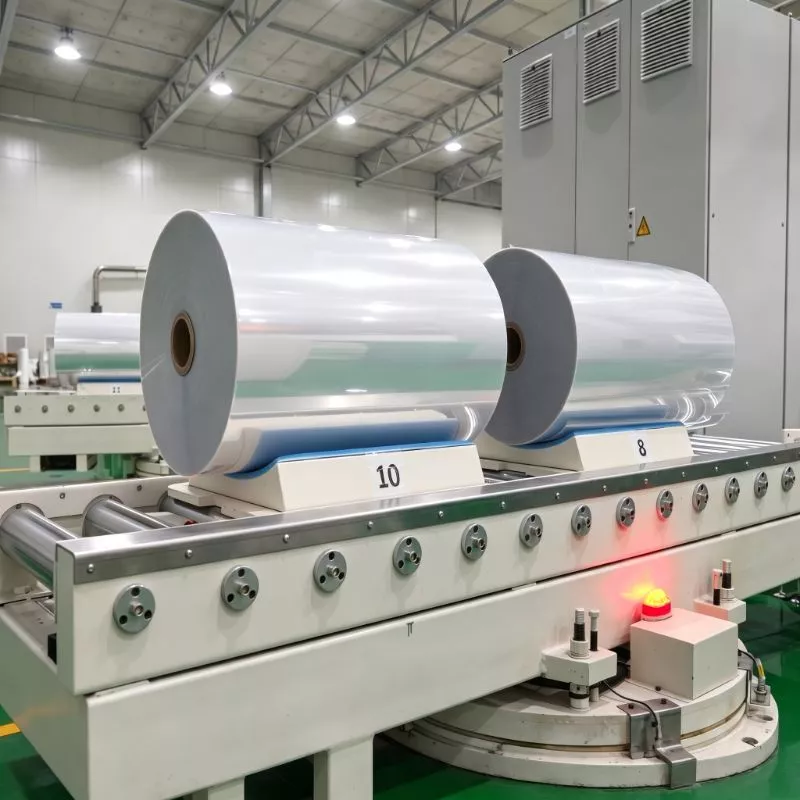
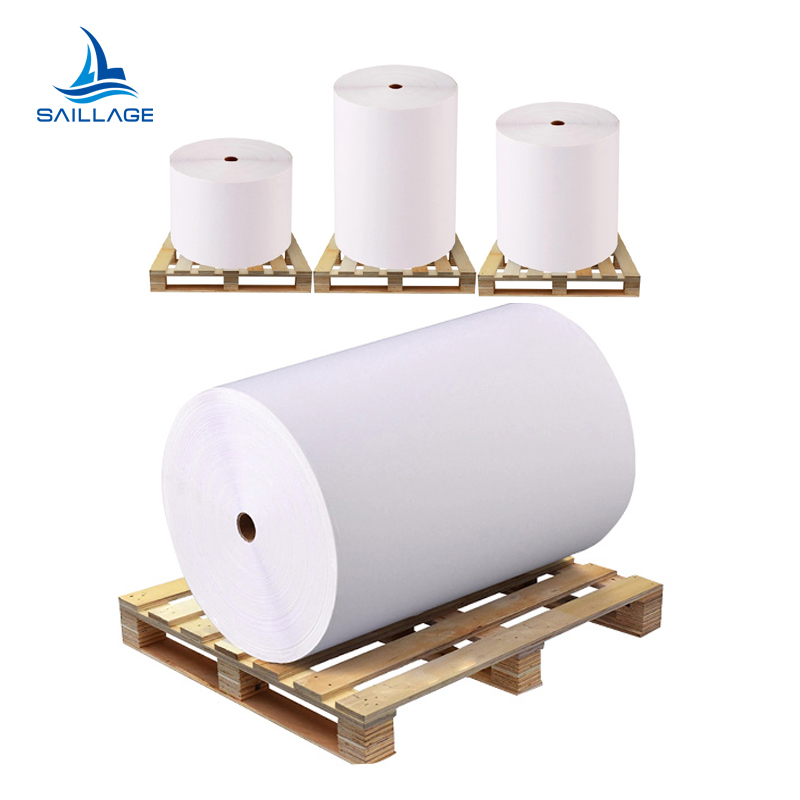
DTF film quality should be protected long before a roll is installed on a printer. For distributors, print shops and textile-transfer manufacturers, warehouse management is an important part of maintaining consistent production. Poor storage practices can expose film to moisture, dust, temperature fluctuations and physical pressure, even when the material originally left the factory in good condition.
DTF film warehouse storage should therefore be treated as part of product quality control rather than a simple inventory task. The way rolls are received, positioned, sealed, labeled and rotated can influence how reliably they perform when opened.
A warehouse does not need complicated equipment to improve film storage. Clear procedures, suitable shelving, intact packaging and disciplined stock rotation can already reduce many avoidable risks.
Quick Answer: How Should a Warehouse Store DTF Film?
Keep DTF film in its original sealed packaging and store it in a clean, dry area away from direct sunlight, water sources and damp walls. In humid warehouses, place rolls on suitable shelves or pallets instead of directly on the floor. Avoid opening packages before production, and organize inventory by receiving date.
Saillage recommends using DTF film within three months of receipt whenever practical. This is a stock-rotation recommendation rather than a universal expiry date. Our updated aluminum laminated packaging has demonstrated an approximately 80% improvement in moisture resistance in internal comparative testing. Packaging protection should still be combined with proper warehouse management.
Key Takeaways
Warehouse storage is part of DTF film quality control.
Keep film sealed until it is required for production.
Elevate rolls above the floor, especially in humid locations.
Use FIFO inventory management and aim for a three-month stock cycle.
Inspect packaging and roll condition when receiving new shipments.
1. Why Warehouse Management Matters for DTF Film
DTF film usually contains a PET base and a functional coating designed to receive printing ink and support powder application and transfer. The coating is a functional surface, not simply a decorative layer.
1.1 The relationship between coating and storage
The coating formulation determines important properties such as ink receptivity, surface uniformity and compatibility with the printing process. These properties need to remain consistent during storage.
Moisture exposure, contamination or physical damage may affect the film's surface condition. Depending on the product construction and exposure conditions, potential consequences include uneven ink behavior, inconsistent powder application or handling difficulties.
A film's ability to absorb printing ink should not be confused with its ability to absorb environmental moisture. These are different material behaviors. A well-designed coating should provide the ink-receptive performance required by the printing process while maintaining suitable stability under the manufacturer's recommended storage conditions.
1.2 Storage problems often begin with small mistakes
Many warehouse problems are caused by routine handling rather than major accidents.
For example:
A roll is placed directly on a damp concrete floor.
Several packages are opened in advance for convenience.
Older inventory is moved behind newly received stock.
Heavy materials are stacked on top of film rolls.
A damaged outer package is returned to storage without inspection.
Each situation creates an avoidable risk. A consistent warehouse procedure helps prevent these problems from becoming production issues.
2. Establishing a Suitable Storage Area
The first step is to designate a suitable storage area for DTF film rather than placing it wherever warehouse space is available.
2.1 Keep rolls away from floors and damp walls
In humid regions, we recommend storing DTF film on shelves or pallets rather than directly on the floor. Concrete surfaces can retain moisture, and the risk may be higher in warehouses with poor ventilation or inadequate waterproofing.
The storage area should also be separated from:
Water pipes and drainage systems.
Exterior walls with visible dampness.
Windows where rainwater may enter.
Areas where condensation frequently occurs.
Chemical materials or substances that may contaminate the packaging.
Elevating film rolls helps reduce direct contact with floor moisture. It does not control the humidity of the entire warehouse, so additional environmental management may be necessary in particularly humid locations.
2.2 Control temperature and humidity where possible
Stable conditions are preferable to repeated temperature and humidity fluctuations. Follow the storage temperature and relative-humidity limits specified by the film supplier. If the supplier has not provided these limits, request them before establishing a long-term warehouse procedure.
For large inventory operations, a simple temperature and humidity monitor can help warehouse teams identify unusual changes. In persistently humid environments, suitable dehumidification and ventilation may also be considered.
Avoid placing film near heating equipment or in direct sunlight. Excessive heat and uneven temperature changes can affect packaging and material handling.
2.3 Protect the film from dust and contamination
Keep the storage area clean and avoid opening film packages unnecessarily. Dust, oil and fingerprints can contaminate exposed film surfaces.
Workers should handle rolls with clean hands or suitable gloves when required by the manufacturer's handling instructions. Packages should be opened only in a clean production area when the material is ready for use.
3. Packaging and Inventory Control
Packaging and inventory management work together. A moisture-resistant package is more effective when it remains intact and is used as intended.
3.1 Keep unused rolls sealed
An unopened package helps limit the film's exposure to surrounding air and contaminants. If a roll is not scheduled for immediate production, keep it in its original packaging.
When a package must be opened:
Confirm that the roll is needed for production.
Inspect the package before opening.
Avoid touching the functional film surface.
Protect any remaining material after partial use.
Reseal the remaining package where the packaging design permits.
Repeatedly opening and leaving packages exposed is particularly undesirable in humid environments.
3.2 Use FIFO inventory management
The first-in, first-out method helps prevent older stock from remaining unused at the back of the warehouse.
A practical inventory record should include:
Product type and specification.
Batch or production number.
Receiving date.
Quantity received.
Package condition.
Planned production or dispatch date.
Saillage recommends aiming to use DTF film within three months of receipt whenever practical. This recommendation helps businesses maintain a manageable stock cycle. It should not be interpreted as a guaranteed shelf life for every film type.
3.3 Compare basic and controlled warehouse practices
| Factor | Basic warehouse practice | Recommended practice |
|---|---|---|
| Floor contact | Rolls may be placed directly on the floor | Use shelves or pallets |
| Package handling | Packages opened for convenience | Open only when needed |
| Inventory rotation | New stock may be used first | Apply FIFO |
| Moisture management | No regular checks | Monitor damp areas and humidity |
| Contamination control | General warehouse storage | Designated clean storage area |
| Quality inspection | Check only when problems occur | Inspect at receiving and before production |
| Inventory waste | Higher risk of forgotten or damaged stock | Better stock visibility and rotation |
The recommended approach does not require a specific storage system for every business. It provides a framework that can be adapted to warehouse size, local climate and order volume.
4. Packaging Improvements for Moisture Protection
Saillage has updated its DTF film packaging by introducing aluminum laminated material. The purpose is to improve the barrier against moisture entering the package during storage and transportation.
In our internal comparative testing, the updated packaging demonstrated an approximately 80% improvement in moisture resistance compared with the previous packaging under the test conditions used.
This result is specific to our internal comparison. It should not be interpreted as an 80% reduction in ambient humidity or as a guarantee of protection against water immersion, damaged packaging or extreme storage conditions.
Some of our DTF coating materials are imported and selected for their ink-receptive properties and moisture-related performance. Material selection, coating characteristics and packaging protection should be considered together. Good ink absorption does not automatically mean that a material will absorb environmental moisture.
For product selection, buyers can review the relevant DTF film product specifications and confirm the recommended storage conditions with the supplier.
.jpg)
5. A Warehouse Inspection Routine
A simple inspection routine helps warehouse teams identify problems before film enters production.
At receiving:
Check whether packages are wet, torn or punctured.
Inspect the roll core and edges for visible damage.
Record the batch number and receiving date.
Photograph damaged packages before moving them into storage.
During storage:
Check for signs of water leakage or condensation.
Keep rolls elevated and packages sealed.
Maintain clear inventory labels.
Avoid placing heavy objects on the rolls.
Before production:
Confirm that the package is intact.
Inspect the exposed film for visible contamination or damage.
Follow the supplier's recommended printing conditions.
If printing results change, examine the film alongside ink, powder, printer and curing settings.
Storage is one part of the overall DTF printing process. It should be considered alongside machine settings and consumable compatibility.
6. Frequently Asked Questions
What are the ideal warehouse conditions for DTF film?
DTF film should be kept in a clean, dry and stable storage area, away from direct sunlight, water sources and damp walls. Follow the manufacturer's specified temperature and humidity limits where available, and keep rolls sealed until use.
Should DTF film be stored vertically or horizontally?
Follow the roll and packaging manufacturer's handling instructions. Whichever orientation is recommended, use suitable racks or supports, prevent rolls from falling or deforming, and avoid placing heavy objects on them.
Why should DTF film be used within three months?
Using film within three months of receipt is a practical stock-management recommendation from Saillage, not a universal expiry date. The actual storage life depends on the coating, packaging, warehouse conditions and supplier guidance.
Can sealed packaging completely prevent DTF film from absorbing moisture?
No packaging should be treated as an absolute guarantee against moisture. Aluminum laminated packaging provides an improved moisture barrier, but storage conditions, package integrity and exposure time still matter.
7. Make Warehouse Storage Part of Your Quality System
A consistent DTF film storage procedure helps distributors and printing businesses protect material quality between delivery and production. Keeping rolls elevated, packages sealed and inventory organized reduces avoidable exposure to moisture, contamination and physical damage.
Saillage combines material selection, packaging improvements and product testing to support DTF film handling throughout the supply chain. If you are purchasing DTF film in bulk, contact our team to discuss product specifications, packaging options and sample evaluation for your warehouse conditions.




News & Events
learn more-
 Blog
Press Release Nov-17-2026
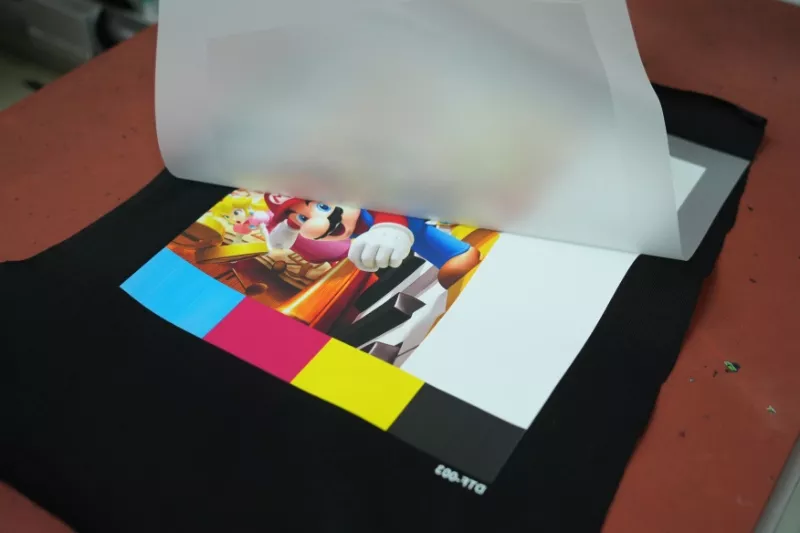
A Guide to DTF Film Peeling: Cold, Hot, Instant and All-Time
Compare Cold, Hot, Instant and All-Time Peel DTF films by release timing, transfer quality, workflow, pressing conditions and production applications. -
 Blog
Press Release Nov-17-2026
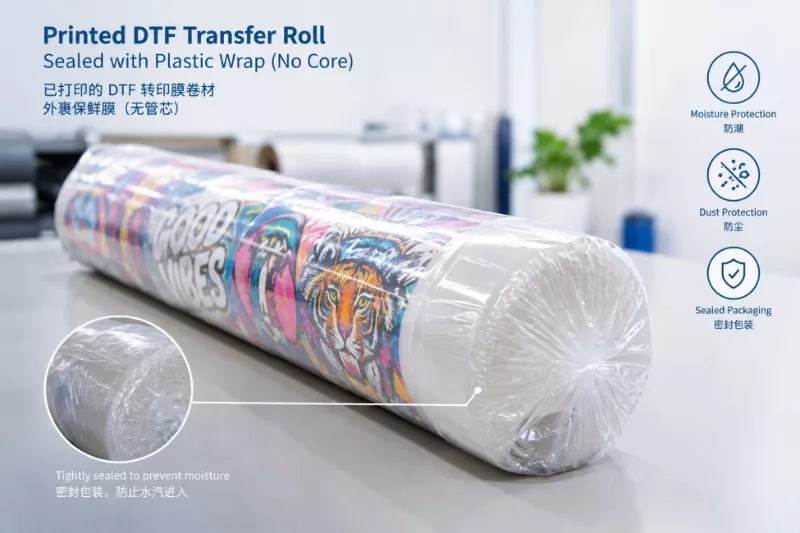
DTF Transfer Problems Before Heat Pressing: How to Check for Oiling, Moisture and Film Defects
Learn how to inspect stored DTF transfers for oiling, moisture, coating damage and other film defects before committing to a full heat-press run. -
 Blog
Press Release Nov-17-2026
How to Improve Scratch Resistance of 3D UV TPU DTF Prints?
Learn how to improve scratch resistance in 3D UV TPU DTF printing by optimizing white ink layers, varnish compatibility, UV curing and durability tests.

contact
Tel: +86 17706217416
Add: Building L2A, No. 520, Lane 1588, Zhuguang Road, Hongqiao World Center, Qingpu District, Shanghai, China
follow us: