
 English EN
 French FR
 German DE
 Portuguese PT
 Spanish ES
 Russian RU
 Japanese JA
 Korean KO
 Arabic AR
 Greek EL
 Turkish TR
 Italian IT
 Polish PL
 Hindi HI
 中国 CN
.webp)
How to Improve Scratch Resistance of 3D UV TPU DTF Prints?
Introduction
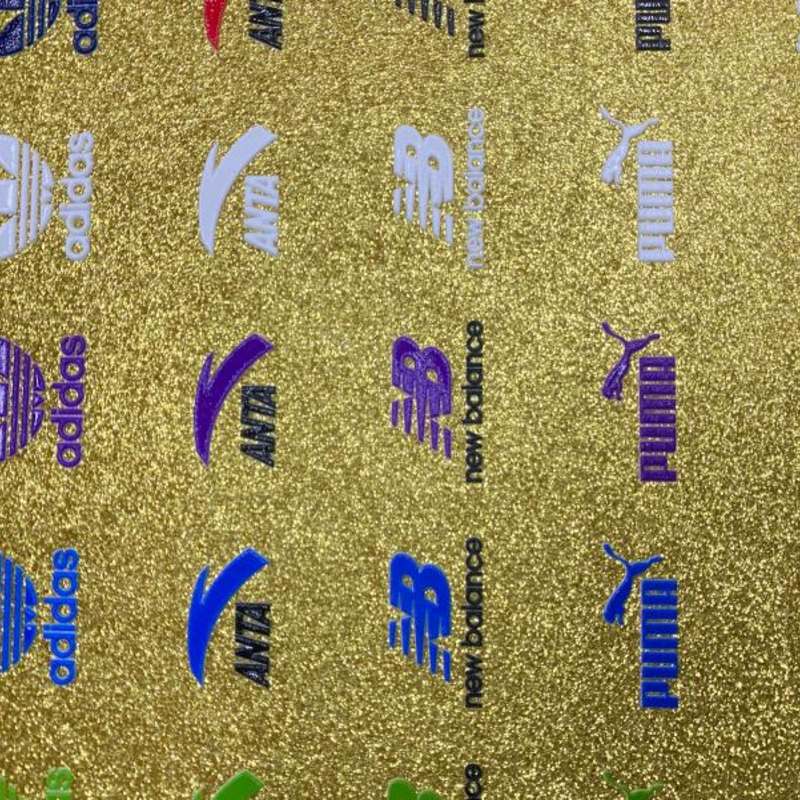
3D UV TPU DTF printing is becoming increasingly popular for producing raised logos, decorative graphics, garment labels, and personalized designs. Its combination of flexible TPU material, UV printing technology, and dimensional effects creates attractive results for apparel and branding applications.
However, achieving a visually impressive print is only part of the process. Scratch resistance is another important factor, especially when the finished design is frequently handled, pressed, stretched, or exposed to friction.
Some printers notice that designs printed with flexible UV ink can be scratched more easily than expected. This does not necessarily mean the TPU film is defective. Ink formulation, white ink layers, varnish application, curing conditions, and material compatibility can all influence the final performance.
In this article, we explore practical ways to improve scratch resistance while maintaining the flexibility and 3D appearance of TPU prints.
1. Why Can UV TPU Prints Be Easily Scratched?
Scratch resistance depends on the complete printing system rather than the TPU film alone.
Several factors may contribute to poor surface durability:
Flexible ink formulation: Flexible UV inks are designed to bend and move with flexible substrates. Their mechanical properties may differ from those of harder UV ink systems.
Insufficient curing: Inadequate UV exposure may leave the ink insufficiently cured, affecting surface performance and adhesion.
Weak interlayer adhesion: Poor bonding between color ink, white ink, and varnish can cause layers to separate.
Incompatible materials: The ink, TPU coating, and varnish may not be designed to work together.
Incorrect printing parameters: Ink volume, layer sequence, and curing settings can influence the finished result.
It is therefore important to evaluate the entire ink-and-film combination instead of changing only one printing parameter.
2. How White Ink Layers Influence the 3D Effect
White ink plays an important role in building the thickness of a 3D UV TPU design.
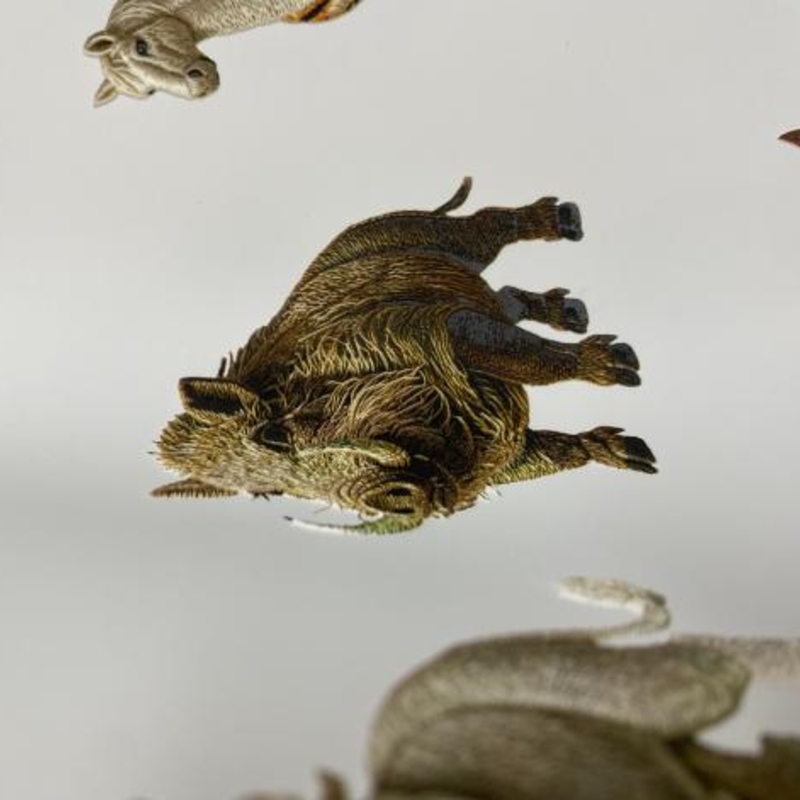
Unlike ordinary flat printing, 3D TPU printing often uses multiple white ink layers to create a raised structure beneath the color and protective layers.
A higher white ink volume can help create:
A more noticeable raised appearance
Greater visual depth
A fuller and more substantial design
Better separation between the printed graphic and the background
In our process observations, applying five layers of 100% white ink followed by varnish can produce a more substantial 3D effect. Under suitable ink and curing conditions, this structure may also improve the resistance of the finished surface to light fingernail scratching.
However, five layers should not be treated as a universal formula. Too much ink can affect flexibility, curing, production speed, and interlayer bonding. The ideal number of layers should be determined through testing on the actual printer and TPU material.
3. Does Varnish Help Protect TPU Prints?
Varnish is an important part of many 3D UV TPU printing systems.
It can provide a finishing layer that changes the surface appearance and may improve resistance to everyday handling and light abrasion.
Depending on the varnish formulation and printing conditions, it may offer:
A smoother or more refined surface
Additional surface protection
Improved visual depth
Glossy or other decorative finishing effects
Nevertheless, varnish does not automatically guarantee scratch resistance. Its compatibility with the ink underneath, coating thickness, UV curing, and adhesion between layers all matter.
For better results, test the varnish together with the selected flexible ink and TPU film rather than evaluating it separately.
4. The Importance of UV Curing
UV curing is essential for the performance of a printed TPU design.
If the ink is not properly cured, the surface may remain vulnerable to scratching, smearing, or poor adhesion. On the other hand, changing curing conditions without testing may affect the flexibility or appearance of the finished design.
During production, pay attention to:
UV lamp output and condition
Printing speed
Ink volume and layer thickness
Curing conditions between printing layers
Final curing after varnish application
A consistent curing process helps reduce variation between batches. Always follow the ink manufacturer's recommendations and verify the result with practical tests.
5. A Practical Process for Improving Print Durability
If your current TPU prints show insufficient scratch resistance, consider reviewing the following steps.
Step 1: Check film and ink compatibility
Confirm that the flexible UV ink is suitable for the selected TPU film and its surface coating.
Step 2: Review the white ink structure
Test different white ink layer counts. Compare the raised appearance, flexibility, and adhesion rather than focusing only on thickness.
Step 3: Optimize varnish application
Check whether the varnish is compatible with the ink system and whether its application is consistent.
Step 4: Verify UV curing
Make sure the ink and varnish receive appropriate UV exposure according to the supplier's technical guidance.
Step 5: Conduct practical tests
Evaluate fingernail scratching, rubbing, bending, stretching, and adhesion. If the product is intended for garments, also test it after heat transfer and under the expected washing conditions.
Step 6: Record the best settings
Keep a record of the film type, ink brand, layer sequence, curing settings, and test results. This makes repeat production more consistent.
6. Choosing TPU Film for Different Printing Requirements
The right TPU film should match the printer, ink system, design, and final application.
For example, a design that requires a soft hand feel may need a different ink and layer structure from a thick decorative logo that prioritizes a strong raised appearance.
Saillage offers 3D UV TPU DTF film options in different thicknesses and finishes. The White 3D UV TPU DTF Film is designed for use with compatible flexible UV ink and varnish systems.
Product details: https://www.saillagedtf.com/white-3d-uv-tpu-dtf-film/
Before mass production, we recommend testing the film with your own printer, ink, and finishing process.
7. Frequently Asked Questions
Why does my flexible UV ink print scratch easily on TPU?
Flexible UV ink is designed to maintain flexibility, but scratch resistance also depends on ink formulation, curing, surface adhesion, and the complete layer structure.
Can adding more white ink improve scratch resistance?
Additional white ink can build a thicker 3D structure. In some tested processes, this may contribute to better surface performance when combined with suitable varnish and curing. However, more layers do not always mean better durability.
Does varnish prevent all scratches?
No. Varnish may improve surface protection, but it cannot eliminate all scratches. Its effectiveness depends on compatibility, coating thickness, curing, and actual usage conditions.
Is flexible UV ink better than hard UV ink for TPU?
Flexible UV ink is generally more suitable for applications that require the printed design to move with the TPU material. Hard UV ink may be more prone to cracking when the finished structure is stretched or bent.
What tests should be performed before mass production?
At minimum, evaluate scratch resistance, adhesion, bending, stretching, and the performance of the finished transfer under its intended application conditions.
Conclusion
Improving scratch resistance in 3D UV TPU DTF printing requires a balanced approach. White ink layers help build the dimensional structure, varnish can provide an additional finishing layer, and proper UV curing supports the performance of the complete print.
There is no single setting that works for every printer and ink system. The best results come from testing compatible materials, adjusting the layer structure, and evaluating the finished transfer under real application conditions.
Looking for TPU film for your 3D UV printing projects? Contact Saillage to discuss your printer, ink system, thickness requirements, and sample testing options.




News & Events
learn more-
 Blog
Press Release Nov-09-2026
A Guide to DTF Film Peeling: Cold, Hot, Instant and All-Time
Compare Cold, Hot, Instant and All-Time Peel DTF films by release timing, transfer quality, workflow, pressing conditions and production applications. -
 Blog
Press Release Nov-09-2026
DTF Transfer Film Wholesale Guide | 9 Specs to Compare
Compare nine essential DTF transfer film specifications, including PET thickness, coating uniformity, peel performance, heat resistance, storage stability, and supplier quality control. -
 Blog
Press Release Nov-09-2026
Bubble-Free UV DTF Stickers on Curved Products | Guide
Learn how to apply UV DTF stickers to tumblers, bottles and curved products without bubbles, weak adhesion or lifted edges using proper preparation and pressure control.

contact
Tel: +86 17706217416
Add: Building L2A, No. 520, Lane 1588, Zhuguang Road, Hongqiao World Center, Qingpu District, Shanghai, China
follow us: