
 English EN
 French FR
 German DE
 Portuguese PT
 Spanish ES
 Russian RU
 Japanese JA
 Korean KO
 Arabic AR
 Greek EL
 Turkish TR
 Italian IT
 Polish PL
 Hindi HI
 中国 CN
中国 CN
.webp)
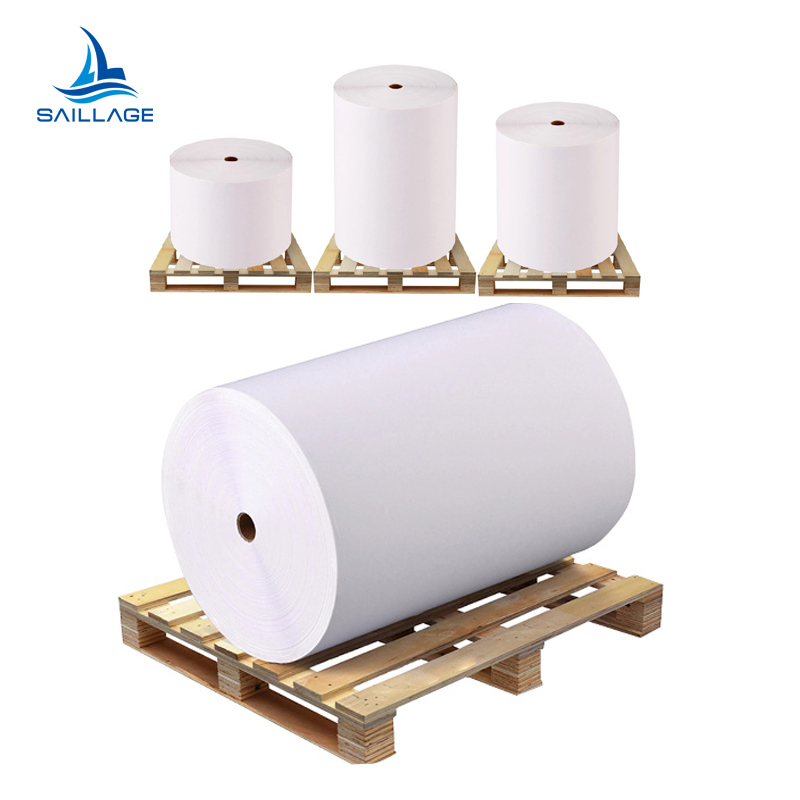
DTF Heat Transfer Film: Sheet (A3/A4) or Roll (30cm/60cm) — Which Format Fits Your Printing Volume?
Choose A3 or A4 DTF film sheets if you print small batches, change designs frequently, or run a desktop DTF printer. Choose 30 cm or 60 cm DTF film rolls if you have daily production orders, run an industrial printer with a roll feeder, and want the lowest cost per transfer. The practical crossover point for most shops is somewhere around 30 to 50 prints per week.
In DTF printing (direct-to-film), the format of your heat transfer film is not just a packaging preference. It affects production efficiency, material cost per transfer, printing speed, and even how much film you waste on failed jobs. SAILLAGE supplies both formats — A3/A4 DTF film sheets and 30 cm/60 cm DTF film rolls — because a startup custom apparel store and a garment factory need genuinely different things. This guide explains the difference, when each format wins, and how to calculate the crossover point for your own business.
Key Takeaways
Sheets win on flexibility: no roll holder needed, easy storage, minimal waste on short runs and sampling.
Rolls win on unit economics: continuous feeding, less downtime, and a meaningfully lower cost per square meter at volume.
Your printer decides first: roll film requires a feed system, and roll width must match the printer — 30 cm for A3-class machines, 60 cm for wide-format.
Film quality matters more than format: coating quality determines ink absorption, powder adhesion, release behavior, and wash durability regardless of whether it arrives as a sheet or a roll.
DTF Film Sheets vs Rolls: Quick Comparison
| Factor | A3 / A4 Sheets | 30 cm / 60 cm Rolls |
|---|---|---|
| Best for | Small batches, sampling, frequent design changes | Daily production, wholesale, industrial output |
| Printer requirement | Desktop and sheet-fed DTF printers | Built-in or aftermarket roll feed system |
| Cost per transfer | Higher per square meter | Lower — better material and packaging economics |
| Waste on short runs | Low — one sheet per job | Higher if the roll is not ganged efficiently |
| Throughput | Limited by manual sheet loading | High — continuous unattended printing |
| Large designs | Limited to sheet size | 60 cm handles back prints and oversized logos |
| Storage and handling | Flat packs, easy to store and keep clean | Needs space, roll handling, and resealing |
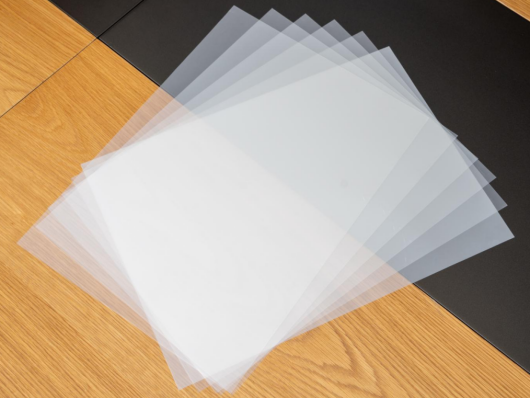
DTF Film Sheets (A3 / A4): Flexible Solution for Small and Medium Production
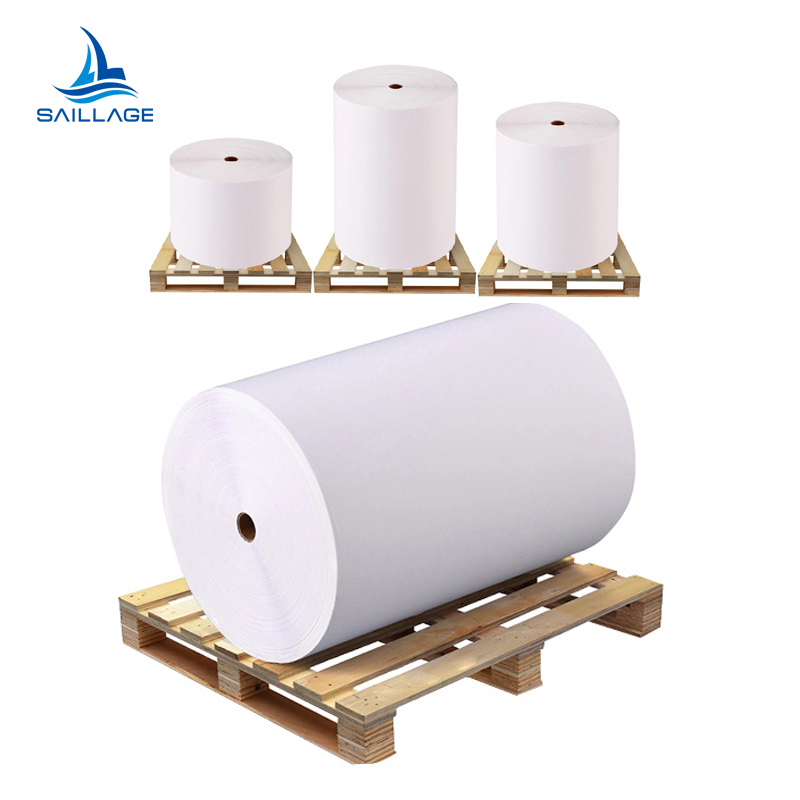
A3 (297 × 420 mm) and A4 DTF transfer film sheets are widely used by small businesses, designers, start-up print shops, and anyone who values flexibility over throughput. Compared with roll film, sheet film requires less setup and is simpler in daily operation.
Advantages of A3/A4 DTF film sheets
Easy operation: load the sheet into the printer and print. No cutting, measuring, or rewinding.
Ideal for sampling: perfect for testing new designs, color performance, printing parameters, and transfer results before committing to mass production.
Compatible with desktop printers: works with most small-format DTF printing systems, making sheets the natural entry point for beginners and small studios.
Less waste on small orders: a failed print costs you one sheet, not a length of roll.
Simple storage: flat packs stack easily and stay protected from dust and handling damage.
Premium DTF film sheets deliver a smooth coating surface, high ink absorption, strong white ink performance, sharp image detail, vivid colors, and reliable powder adhesion — the same coating quality you expect from roll film.
Typical applications
Custom T-shirts, hoodies and jackets, bags and accessories, pet clothing, personalized gifts, and small brand merchandise. Sheets suit new DTF printing businesses, online custom apparel stores, designers and sample makers, and small batch production.
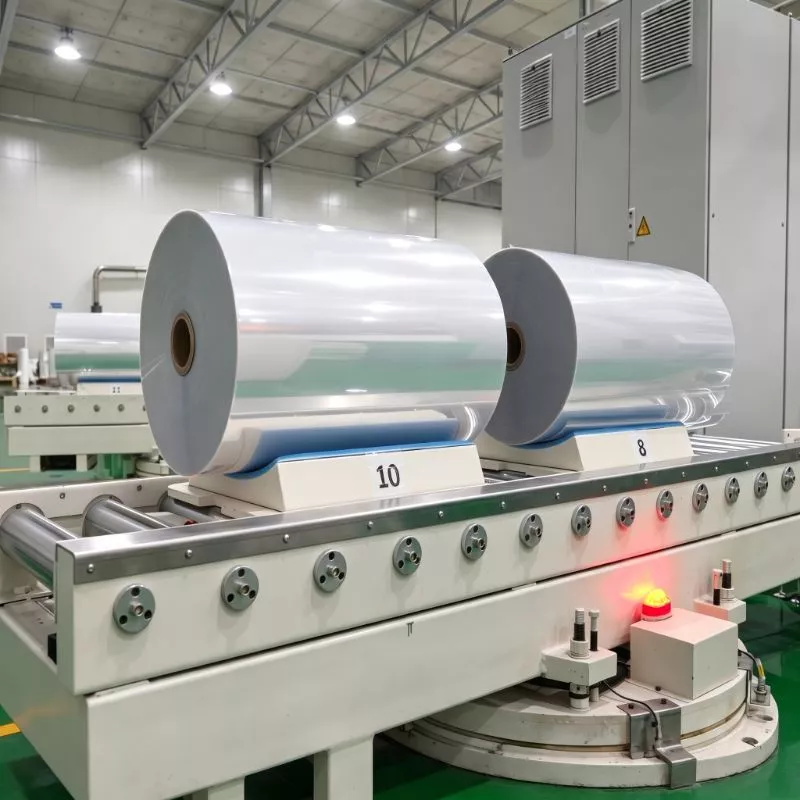
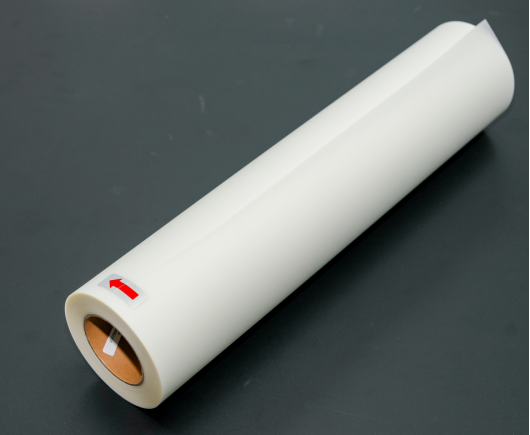
DTF Film Rolls (30 cm / 60 cm): Professional Solution for High-Volume Production
For professional print shops, garment factories, and printing service providers, roll film is the standard choice because it delivers higher productivity and better cost efficiency. Continuous feeding lets the printer run long jobs with minimal operator intervention and minimal downtime between prints.
Advantages of 30 cm / 60 cm DTF film rolls
Higher printing efficiency: continuous printing suits large order quantities and keeps the production process stable whether you are producing hundreds or thousands of garments.
Lower cost per transfer: roll film generally provides better material utilization and lower packaging and handling costs than individual sheets, which compounds quickly at volume.
Suitable for large designs: 60 cm rolls handle large back prints, oversized logos, multi-design gang layouts, and industrial garment production that simply will not fit on an A3 sheet.
Efficient ganging: laying out multiple designs across the web width is where roll film converts its price advantage into real savings.
Stable transfer performance: quality roll film uses advanced coating technology for uniform ink absorption, good powder melting, smooth release, high transfer rate, strong adhesion after pressing, and reliable wash durability.
How Should You Choose Between Sheets and Rolls?
Work through these four questions in order:
Can your printer feed roll film? If it has no built-in or aftermarket roll holder, sheets are your only practical option until you upgrade. Check the maximum roll width your machine accepts before ordering.
What is your weekly print volume? Below roughly 30 transfers per week, sheets are usually more practical. Above 30 to 50 per week, roll film starts to save real money.
How large are your designs? If you regularly print full back designs or oversized logos, a 60 cm roll is the only format that fits them without splitting the artwork.
How often do designs change? High-mix, low-volume work with constant design changes favors sheets, because you never carry unused width across a job.
Choose A3/A4 DTF film sheets if you
Produce small quantities or one-off custom items
Need frequent design changes
Make samples before bulk production
Operate a small or desktop DTF printer
Focus on personalized customization
Choose 30 cm/60 cm DTF film rolls if you
Have daily production orders
Need faster, uninterrupted printing
Supply wholesale garment customers
Operate an industrial DTF printer with roll feed
Want the lowest achievable production cost per transfer
Many growing businesses run both: rolls for repeat bulk orders, sheets for sampling and rush one-offs. That combination usually beats forcing every job through a single format.
Format Is Only Half the Decision: Film Quality Determines Your Results
Whichever format you choose, the coating on the film is what actually decides your print results. A high-quality DTF heat transfer film delivers better ink release, more accurate color reproduction, smooth powder application, cleaner peeling, stronger fabric adhesion, and longer wash durability. Batch-to-batch coating consistency matters just as much as the specification on paper — a film that behaves differently from one order to the next will cost you more in rework than any format decision saves.
Peel types available in both formats
Hot peel DTF film: peel immediately after pressing, which shortens cycle time and improves throughput.
Cold peel DTF film: peel after the transfer cools, giving excellent stability and strong, consistent transfer quality.
Instant peel DTF film: remove the film within seconds of pressing — the fastest option for high-speed production lines.
Applications of SAILLAGE DTF Heat Transfer Film
Our DTF transfer film solutions are used for T-shirt printing, fashion apparel, cap printing, bag printing, garment factory production, custom clothing businesses, and the global textile printing industry — in both sheet and roll format.
Frequently Asked Questions
Is DTF film cheaper in rolls or sheets?
Roll film is meaningfully cheaper per square meter than pre-cut sheets, because it avoids cutting and individual packaging costs. However, that advantage only materializes if you use the full web width efficiently — a shop that prints one small design at a time on a 60 cm roll may waste more film than it saves.
At what production volume should I switch from sheets to rolls?
For most shops, the crossover is around 30 to 50 transfers per week. Below that, the convenience and low waste of sheets usually outweigh the unit price difference. Above it, the material savings and reduced handling time of rolls compound quickly.
Can I use roll DTF film in a sheet-fed printer?
Not directly. Roll film needs a feed system — either built into the printer or added as an aftermarket roll holder — plus a take-up or cutting arrangement. Cutting roll film down to sheets by hand is possible but usually introduces edge dust and dimensional inconsistency that hurt print quality.
What roll width should I choose, 30 cm or 60 cm?
Match the roll to your printer's maximum media width first. A 30 cm roll suits A3-class DTF printers and everyday chest prints; a 60 cm roll suits wide-format industrial printers, full back designs, and multi-design gang layouts.
Do sheets and rolls have the same print quality?
They do when both are made from the same coated film. Print quality is a function of the coating — ink absorption, powder adhesion, release behavior — not of whether the film was cut into sheets or wound onto a core. Ask your supplier whether both formats come from the same coated base.
How should DTF film be stored to protect print quality?
Keep film sealed in its original packaging, in a cool, dry room away from direct sunlight, and reseal partially used rolls or opened sheet packs. The functional coating is moisture-sensitive, and film that has absorbed humidity can change its ink absorption and release behavior.
Conclusion: The Right Film for Every Printing Volume
There is no universally better format — only the format that matches your printer, your volume, and your design mix. A3/A4 DTF film sheets give small and growing businesses flexibility and low waste; 30 cm and 60 cm DTF film rolls give production shops speed and the lowest cost per transfer. SAILLAGE supplies both from the same coated base film, with hot peel, cold peel, and instant peel options, so you can change format as your business scales without changing how your prints behave. Contact us for samples and pricing on the format that fits your workflow.




News & Events
learn more-
 Blog
Press Release Jul-31-2026
Blog
Press Release Jul-31-2026Why Do DTF Prints Crack or Peel After Washing? — The Complete Care Guide You Should Give Your Customers
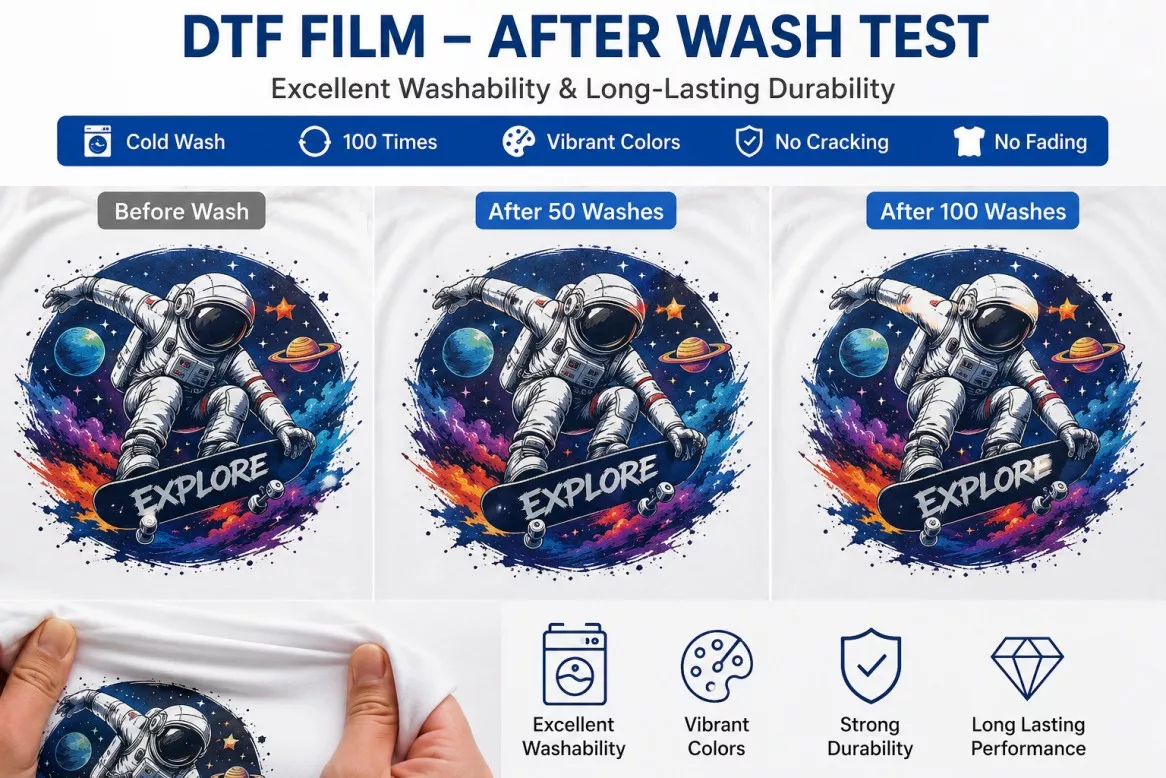
DTF cracking or peeling after washing is usually caused by improper heat pressing, low-quality materials, or wrong care — not defective film. See the top 10 causes, prevention tips, and full DTF washing & care instructions. -
 Blog
Press Release Jul-31-2026
Blog
Press Release Jul-31-2026Why Is My DTF Transfer Not Sticking? 7 Causes and Fixes
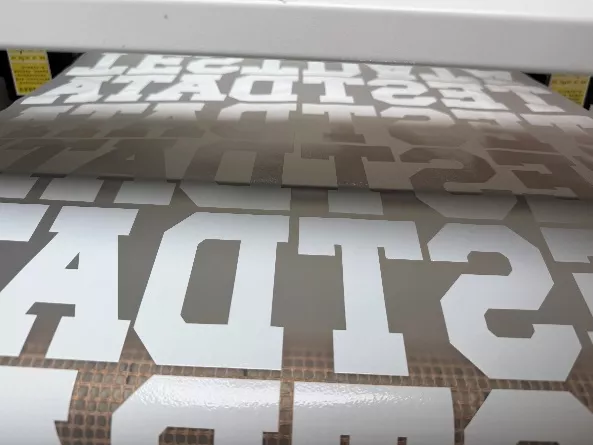
DTF transfer lifting or peeling after washes? See the 7 causes of adhesion failure, from under-cured powder to missing second press, and how to fix each one. -
 Blog
Press Release Jul-31-2026
Blog
Press Release Jul-31-2026DTF Film Anti-Static Treatment: Why It Matters for Roll-to-Roll Production
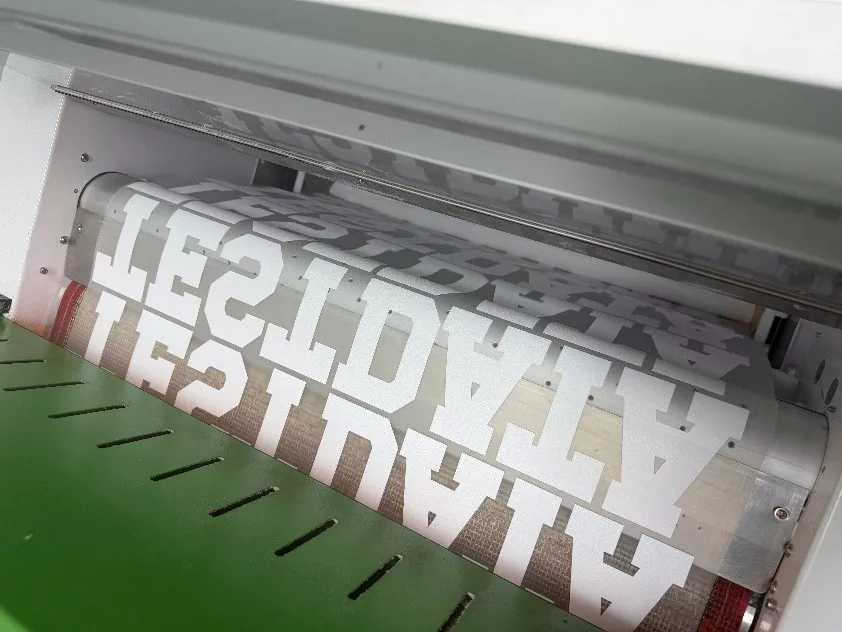
Untreated PET film builds static charge during roll-to-roll production, particularly under variable humidity conditions. The consequences are not merely cosmetic — powder sticking, airborne dust attraction, printhead nozzle contamination, and ultimately permanent printhead damage form a predictable failure chain that anti-static treatment is specifically engineered to interrupt. Our DTF film undergoes a full anti-static surface treatment that delivers zero powder adhesion under all production conditions.

contact
Tel: +86 17706217416
Add: Building L2A, No. 520, Lane 1588, Zhuguang Road, Hongqiao World Center, Qingpu District, Shanghai, China
follow us: