
 English EN
 French FR
 German DE
 Portuguese PT
 Spanish ES
 Russian RU
 Japanese JA
 Korean KO
 Arabic AR
 Greek EL
 Turkish TR
 Italian IT
 Polish PL
 Hindi HI
 中国 CN
中国 CN
.webp)
DTF Film Anti-Static Treatment: Why It Matters for Roll-to-Roll Production
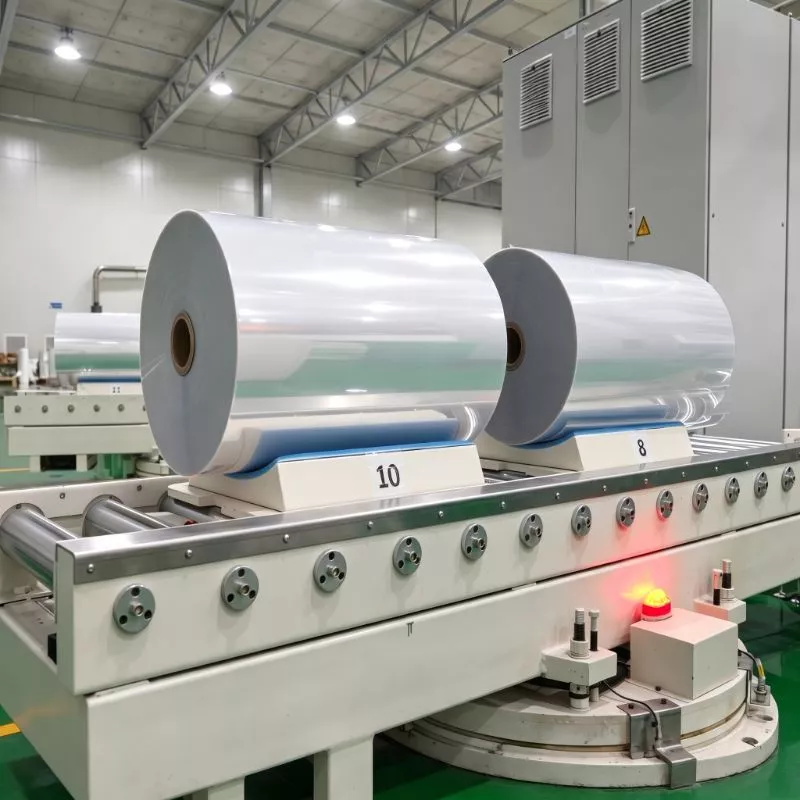
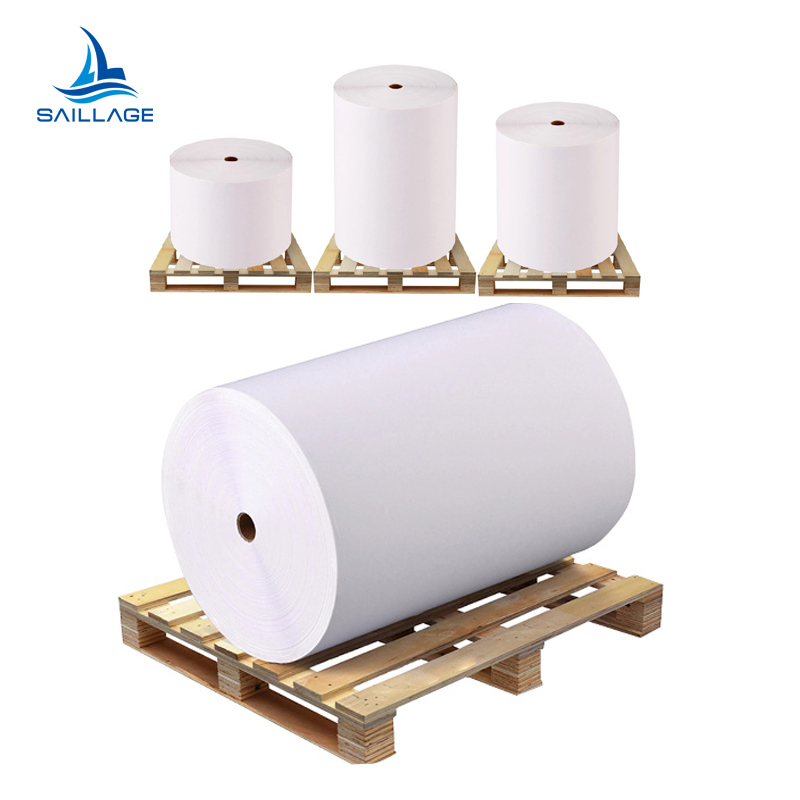
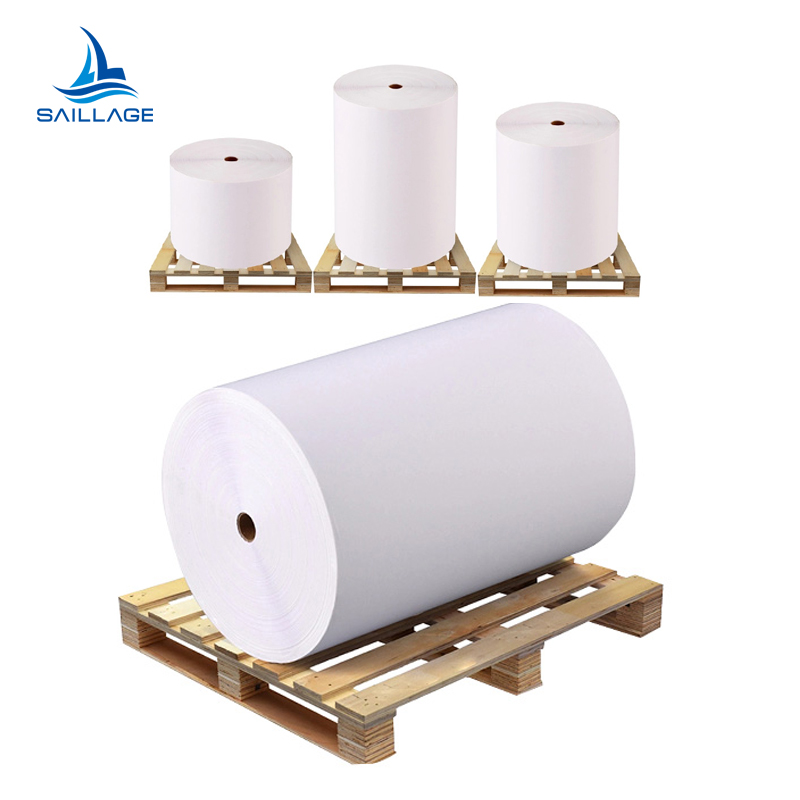
Untreated PET film builds static charge during roll-to-roll production, particularly under variable humidity conditions. The consequences are not merely cosmetic — powder sticking, airborne dust attraction, printhead nozzle contamination, and ultimately permanent printhead damage form a predictable failure chain that anti-static treatment is specifically engineered to interrupt. Our DTF film undergoes a full anti-static surface treatment that delivers zero powder adhesion under all production conditions.
The Specification That Doesn't Appear on Most Film Data Sheets
When DTF film manufacturers publish technical data sheets, the specifications that appear — base film thickness, peel type, coating weight, compatible ink types — describe what the film is made of and how it is structured. Anti-static treatment is a surface property that determines h
ow the film behaves in a production environment, and it is almost universally absent from published specifications, even though its presence or absence has direct, measurable consequences on print quality, consumable waste, and equipment longevity.
This article explains the physics of static charge buildup in PET film, how variable humidity conditions accelerate or modify this behavior, the specific failure modes it causes in DTF roll-to-roll production, and how anti-static surface treatment interrupts this failure chain at the source rather than managing its symptoms.
Why PET Film Builds Static Charge During Roll-to-Roll Production
Polyethylene terephthalate (PET) is by nature a very high electrical resistivity material — it does not conduct electricity, which means charges that accumulate on its surface have no path to dissipate and remain in place indefinitely. In roll-to-roll film production, several mechanical processes generate static charge continuously and cumulatively.
The triboelectric effect — charge generation through contact and separation — is particularly active when PET film moves across guide rollers, through tension bars, and especially during the high-speed unwinding phase at the beginning of each roll. The charge generated is not distributed evenly: it concentrates at edges, at points of high-speed separation, and at any surface irregularity where the charge density is highest.
How Humidity Conditions Amplify or Modify Static Behavior
Humidity is the most significant environmental variable affecting static charge behavior on untreated PET film. Water molecules in humid air provide a partial surface conductivity path that allows some charge dissipation — which is why static problems are most severe in dry conditions and appear to reduce when humidity rises. However, this relationship is more complex and more problematic than it appears.
In dry conditions (below 35% relative humidity), charge dissipation via surface moisture is minimal, and charge accumulates rapidly to high levels. This is the scenario most commonly associated with static-related production problems — powder sticking, dust attraction, and print defects from debris in the print zone.
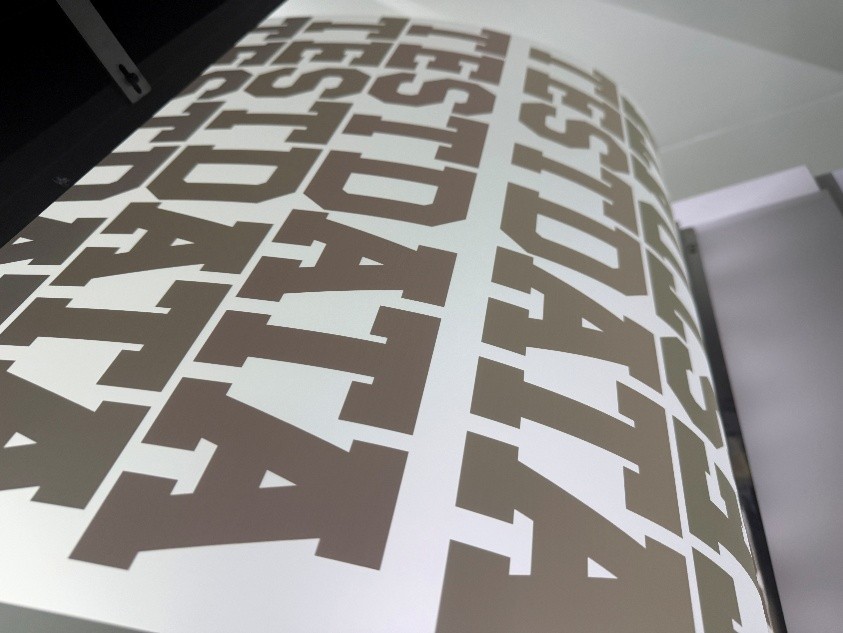
However, the apparent improvement at higher humidity conceals a different but equally serious problem: hot melt powder — the adhesive that bonds the transfer to the fabric — is hygroscopic. At elevated humidity (above 65% relative humidity), it absorbs moisture from the air, causing the powder particles to swell and partially fuse together before the curing tunnel. The result is uneven powder application, inconsistent adhesion after heat pressing, and reduced wash durability — problems that look different from static-related defects but originate from the same root cause: choosing untreated film that required high humidity to manage static charge.
From Static Charge to Printhead Damage: The Complete Failure Sequence
Static-related failure in DTF production follows a predictable four-stage sequence. Each stage compounds the next, and the final stage — printhead damage — is irreversible and expensive. Understanding the complete sequence explains why anti-static treatment is not a minor quality refinement but a fundamental protection measure for the most expensive consumable in the system.
Stage 1: Powder Sticking to Non-Ink Areas
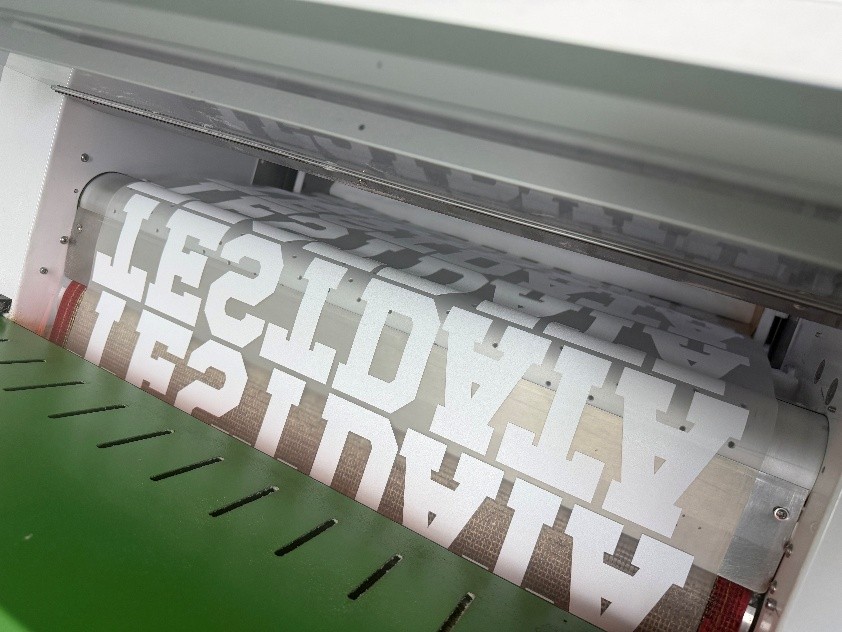
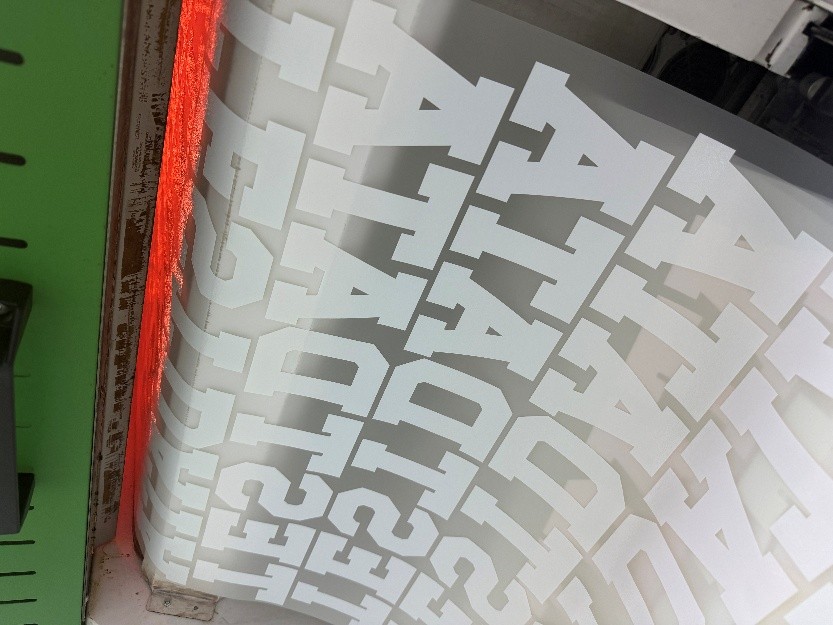
Hot melt powder is applied to the film surface after printing while the ink is still wet. Under normal conditions, the powder adheres only to the ink-wet areas through the natural affinity between wet ink and dry powder. On a statically charged film surface, the electric field attracts powder particles to all charged areas of the film — including areas where no ink was deposited. This produces visible powder contamination in the non-printed zones of the film, which then requires additional cleaning steps and wastes powder.
Stage 2: Airborne Dust and Debris Attraction
A charged film surface does not only attract powder — it attracts any electrically neutral particle in its vicinity through electrostatic induction. In a production environment, this includes airborne dust, fiber fragments from fabric handling, paper dust from adjacent processes, and microscopic particles shed by the machine itself. These particles are attracted to the film surface and become embedded in or on the ink layer, creating contamination that is then carried directly into the printhead zone on subsequent passes.
Stage 3: Printhead Nozzle Contamination
As the contaminated film passes under the printhead, the particles attracted to its surface come into close proximity with the nozzle plate — the precision-machined face of the printhead that contains the ink ejection nozzles. Nozzle plates typically operate within 0.5–2mm of the film surface. Particles embedded in the film surface or protruding from it can make contact with the nozzle plate, physically abradinge the precision surface features around nozzle openings. Even particles that do not make contact can be displaced into the air gap by the electrostatic field and deposit on the nozzle plate surface.
Stage 4: Permanent Printhead Damage
Printhead nozzles are precision components with orifice diameters typically in the range of 20–40 microns. Abrasion from particles even half this size can deform the nozzle geometry, altering the ink droplet ejection angle and volume in ways that produce visible print defects: missing dots, misaligned drop placement, and satellite droplets. Once nozzle geometry is mechanically deformed, no cleaning procedure can restore it. The printhead must be replaced — at a cost representing 15–30% of the original printer purchase price, and with production downtime that cannot be recovered.
How Anti-Static Surface Treatment Works — and What "Permanent" Means
Anti-static surface treatment introduces a conductive or hygroscopic layer onto the film surface that provides a continuous discharge path for accumulated charge. Unlike temporary anti-static sprays or surface treatments that wash off or degrade, a properly engineered permanent anti-static coating is bonded to the film surface at the molecular level and maintains its charge-dissipation function through the full service life of the film roll, regardless of humidity conditions.
Our Standard
Anti-Static Treatment as a Production Baseline, Not an Optional Upgrade
Our DTF film incorporates permanent anti-static surface treatment as a standard specification across our full product range — not as a premium tier or add-on option. The result is zero powder adhesion to non-ink-area film surfaces under all production conditions, and a printhead zone that receives clean film regardless of seasonal humidity variation or factory environmental control levels.




News & Events
learn more-
 Blog
Press Release Jul-03-2026
Blog
Press Release Jul-03-2026DTF Film Anti-Static Treatment: Why It Matters for Roll-to-Roll Production
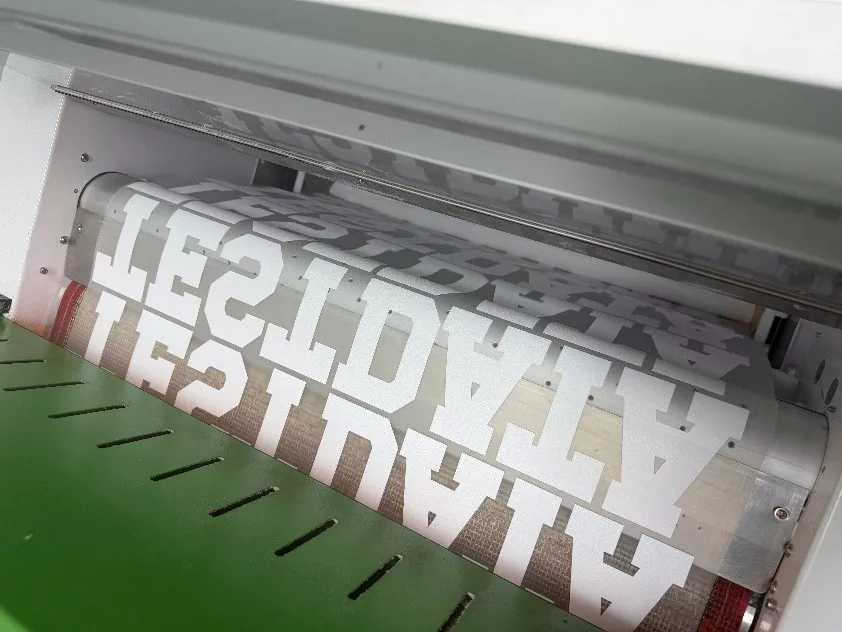
Untreated PET film builds static charge during roll-to-roll production, particularly under variable humidity conditions. The consequences are not merely cosmetic — powder sticking, airborne dust attraction, printhead nozzle contamination, and ultimately permanent printhead damage form a predictable failure chain that anti-static treatment is specifically engineered to interrupt. Our DTF film undergoes a full anti-static surface treatment that delivers zero powder adhesion under all production conditions. -
 Blog
Press Release Jul-03-2026
Blog
Press Release Jul-03-2026DTF Film Wash Durability Test: How Many Washes Can a Transfer Survive?
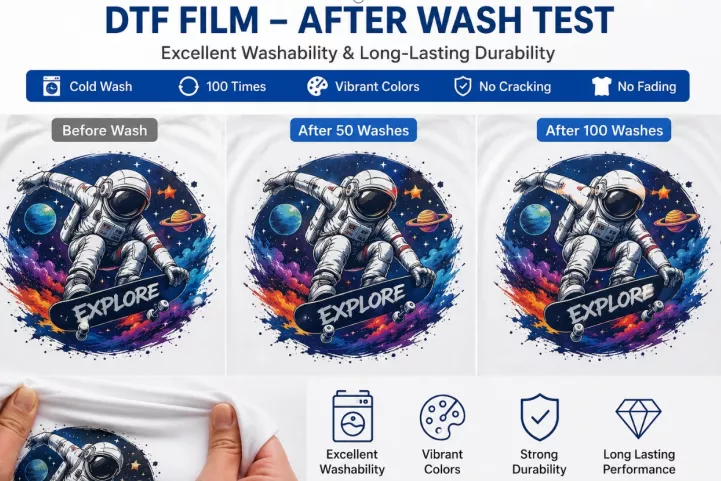
Industry-standard DTF transfers are typically rated for around 30 wash cycles before noticeable cracking, fading, or edge lifting occurs. Our water-based, eco-friendly DTF film extends that figure to 50+ washes under the same rigorous test protocol — without compromising on environmental safety. This article explains exactly how that number is measured, what causes a transfer to fail, and how our formulation closes the gap between durability and sustainability. -
 Blog
Press Release Jul-03-2026
Blog
Press Release Jul-03-2026Can I use black DTF powder on different types of fabrics?
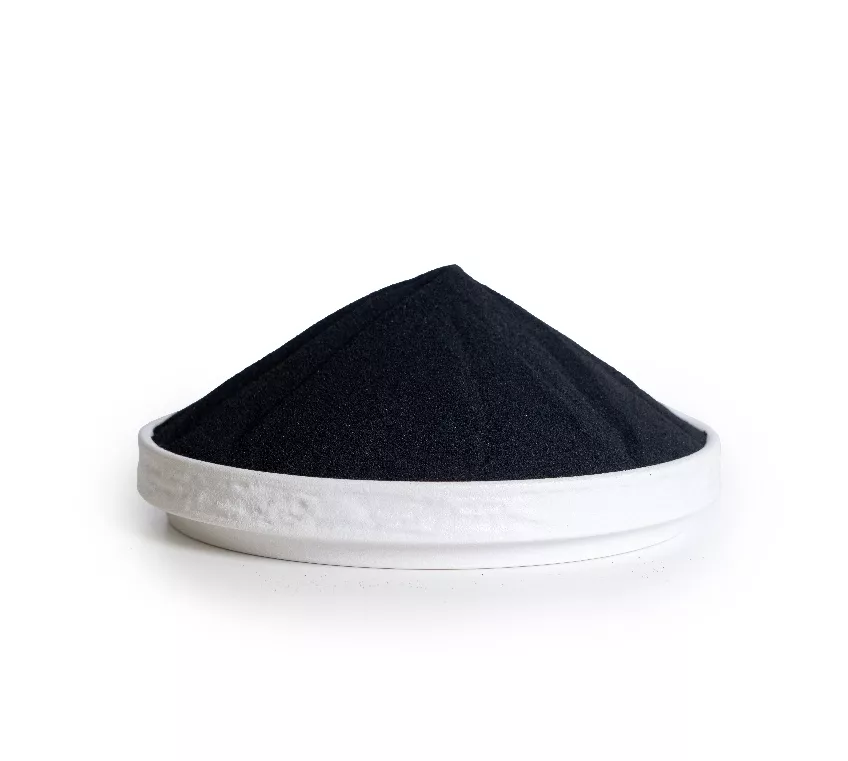
Yes. Black DTF powder isn't just a color variant — it's a fundamentally different adhesive choice that directly affects how your transfer looks on dark and light fabrics. Understanding which powder belongs on which garment is one of the most underestimated decisions in DTF production.

contact
Tel: +86 17706217416
Add: Building L2A, No. 520, Lane 1588, Zhuguang Road, Hongqiao World Center, Qingpu District, Shanghai, China
follow us: