
 English EN
 French FR
 German DE
 Portuguese PT
 Spanish ES
 Russian RU
 Japanese JA
 Korean KO
 Arabic AR
 Greek EL
 Turkish TR
 Italian IT
 Polish PL
 Hindi HI
 中国 CN
中国 CN
.webp)
How BOPP Film Barrier Properties Are Tested: OTR, WVTR and What the Numbers Mean
1. Introduction
Barrier performance is often treated as a simple number on a film datasheet, but OTR and WVTR results can be misleading when test conditions, film structure and end-use requirements are not considered together. For buyers of BOPP barrier Films, metalized BOPP films, Vacuum Metalized BOPP Film or VMOPP film, the important question is not simply whether a film has a “low” oxygen or water-vapor transmission rate. The question is whether the measured barrier performance is suitable for the package structure, product sensitivity, storage environment and converting process.
This matters because a transparent BOPP film, a metallized BOPP film and a high barrier BOPP film can have very different transport behavior. Metallization, coating, sealant layers, defects and lamination can all change the final package barrier.
Key Takeaways
OTR measures oxygen transmission, while WVTR measures water-vapor transmission. They describe different permeation mechanisms.
Test temperature, relative humidity, film thickness and specimen conditioning can materially affect reported results.
Metallized structures generally provide much higher barrier than uncoated BOPP, but barrier is influenced by coating or metal-layer integrity.
Procurement decisions should compare data measured under equivalent conditions and, for critical packaging, verify the complete finished structure rather than relying only on a single film layer.
2. Technical Core: How OTR and WVTR Work
BOPP is a biaxially oriented polypropylene film. Its molecular structure and orientation provide useful mechanical strength and dimensional stability, but conventional polypropylene film is not an absolute barrier to gases or water vapor. Molecules can dissolve into the polymer surface and diffuse through the film, producing measurable transmission.
OTR, or Oxygen Transmission Rate, quantifies the amount of oxygen passing through a defined film area over a defined time under specified test conditions. The result is commonly expressed in a unit such as cm³/m²/day. A lower OTR means less oxygen permeates through the specimen under the stated conditions.
WVTR, or Water Vapor Transmission Rate, measures the passage of water vapor through the specimen. It is commonly reported in g/m²/day. A lower WVTR indicates greater resistance to water-vapor transmission under the specified test conditions.
The reported value is not an intrinsic universal constant. Permeation is affected by temperature, humidity, pressure difference, film thickness, crystallinity, orientation and the presence of coatings or metallization. This is why two datasheets should not be compared directly unless their test conditions are comparable.
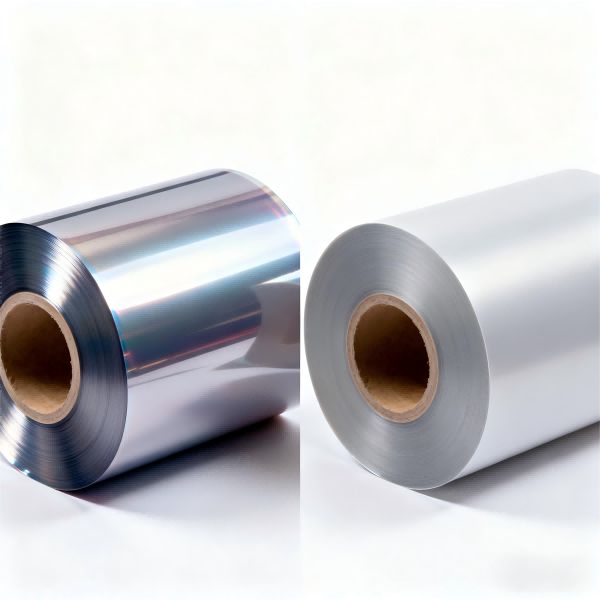
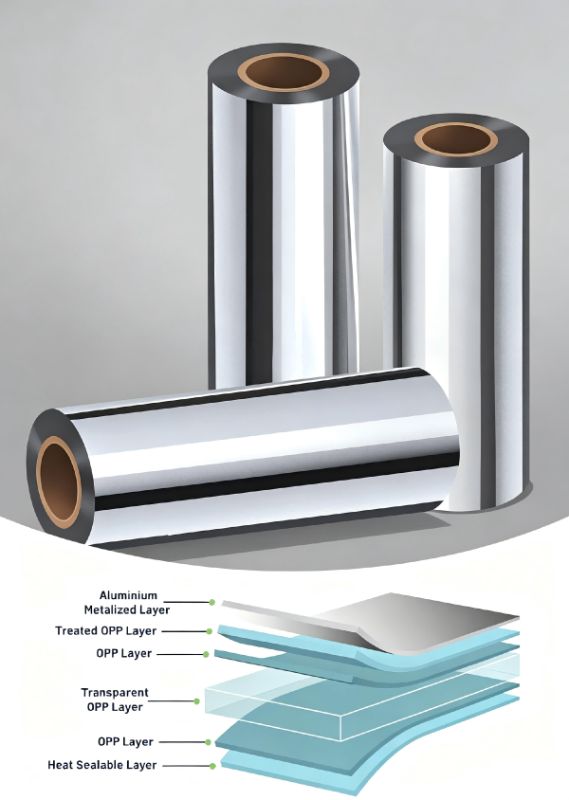
For metalized BOPP films, a thin aluminum layer creates a more tortuous and less permeable path for oxygen and moisture. Vacuum Metalized BOPP Film, often abbreviated as VMOPP film, therefore occupies an important position in flexible packaging. However, metallization quality matters. Pinholes, scratches, poor adhesion, flex cracking and converting damage can reduce effective barrier.
A high barrier BOPP film may also use additional coatings, sealant layers or multilayer structures. Ultra-high Barrier Sealable VMOPP can combine enhanced barrier with a heat-sealable surface, but the final package still depends on seal integrity, coating continuity and converting conditions.
The central engineering principle is to compare barrier data under equivalent test conditions and then validate the complete package structure.
3. Application & Solutions
3.1 How to Read OTR and WVTR Test Results
A film datasheet should be read as a test result, not as a universal performance guarantee. Before comparing BOPP grades, record the test method or instrument basis, temperature, relative humidity, specimen thickness and whether the result applies to the film alone or to a coated/metallized structure.
Compare OTR values only when the test temperature and humidity are comparable.
Compare WVTR under equivalent humidity conditions because water-vapor permeation is strongly moisture-dependent.
Confirm whether the reported value represents a single film layer or a complete laminate.
Check the nominal film thickness and construction because barrier performance can change with gauge.
Ask for repeatability or representative production data when barrier is a critical specification.
A low OTR does not automatically mean a low WVTR. Oxygen and water vapor interact differently with polymeric and metallized structures, so packaging engineers should define the actual failure mechanism of the packaged product before selecting the film.
3.2 Why Metallized BOPP Films Provide Higher Barrier
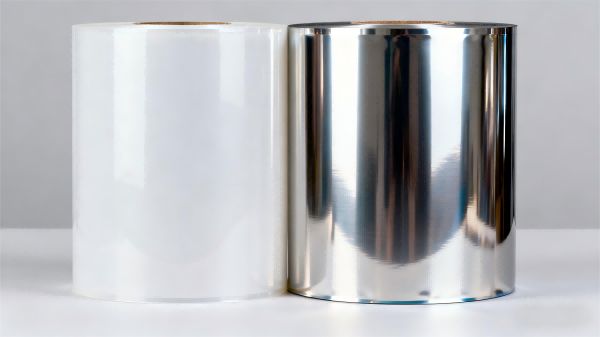
Metallized BOPP is widely used when a packaging structure needs improved protection against oxygen, moisture and light while retaining the processing advantages of a thin oriented film. Metallization deposits a very thin aluminum layer on the film surface, creating a substantially less permeable path than the polymer alone.
For metallized BOPP films for snack package applications, the barrier layer can help protect products that are sensitive to oxygen or moisture. The practical result depends on metallization coverage and how the film is handled during slitting, lamination and pouch conversion.
Inspect metallization uniformity and optical appearance.
Control web tension and handling to minimize scratches and flex damage.
Evaluate metal adhesion before and after lamination.
Consider the effect of printing, adhesive lamination and pouch forming on barrier retention.
For high-barrier packaging, test the finished laminate rather than assuming the individual VMOPP layer will retain its original laboratory value.
Bopp High Barrier Metallized Film is therefore best evaluated as part of a construction. The film grade, metal layer, adhesive, sealant and converting process collectively determine package performance.
3.3 Selecting High Barrier BOPP Packaging Films by End Use
A BOPP film distributor or BOPP pouch manufacturer should start with the sensitivity of the product rather than a generic “high barrier” label.
For dry snacks, confectionery and similar products, moisture and oxygen control can influence shelf life, texture and flavor retention. Metallized OPP Film for Packaging can be considered when higher barrier and light protection are required.
For products requiring heat sealing, an Ultra-high Barrier Sealable VMOPP structure can be relevant because it combines a barrier layer with a sealable surface. The sealant must still provide the required seal initiation temperature, seal strength and hot-tack performance for the actual packaging machine.
For more demanding applications, a High barrier BOPP packaging films specification should define target barrier values, seal performance, laminate structure and storage conditions rather than relying on terminology alone.
Define the product's oxygen and moisture sensitivity.
Establish the expected shelf-life and distribution environment.
Determine whether light protection is also required.
Select transparent BOPP, metallized BOPP or a coated/multilayer structure according to the actual barrier target.
Validate barrier after printing, lamination and pouch conversion.
3.4 Testing Barrier After Converting
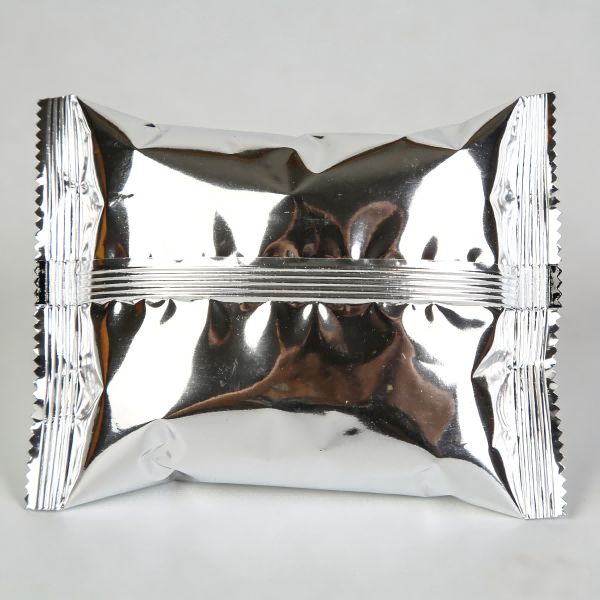
A frequent procurement mistake is to approve a film using the incoming-roll OTR or WVTR and never verify the finished laminate. Converting can introduce scratches, folds, pinholes, flex cracking, poor lamination or seal defects that change package performance.
A BOPP film converter should therefore establish a qualification sequence that includes incoming film inspection, metallization or coating inspection when applicable, lamination, curing, pouch forming and final barrier testing.
Test the incoming film according to the agreed specification.
Inspect the metalized or coated surface for defects.
Produce a representative laminate using commercial production settings.
Condition the finished structure before comparative barrier testing where required by the selected method.
Compare the finished structure with the incoming film and investigate significant deterioration.
Combine barrier testing with seal-strength and package-integrity checks.
This approach helps distinguish a film-material problem from a converting problem. It also gives category managers and purchase managers a more useful supplier-qualification record.
3.5 Barrier Test Comparison and Procurement Logic
| Factor | Conventional uncoated BOPP | Recommended barrier selection approach | Why it matters |
|---|---|---|---|
| Barrier target | General polymer barrier | Define OTR and WVTR targets for the product | Prevents buying by vague “high barrier” terminology |
| Test comparison | Datasheet values may use different conditions | Compare equivalent temperature, humidity and thickness | Avoids false supplier-to-supplier comparisons |
| Construction | Single BOPP layer | Select coated/metallized/multilayer construction when needed | Barrier often depends on the full structure |
| Converting impact | Incoming film result only | Retest after printing, lamination and pouch making | Detects damage or barrier loss |
| Procurement logic | Price and nominal gauge | Barrier + sealability + process performance + cost | Reduces total packaging risk |
3.6 Practical Barrier-Film Selection Workflow
For commercial qualification, a practical sequence is:
Define the packaged product, shelf-life objective and expected distribution environment.
Set separate OTR and WVTR requirements rather than using a single generic barrier specification.
Specify the reference test conditions and required reporting units.
Decide whether transparent BOPP, metalized BOPP films, Vacuum Metalized BOPP Film, or a higher-barrier multilayer construction is appropriate.
Request production-representative samples rather than relying only on marketing literature.
Test the material before and after the key converting stages.
Review seal performance, laminate adhesion and package integrity together with OTR and WVTR.
Keep approved specifications tied to a defined construction, thickness and test method.
For distributors and procurement teams, supplier comparison should use a common technical template. A film with a lower quoted OTR is not necessarily the better commercial choice if its test conditions are less demanding, its converting stability is poorer, or its price and yield make the final package less efficient.
4. Frequently Asked Questions
What is the difference between OTR and WVTR?
OTR measures oxygen transmission through a film under specified conditions, while WVTR measures water-vapor transmission. They address different permeation mechanisms and should be specified separately for packaging applications.
Does a lower OTR always mean a better BOPP barrier film?
No. Lower OTR indicates lower oxygen transmission under the stated test conditions, but the package may also require moisture barrier, light protection, sealability and mechanical durability. Test conditions must also be comparable.
Why can metallized BOPP lose barrier after converting?
Metallization can be affected by scratches, flex cracking, pinholes, lamination defects or mechanical damage. The finished laminate should be tested when barrier performance is critical.
Should I compare supplier OTR and WVTR numbers directly?
Only when the test conditions, specimen construction and reporting basis are comparable. Ask suppliers to provide the test method, temperature, humidity, thickness and whether the result is for a single film or laminate.
5. Conclusion & B2B Action Guide
Barrier selection should be driven by measurable package requirements rather than by labels such as “high barrier” alone. OTR and WVTR provide two essential but different views of gas and moisture transmission. For metalized BOPP films, Vacuum Metalized BOPP Film and VMOPP film, metallization quality and converting integrity are just as important as the initial laboratory result.
For BOPP film distributors, converters and pouch manufacturers, the practical next step is to establish a common test specification and compare representative samples under equivalent conditions. When a high barrier BOPP film is being considered for a demanding application, request technical data, production samples and a finished-laminate trial before commercial approval.




News & Events
learn more-
 Blog
Press Release Sep-30-2026
Blog
Press Release Sep-30-2026How to Choose a BOPP Label Film for Your Printing Process: Flexo, UV Inkjet, HP Indigo and Offset Compared
Compare BOPP label film requirements for flexo, UV inkjet, HP Indigo and offset printing, including coatings, adhesion, surface energy and converting. -
 Blog
Press Release Sep-30-2026
Blog
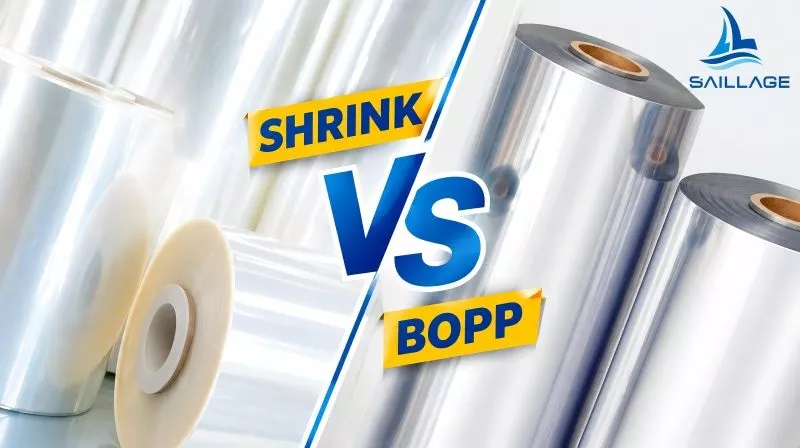
Press Release Sep-30-2026Shrink Film vs BOPP Overwrap | Packaging Film Guide
Compare shrink film, BOPP overwrap and PETG sleeve film for boxes, cosmetics and multipacks by shrink behavior, appearance, sealing and total cost. -
 Blog
Press Release Sep-30-2026
Blog
Press Release Sep-30-2026BOPP Film Coatings Explained: Acrylic, PVdC, Heat-Seal and Top-Coated Grades
Compare acrylic, PVdC, heat-seal and top-coated BOPP film grades by printability, barrier performance, sealing behavior and converting requirements.

contact
Tel: +86 17706217416
Add: Building L2A, No. 520, Lane 1588, Zhuguang Road, Hongqiao World Center, Qingpu District, Shanghai, China
follow us: