
 English EN
 French FR
 German DE
 Portuguese PT
 Spanish ES
 Russian RU
 Japanese JA
 Korean KO
 Arabic AR
 Greek EL
 Turkish TR
 Italian IT
 Polish PL
 Hindi HI
 中国 CN
中国 CN
.webp)
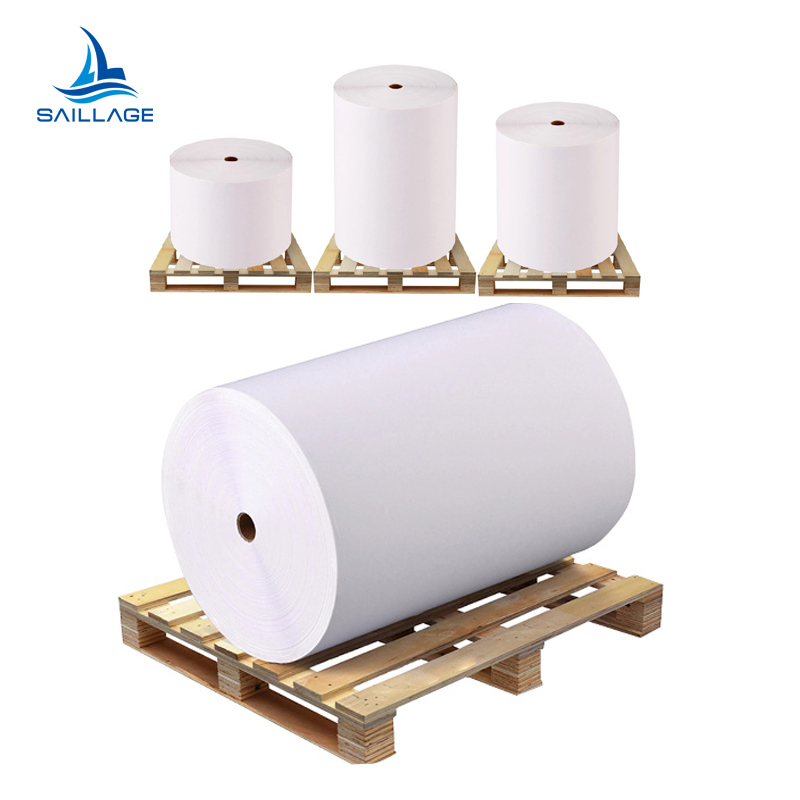
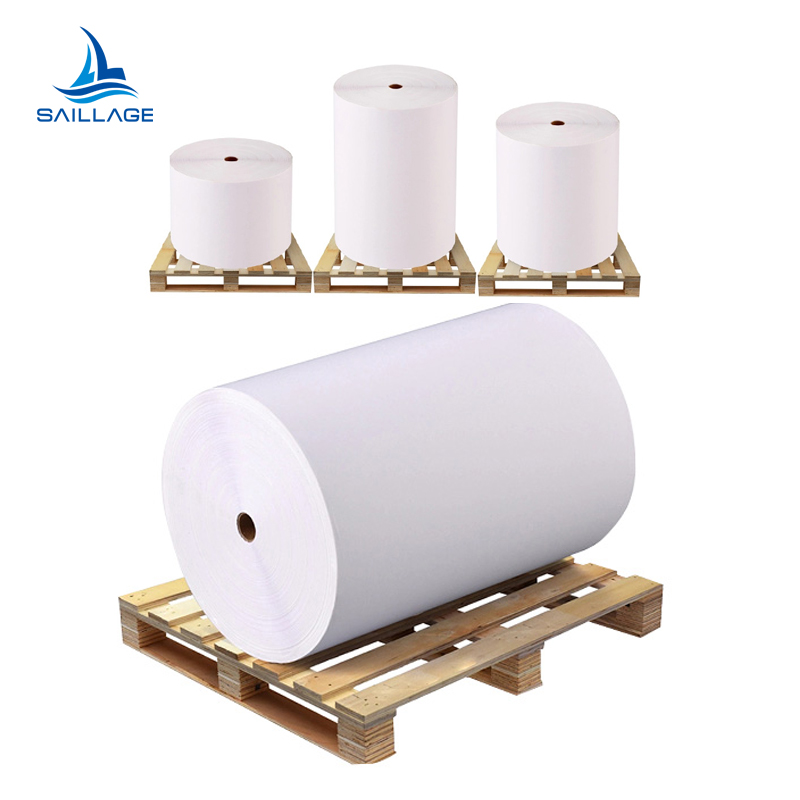
How to Correctly Pack Substrate BOPP Film Rolls: A Step-by-Step Guide
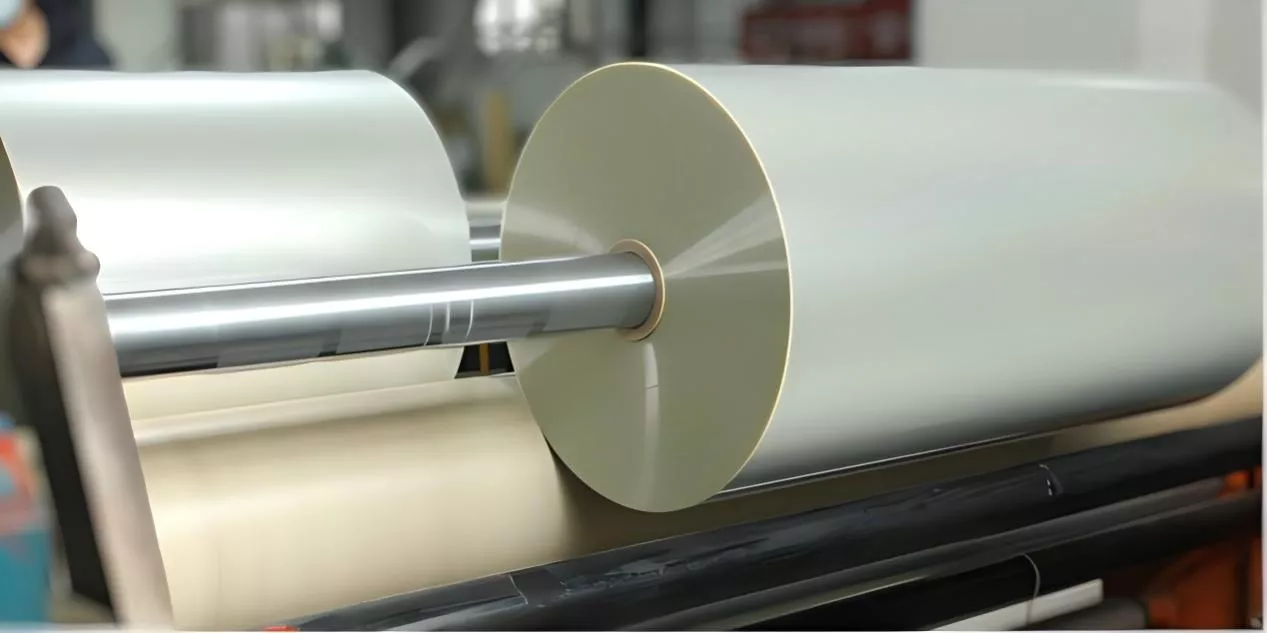
To correctly pack a substrate BOPP film roll, follow six steps: inspect the roll for defects and winding tension, apply a moisture-barrier inner wrap, protect both roll edges, add kraft or laminated outer packaging with strapping, palletize with the correct orientation and stretch wrapping, and label every roll for full traceability. Done properly, this process protects the film from dust, moisture, pressure, and mechanical damage from the winder all the way to the customer's converting line.
A BOPP film roll is more fragile than it looks. The film surface can be scratched by a single dust particle under pressure, the edges can be crushed by one careless forklift movement, and a damp paper core can quietly ruin the inner wraps of an entire roll. Unlike most packaging defects, roll damage is often invisible until the film is unwound at the customer's facility — which makes packing quality a direct part of product quality. This guide walks through the complete packing process used by professional BOPP film manufacturers, the storage conditions that preserve the film after delivery, and the most common packing mistakes to avoid.
Why Does BOPP Film Roll Packing Matter So Much?
BOPP (biaxially oriented polypropylene) film is used as a printing, laminating, and labeling substrate, so its surface condition directly determines the quality of everything produced from it. Poor packing causes four types of loss:
Surface damage: scratches, dents, and pressure marks that show up as printing or laminating defects across hundreds of meters of film.
Structural damage: telescoping (layers shifting sideways), crushed edges, and deformed cores that make the roll impossible to run at speed on a converting line.
Environmental damage: moisture absorbed by paper cores and dust embedded between layers during transit.
Commercial loss: claims, replacement shipments, and production downtime at the customer — costs that far exceed the price of proper packing materials.
Step 1: Inspect the BOPP Film Roll Before Packing
Every roll should pass a detailed inspection before any packaging material touches it. Packing a defective roll only ships the problem to the customer.
Surface appearance: the substrate BOPP film must be free of wrinkles, scratches, gels, and contamination across the full web width.
Edge alignment: the roll edges must be neat and evenly wound — misaligned edges are easily crushed during handling and cause weaving problems on the unwind.
Roll hardness and winding tension: correct, uniform tension keeps the roll stable and prevents telescoping or loosening in transit. Telescoping usually starts at the winder, not in the truck — a roll wound too loosely will shift no matter how well it is packed.
Core condition: the core must be undeformed and dry. Paper cores readily absorb moisture — a wet core expands and crushes the inner wraps of film, creating tension variations through the whole roll.
Any roll that fails inspection should be corrected or rejected at this stage, never packed and shipped.
Step 2: Apply Protective Inner Wrapping
After inspection, the BOPP film roll receives its first protective layer — the one that does most of the environmental protection work:
Moisture-barrier wrapping: a layer of PE protective film or moisture-resistant plastic is wrapped around the roll to shield it from dust, humidity, and scratches. While BOPP itself resists moisture well, the winding surface and the paper core do not — the barrier wrap protects both.
Clean-room discipline: wrapping should happen promptly after slitting, before dust can settle on the roll surface, and the wrap should be sealed rather than loosely draped.
Step 3: Protect the Roll Edges
Roll edges are the most vulnerable point of a BOPP film on reel: a small dent on one edge makes the film unusable across its full width at that point. Professional packing therefore treats edge protection as its own step:
Edge guards or side discs: rigid protective discs are placed on both end faces of the roll, covering the film edges completely.
Core plugs: plugs inserted into both core ends prevent core crushing and give handling equipment a defined contact point that never touches the film.
Step 4: Outer Packaging and Roll Stabilization
Outer wrapping: kraft paper or laminated packaging material is wrapped securely around the inner layer, providing mechanical protection and resistance to environmental conditions during shipping.
Strapping: plastic straps or packing belts hold the packaging tightly in place so the BOPP film on reel cannot shift inside its wrapping.
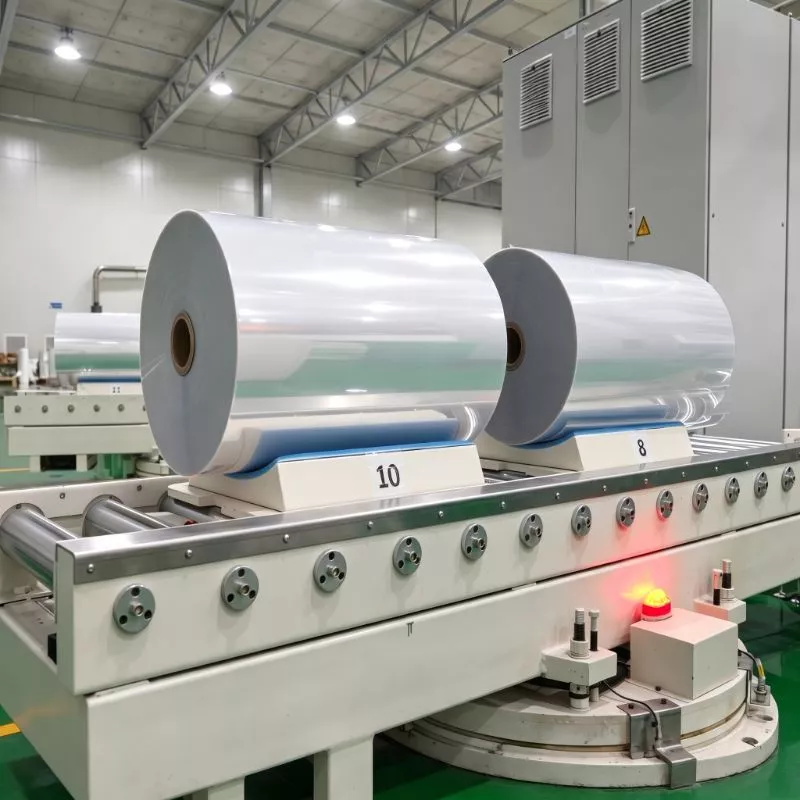
Automated packing: many production facilities use automatic packing machines to guarantee that every substrate BOPP film roll is wrapped with identical material overlap and strap tension — consistency in packing matters just as much as consistency in the film itself.
Step 5: Palletize for Transportation Safety
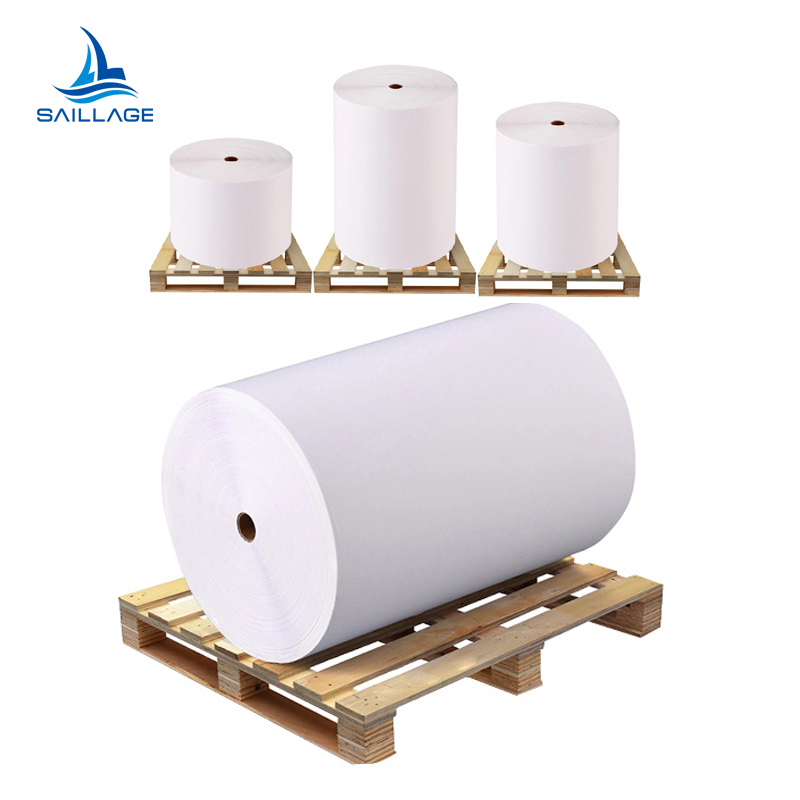
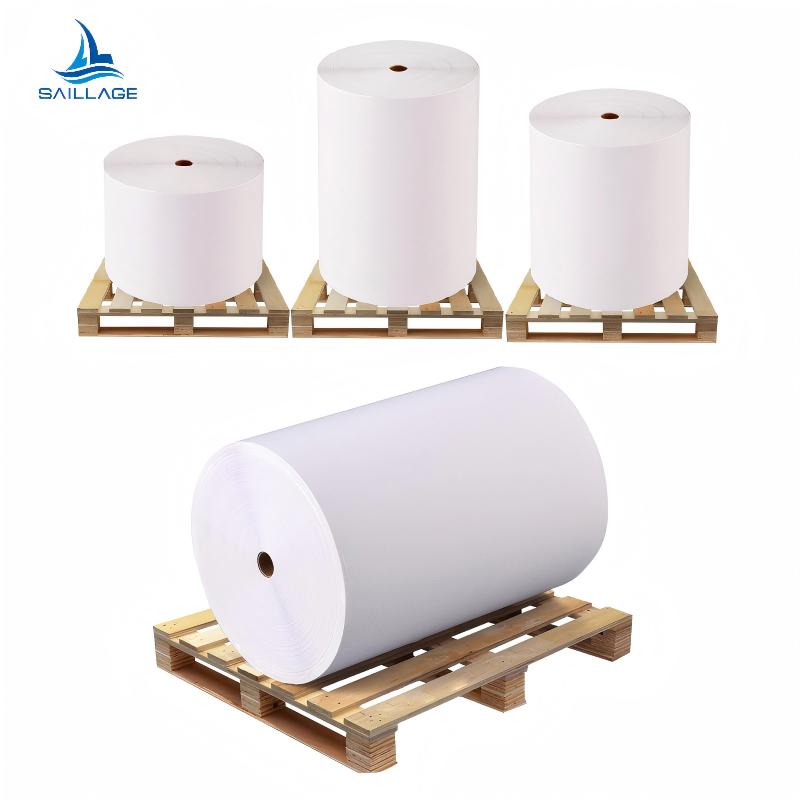
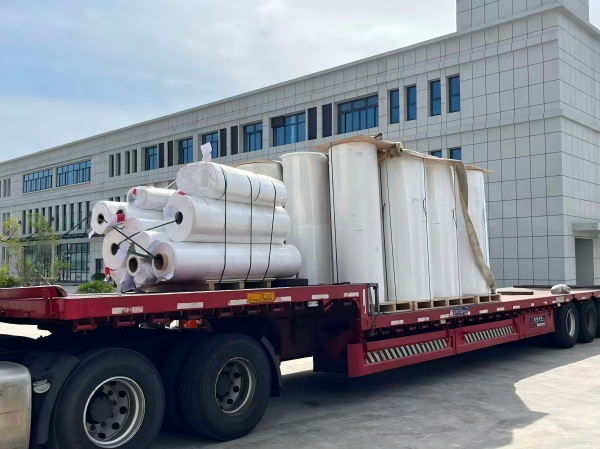
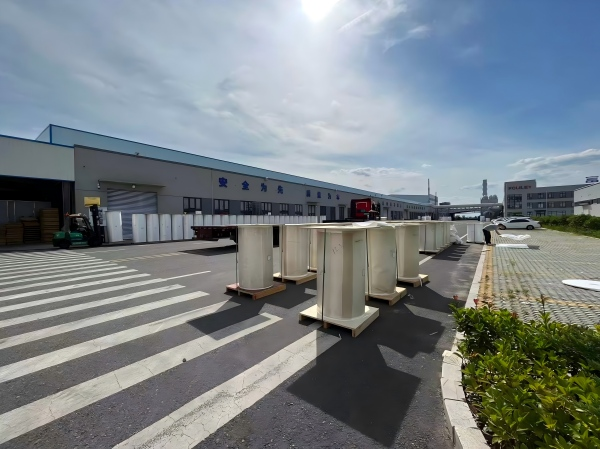
Pallet selection: fully wrapped rolls are placed on wooden or plastic pallets so they can be handled safely with forklifts or pallet jacks, and never rest directly on concrete floors, which transfer cold and moisture.
Roll orientation: rolls are arranged vertically (on end) or horizontally depending on size and weight. Vertical placement avoids pressure on the film surface; horizontal placement requires cradles or saddles so the roll weight rests on the core zone, not on the film.
Stretch wrapping: the loaded pallet is stretch-wrapped as a unit, fixing every BOPP film roll firmly in place and preventing movement or collision between rolls during shipping.
Careful handling: forklift clamps must be adjusted to the correct pressure — over-clamping crushes rolls and is one of the most common causes of hidden transit damage. Roll-handling attachments or soft clamps are strongly preferred.
Step 6: Label Every Roll for Traceability
Each packed roll should carry a clear label showing the film grade, thickness, width, length, net and gross weight, batch number, and roll number, plus handling marks (keep dry, do not drop, orientation arrows). Proper labeling allows the customer to verify the goods against the order, run first-in-first-out stock rotation, and gives both sides full traceability if a quality question ever arises.
Packing Materials at a Glance
| Packing Material | Function | Protects Against |
|---|---|---|
| PE inner wrap | Moisture and dust barrier on the film surface | Humidity, dust, scratches |
| Edge guards / side discs | Rigid protection of both roll end faces | Edge crushing, impact |
| Core plugs | Reinforce core ends and define lifting points | Core deformation |
| Kraft / laminated outer wrap | Mechanical and environmental outer shell | Abrasion, light, weather |
| Straps / packing belts | Hold wrapping tight to the roll | Shifting, unwrapping |
| Pallet + stretch wrap | Unitize rolls for safe mechanical handling | Collision, floor moisture, tipping |
What Are the Best Storage Conditions for BOPP Film Rolls?
BOPP film rolls should be stored at a stable 15–25 °C and at or below about 60% relative humidity, away from direct sunlight, in their original packaging, and rotated first-in-first-out. Good packing preserves quality in transit, but storage conditions at destination matter just as much:
Temperature: excessive heat can soften film and encourage telescoping; low temperatures make film brittle and prone to breaking during unwinding.
Humidity: high humidity attacks paper cores and coated or printable surfaces before it affects the BOPP itself.
Light and packaging: keep rolls away from direct sunlight and leave them in their original packaging until the moment of use.
Shelf life: use film within the period recommended for its grade — this is especially important for corona-treated or coated substrate BOPP film, where surface energy declines over time and affects printability and adhesion.
5 Common Packing Mistakes That Damage BOPP Film Rolls
Packing without inspection: a loosely wound or edge-damaged roll will fail in transit no matter how well it is wrapped.
Skipping edge protection: unprotected end faces are the most common source of claims, because edge dents ruin the full film width.
Horizontal stacking without cradles: resting a roll's weight on the film surface creates flat spots and pressure marks that appear as print defects later.
Over-clamping with forklifts: excessive clamp pressure crushes rolls invisibly — the damage only shows when the film is unwound.
Storing packed rolls in poor conditions: damp warehouses and direct floor contact defeat even perfect packing by soaking cores and packaging from the outside in.
Frequently Asked Questions
Should BOPP film rolls be stored vertically or horizontally?
Vertical storage (roll standing on end) is generally preferred because it keeps weight off the film surface. Horizontal storage is acceptable for heavy rolls when cradles or saddles support the roll at the core zone, and stacking height is limited so lower rolls are not deformed.
What causes telescoping in BOPP film rolls?
Telescoping — layers of the roll shifting sideways like an extended telescope — usually originates from incorrect or uneven winding tension at the factory. Heat during storage or transport and vibration in transit can then make a marginal roll worse. It is prevented by tension control at winding, not by packaging alone.
What temperature and humidity are best for storing BOPP film?
A stable 15–25 °C with relative humidity at or below about 60% is the widely recommended range. Stability matters as much as the absolute values: repeated temperature swings cause expansion and contraction cycles that loosen rolls and stress the film.
How long can substrate BOPP film be stored before use?
Follow the shelf life stated on the supplier's datasheet for the specific grade. As a rule, corona-treated and coated films should be used sooner than plain film, because surface treatment effects decline over time and reduce printability and adhesion. First-in-first-out rotation protects you regardless of grade.
Why do BOPP film rolls need edge protection?
Because a dent on the roll edge damages the film across its entire width at that point. Edge guards and side discs absorb the impacts that occur during loading, unloading, and stacking — the moments when rolls are most frequently damaged.
Can packed BOPP film rolls be stacked on top of each other?
Palletized vertical rolls can be stacked only if the pallet design transfers the load through the pallet structure rather than through the rolls. Horizontal rolls should not be stacked more than two to three layers, with cradles between layers — and heavy or wide rolls should not be stacked at all.
Conclusion
Correct packing methods play a vital role in maintaining the quality of substrate BOPP film throughout logistics and storage. By inspecting each BOPP film roll before packing, applying moisture-barrier inner wrapping and edge protection, using strong outer packaging with proper strapping, palletizing with the right orientation, and labeling every roll for traceability, manufacturers ensure that customers receive film in the same condition it left the production line. At SAILLAGE, this packing discipline is a standard part of our production process for every BOPP film on reel we ship — because film quality only counts if it survives the journey.




News & Events
learn more-
 Blog
Press Release Mar-13-2026
Blog
Press Release Mar-13-2026Celebrating Women’s Month: To Every Woman Creating, Dreaming, and Leading Through Design💗
Here at SAILLAGE, as a publicly listed company and a trusted global supplier of premium DTF film and heat transfer solutions, We are proud to support women creators, entrepreneurs, designers, and brand builders around the world. -
 Blog
Press Release Mar-13-2026
Blog
Press Release Mar-13-2026The Introduction of Different Types of BOPP Film
Biaxially oriented polypropylene remains one of the most versatile materials in modern converting industries. The various types of BOPP film are developed to meet different surface requirements, printing demands, and end-use applications. From high-gloss transparent structures to textured and specialty finishes, each category of types of BOPP film delivers distinct surface characteristics that influence performance. Understanding these differences helps converters and brand owners select the right material for packaging, labeling, and graphic applications. -
 Blog
Press Release Mar-13-2026
Blog
Press Release Mar-13-2026Which DTF Film Is Better? Cold Peel vs. Hot Peel vs. Instant Peel, A Complete Comparison
There is no single “best” DTF film—cold peel, hot peel, and instant peel each have their own strengths, tailored to different production needs. The key is to match the film type to your workflow, substrate, and quality requirements. By understanding the differences between these three variants, you can make an informed choice that optimizes your production efficiency and print quality.

contact
Tel: +86 17706217416
Add: Building L2A, No. 520, Lane 1588, Zhuguang Road, Hongqiao World Center, Qingpu District, Shanghai, China
follow us: