
 English EN
 French FR
 German DE
 Portuguese PT
 Spanish ES
 Russian RU
 Japanese JA
 Korean KO
 Arabic AR
 Greek EL
 Turkish TR
 Italian IT
 Polish PL
 Hindi HI
 中国 CN
.webp)
PETG Shrink Sleeve Base Film for Printing: Surface and Ink-Adhesion Trial Checklist
Introduction
A print defect on a PETG shrink sleeve label is not always caused by the ink or press settings. Poor wetting, inconsistent surface condition, contamination, and weak ink adhesion can lead to mottling, scuffing, blocking, or ink loss during slitting, seaming and sleeve application. Before approving PETG Shrink Sleeve Base Film printing for production, converters should verify the film surface and ink system together under representative process conditions.
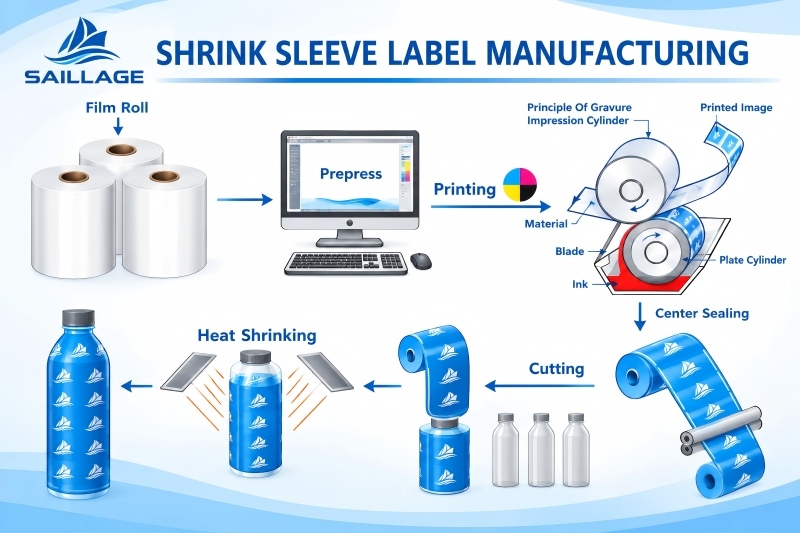
PETG Shrink Sleeving Film contracts when heated, allowing a printed sleeve to fit the shape of a container. That thermal response makes print qualification demanding: the ink layer must remain visually consistent and adequately bonded during converting and shrinking. Transparent PETG Shrink Film also makes haze, streaks, pinholes and uneven ink coverage easy to see. A successful trial needs more than a visual check immediately after printing.
Key Takeaways
inspect the film before printing
confirm surface condition using an agreed method
verify ink compatibility and drying or curing
test adhesion after a defined conditioning period
and assess the printed sleeve after seaming and shrink simulation. Acceptance limits should be agreed by the film supplier, ink supplier and converter rather than assumed to be universal.
Technical Core: Surface Condition, Wetting and Ink Adhesion
Surface energy describes how readily a liquid wets a solid surface. In film printing, it is commonly expressed in dynes per centimetre; mN/m is numerically equivalent for surface tension. If the film surface is not sufficiently wettable for the chosen ink, the ink may retract, form uneven droplets or produce poor coverage. Surface energy alone does not guarantee adhesion: surface chemistry, ink binder, solvent or water system, drying conditions and treatment decay also influence the final result.
Surface treatment, often corona treatment, uses an electrical discharge to modify surface chemistry and improve wetting. Treatment level can decline during storage, while contamination from handling, slip additives, oils or dust can affect the result. A dyne test is a useful screening tool, but it is not a direct measurement of bond strength. Follow the supplier’s method, test location and handling guidance, and avoid touching the print side with bare hands.
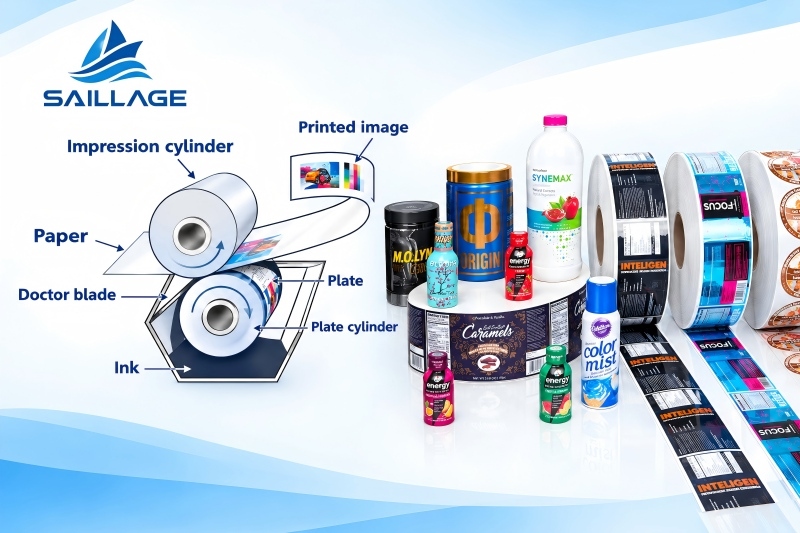
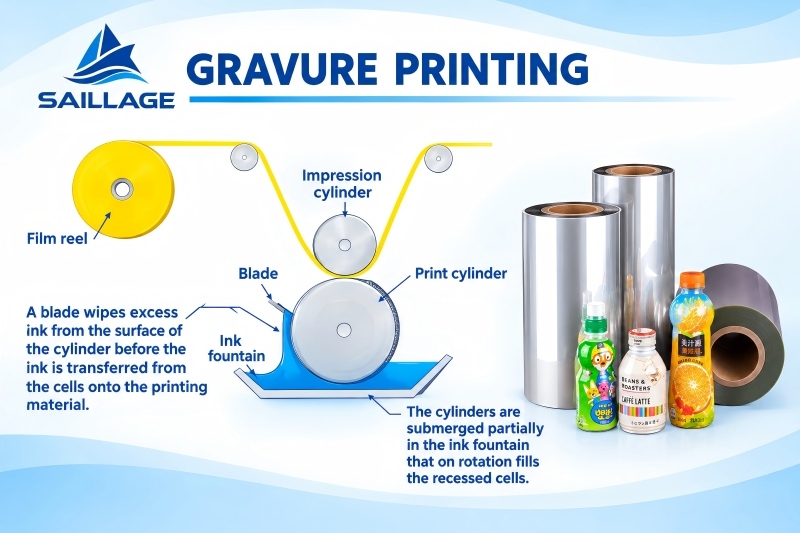
In gravure printing, ink transfers from engraved cylinder cells to the moving web. The surface condition of PETG film for gravure printing affects ink transfer and wetting, while press speed, viscosity, cell geometry, impression, solvent balance and drying capacity affect print formation. A film that performs well with one ink system or press setup may not behave identically with another. Qualification should use the intended ink, representative cylinder conditions, press speed and drying profile.
The ink-adhesion performance of PETG shrink sleeve label film should be evaluated after printing and relevant downstream steps. Adhesion can be affected by incomplete drying, incompatible ink chemistry, residual solvent, overprinting sequence, contamination and strain during shrinking. If ink remains soft when rewound, blocking can occur as adjacent layers contact each other. Marginal adhesion may not become obvious until cutting, seaming, bottle handling or shrink-tunnel exposure.
High shrink petg shrink film may undergo substantial dimensional change during shrinking. Artwork distortion is not the same as ink-adhesion failure, so the trial should assess them separately. Film shrink behavior, ink flexibility, print design and tunnel conditions should be considered together. A stable print result requires a suitable surface, compatible ink, adequate drying or curing, and a controlled converting process.
Application & Solutions: A Step-by-Step Trial Plan
1. Incoming film inspection
Before mounting the roll, verify grade, thickness, width, roll identification, batch number and packaging condition. Inspect the web for haze, scratches, specks, streaks, wrinkles, edge damage and contamination. Confirm which side is intended for printing and whether the supplier specifies a treated side. Record abnormalities before the trial begins.
2. Check surface condition before printing
Measure surface wetting using the agreed dyne-test procedure or another supplier-approved method. Record the test method, date, roll number, web side and sampling location. Check more than one location across the web when uniformity matters. Do not use a single dyne reading as the sole acceptance criterion; compare it with supplier recommendations and confirm actual print performance.
Use clean gloves and avoid touching the print surface.
Check the film’s storage history and time elapsed since treatment, where available.
If surface readings are inconsistent, hold the sample and consult the supplier before changing press settings.
3. Qualify ink compatibility and press conditions
Use the intended production ink system, including specified additives, viscosity range and solvent or water balance. Record ink batch, viscosity, press speed, cylinder details, impression settings, drying-zone temperatures and ventilation. Change one variable at a time during troubleshooting. Excessive heat may affect web handling or shrink behavior, while insufficient drying can cause smearing, blocking or poor adhesion after rewinding.
4. Test print appearance and adhesion
Inspect solid areas, fine text, gradients, reverse printing, overprints and high-coverage regions. Look for pinholes, mottling, ink retraction, streaking, color variation and poor edge definition. After the ink has dried or cured for the agreed period, perform the agreed adhesion test, such as a controlled tape test where appropriate. Define tape type, application pressure, dwell time, removal angle and rating method before comparing results. A tape test is comparative and should not be treated as a universal standard unless a specific method is agreed.
5. Simulate converting and end use
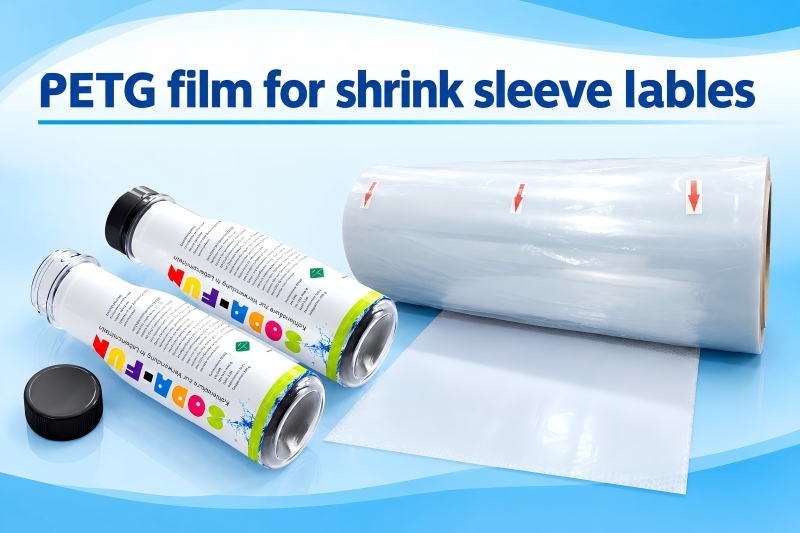
Evaluate the print after slitting, rewinding and seaming. Check for scuffing, blocking, ink transfer, cracking and damage around the seam. Then shrink a printed sleeve on the target container or representative test form using the intended tunnel profile. Inspect fine graphics, color boundaries and high-coverage areas for cracking, flaking, distortion and loss of legibility. Distinguish normal artwork distortion from actual ink-film separation.
6. Document and approve the trial
Use a written trial report so purchasing, R&D, the film supplier and the ink supplier can make decisions from the same evidence. Record sample identity, test conditions, observations, photos, deviations and pass/fail criteria. If the trial fails, identify whether the likely cause is surface condition, ink compatibility, drying, contamination or downstream strain before requesting a material change.
The comparison below focuses on decision quality and process control. It does not claim a fixed improvement in adhesion or waste, because outcomes depend on film grade, ink system, press and shrink process.
Traditional Check vs Controlled Trial Plan
| Evaluation area | Basic / traditional check | Recommended controlled trial |
|---|---|---|
| Film surface | Rely on appearance or one dyne reading | Inspect the roll and record method, print side and sampling locations |
| Ink selection | Assume existing ink will behave the same | Qualify the intended ink system and record viscosity and press conditions |
| Drying | Judge only at press exit | Confirm drying or curing and check blocking after rewinding and conditioning |
| Adhesion | Use an informal tape pull immediately after printing | Define conditioning time, tape method, rating and acceptance criteria in advance |
| End use | Approve print before shrink simulation | Inspect after slitting, seaming and representative shrink-tunnel exposure |
| Troubleshooting | Change several settings at once | Change one variable at a time and record evidence |
Trial Checklist
☑ Confirm the correct film grade, print side, batch number, thickness and roll condition.
☑ Record the agreed surface-energy test method, results and sampling locations.
☑ Use the production ink system and record viscosity, press speed and drying settings.
☑ Inspect wet and dry print quality across solid, fine-detail and high-coverage areas.
☑ Test adhesion after the specified drying or curing period using an agreed method.
☑ Check blocking, scuffing and ink transfer after rewinding and handling.
☑ Inspect the sleeve after seaming and representative shrink-tunnel exposure.
☑ Keep photos and results; agree on acceptance limits before production approval.
FAQ: Questions from Converters and Buyers
How do I check the printing property of PETG shrink sleeve film?
Start with incoming visual inspection and the supplier-approved surface-wetting test. Print with the intended ink system under representative press conditions, assess appearance and drying, test adhesion after conditioning, and inspect the sleeve after seaming and shrinking.
Does a higher dyne level always mean better ink adhesion?
No. A dyne reading indicates wetting behavior, not bond strength. Ink chemistry, contamination, treatment uniformity, drying and downstream strain also affect adhesion. Confirm performance with an adhesion test and an end-use trial.
Why does ink pass the initial test but peel after shrinking?
The ink may have marginal adhesion, inadequate curing, poor flexibility or incompatibility with shrink strain. Check the film surface, ink system and drying profile, then repeat a controlled shrink trial. Record print adhesion and artwork distortion separately.
Can one PETG film grade work with every gravure ink system?
Not necessarily. Performance depends on surface condition, ink binder and solvent system, press settings, drying capacity and shrink requirements. Qualify each intended combination before full-scale production.
Conclusion & B2B Action Guide
Reliable PETG Shrink Sleeve Base Film printing depends on a verified surface, compatible ink, controlled drying and adhesion that survives converting and shrink application. A dyne test is useful for screening, but it cannot replace a complete print-and-shrink trial. Documented conditions help teams distinguish film-related issues from ink, press or process problems.
Before approving a new film grade or supplier, request the current technical data sheet, recommended print-side surface condition and handling guidance. Share your ink system, gravure conditions, target shrink profile and end-use container with the film supplier. A joint sample trial with agreed acceptance criteria can reduce uncertainty before a production-scale order.




News & Events
learn more-
 News
Press Release Oct-24-2026
From Istanbul to the World: Saillage Prepares for Global Printing Exhibitions in 2027
Saillage shares its 2027 exhibition plans for Impressions Expo Long Beach, APPP EXPO Shanghai and FESPA Global Print Expo. -
 Blog
Press Release Oct-24-2026
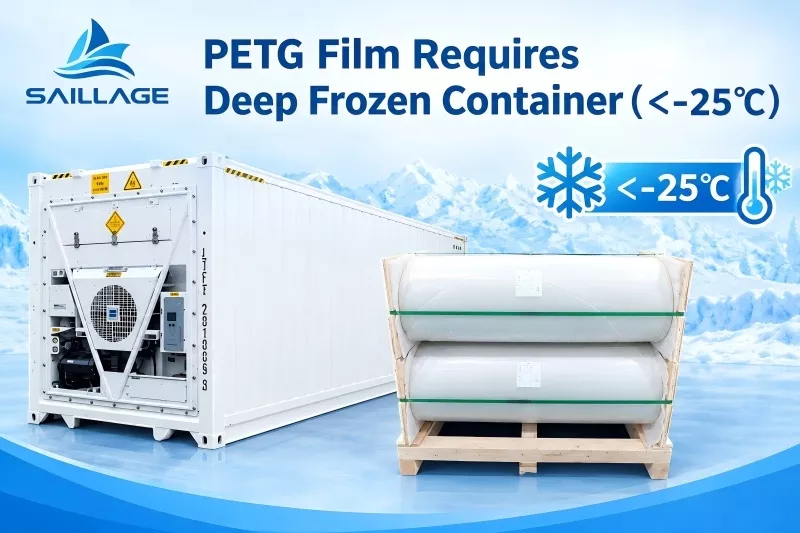
How to Store and Ship PETG Shrink Film Master Rolls: Prevent Premature Shrink and Roll Damage
Learn how to store, package and ship PETG shrink film master rolls to prevent premature shrink, edge damage, crushed cores and transit-related defects. -
 Blog
Press Release Oct-24-2026
Single-Sided vs Double-Sided Matte DTF Film: How to Select the Right Film for Stable Printing Performance
Compare single-sided and double-sided matte DTF film by coating structure, feeding stability, static control, print performance and supplier selection.

contact
Tel: +86 17706217416
Add: Building L2A, No. 520, Lane 1588, Zhuguang Road, Hongqiao World Center, Qingpu District, Shanghai, China
follow us: