
 English EN
 French FR
 German DE
 Portuguese PT
 Spanish ES
 Russian RU
 Japanese JA
 Korean KO
 Arabic AR
 Greek EL
 Turkish TR
 Italian IT
 Polish PL
 Hindi HI
 中国 CN
中国 CN
.webp)
What Causes DTF Ink Smearing and How to Prevent It
Ink smearing in DTF printing is not a single-cause problem. It is the visible result of one or more failures across five interdependent variables: film coating quality, ink formulation, print parameters, ambient humidity, and consumable compatibility. A solution that addresses only one variable while ignoring the others rarely eliminates the problem — because any single remaining misalignment is sufficient to reintroduce smearing under production conditions.
Smearing Is a Symptom. These Are the Diagnoses.
When ink spreads laterally beyond the intended dot boundary — blurring edges, merging adjacent colors, creating halos around fine elements, or leaving visible water marks along the perimeter of printed areas — the result is described variously as smearing, bleeding, feathering, or ink spread. All of these terms describe the same underlying failure: ink that was not absorbed and held in the correct position within the film's ink reception layer.
The diagnostic value of this definition is important: smearing always involves a failure of the film's absorption layer to control ink placement — but the reason for that failure can originate in any of the five variables listed above. This article examines each one systematically, explains its specific contribution to the smearing mechanism, and identifies the correction at each level.
Film Coating Quality: The Primary Determinant of Ink Placement Accuracy
The ink absorption coating on a DTF film is the first — and most important — line of defense against smearing. Its function is to receive each ink droplet, absorb it to a controlled depth, and hold it in place while retaining sharp dot boundaries. When this coating is uneven in thickness, inconsistent in formulation, or mismatched to the ink's viscosity, the absorption rate varies across the film surface — and ink deposited in lower-absorption zones spreads laterally before it can be held.
Coating unevenness is the most common and most underreported cause of smearing in DTF production. It is particularly insidious because it produces intermittent defects — smearing appears in certain areas of a print but not others, or on certain batches of film but not the roll that preceded it. This variability makes the coating the last variable buyers typically think to examine, when it is often the first they should.
The 100% Ink Load Test: Immediate vs 10-Minute Comparison
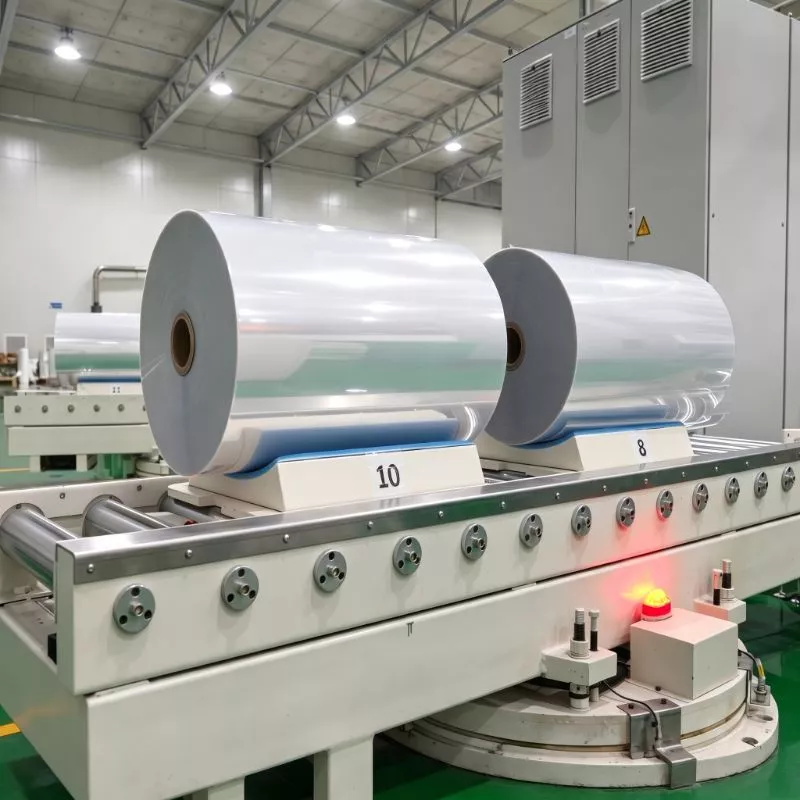
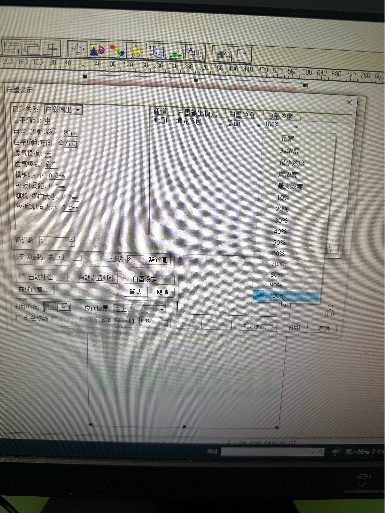
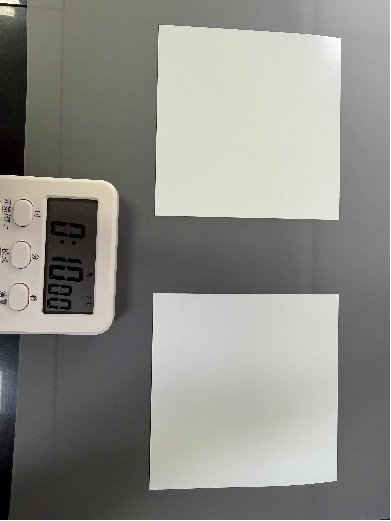
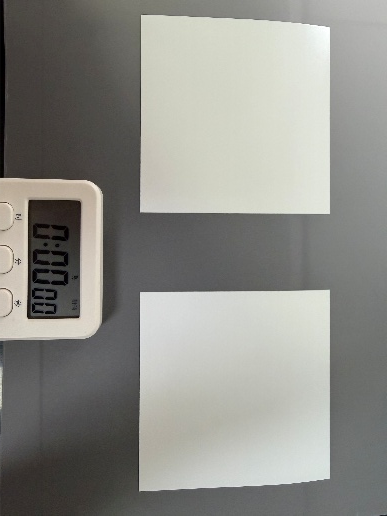
The definitive test for film coating quality under real production conditions is to print at maximum ink saturation — 100% ink load across all channels simultaneously — and compare the result immediately after printing with the same print examined after 10 minutes of rest at room temperature. This test is more demanding than any typical production job because 100% ink load deposits the maximum possible volume of ink per unit area, challenging the coating's absorption capacity and hold time beyond what most designs require.
On a correctly formulated film with uniform coating, the result at 0 minutes and at 10 minutes should be visually identical: sharp edges, no lateral spread, no water marks along print boundaries, and consistent color saturation across all areas. Any smearing, edge softening, or water mark formation that develops in the 10-minute window indicates that the coating could not hold the ink volume deposited — a film coating failure, not a printer or parameter problem.
Ink Formulation: Viscosity, Surface Tension, and Absorption Rate
DTF ink is a precision formulation in which pigment particle size, carrier fluid viscosity, surfactant concentration, and humectant levels all interact to determine how ink behaves on the film surface. When any of these parameters falls outside the range the film coating was calibrated for, the ink-to-film absorption dynamics change in ways that cause smearing.
Viscosity Too Low
Low-viscosity ink flows more readily across the film surface before absorption begins, spreading beyond the intended dot boundary. Produces soft edges and blurred fine detail.
Surface Tension Mismatch
Surface tension between ink and film coating determines initial dot spreading on impact. Insufficient tension difference allows uncontrolled lateral spread before absorption locks the droplet in place.
Humectant Excess
Humectants keep ink fluid longer after deposition — beneficial for printhead operation but counterproductive for film absorption. Excess humectant delays the absorption onset, extending the window for lateral spread.
Calibrated for Film Coating
Viscosity, surface tension, and humectant levels matched to the specific absorption kinetics of the paired film coating — ink arrives at surface and is absorbed before lateral spread can begin.
Print Parameters: Ink Volume, Pass Count, and Drying Time
Even with correctly matched film and ink, incorrect print parameters can saturate the coating's absorption capacity and cause smearing. The three most critical parameter variables are ink volume per pass, total pass count, and the inter-pass drying interval.
Ink Volume per Pass
Exceeds coating absorption capacity per pass — excess ink remains at surface and spreads
Print Speed
Insufficient inter-pass drying at high speed — each pass deposits on partially-wet surface
Media Profile Setting
Using a profile built for a different film — absorption kinetics assumptions are incorrect
When first evaluating a printer-film-ink combination, perform ink saturation profiling before running production jobs. Start with the film manufacturer's recommended media profile and reduce total ink limit in 5% increments until smearing is eliminated, then increase by 2% as a safety margin. This defines the operational ceiling for that specific combination under current environmental conditions.
Ambient Humidity: The Environmental Variable That Changes Without Warning
Humidity affects smearing through two simultaneous mechanisms that act in opposite directions: it slows ink drying (increasing lateral spread window) and it changes the absorption rate of the film coating (which is hygroscopic to varying degrees depending on its formulation). The combined effect means that a printer-film-ink combination calibrated to eliminate smearing at 50% relative humidity may produce visible smearing at 75% RH using identical settings.
This humidity sensitivity is particularly problematic in facilities without climate control — factories where seasonal changes in outdoor humidity translate directly into changing production conditions. A film that performs correctly in winter may produce smearing in summer, not because anything changed in the equipment or materials, but because ambient humidity increased by 20–30 percentage points.
Consumable Compatibility: When the System Wasn't Designed to Work Together
The final and often most difficult root cause to diagnose is systemic incompatibility — using film, ink, and printer hardware that were not designed and calibrated to work together. Each manufacturer optimizes their product for the variables they control: a film manufacturer calibrates their absorption coating for a specific ink viscosity range; an ink manufacturer formulates for specific printhead characteristics; a printer manufacturer provides media profiles for specific film types.
When consumables from different manufacturers are combined, each component operates in conditions for which it was not designed. The result is not always catastrophic failure — more often, it is a persistent, moderate smearing that cannot be eliminated through parameter adjustment because the parameter space is bounded by the compatibility mismatch itself.
Our Film Standard
Zero Bleed at 100% Ink Load. Zero Water Marks. Proven.
Our DTF film undergoes mandatory 100% ink load testing as part of the batch release protocol — printing at maximum ink saturation, then comparing the result immediately and after 10 minutes. No batch reaches a customer until it passes both comparisons with identical results: zero lateral bleed, zero water marks, and edge sharpness maintained at all ink density levels. This is not a specification claim — it is a test result we can show you.




News & Events
learn more-
 Blog
Press Release Jul-10-2026
Blog
Press Release Jul-10-2026DTF Film Anti-Static Treatment: Why It Matters for Roll-to-Roll Production
Untreated PET film builds static charge during roll-to-roll production, particularly under variable humidity conditions. The consequences are not merely cosmetic — powder sticking, airborne dust attraction, printhead nozzle contamination, and ultimately permanent printhead damage form a predictable failure chain that anti-static treatment is specifically engineered to interrupt. Our DTF film undergoes a full anti-static surface treatment that delivers zero powder adhesion under all production conditions. -
 Blog
Press Release Jul-10-2026
Blog
Press Release Jul-10-2026How to Manage BOPP Film Roll Tension and Winding Defects in Converting Operations
Maintaining the correct tension during converting operations is one of the most important factors in producing high-quality packaging materials. Every BOPP Film Roll must be wound with consistent tension to ensure smooth printing, lamination, slitting, and bag-making processes. Improper tension can lead to wrinkles, telescoping, loose winding, and web breaks, resulting in costly production downtime. -
 Blog
Press Release Jul-10-2026
Blog
Press Release Jul-10-2026Metallized BOPP Film: Applications, Vacuum Deposition Process, and Barrier Performance
Metallized BOPP Film is a high-performance packaging material produced by depositing a thin layer of aluminum onto the surface of BOPP film through a vacuum metallization process. This combination of polypropylene film and metallic coating creates a material that offers excellent appearance, enhanced barrier properties, and superior packaging performance.

contact
Tel: +86 17706217416
Add: Building L2A, No. 520, Lane 1588, Zhuguang Road, Hongqiao World Center, Qingpu District, Shanghai, China
follow us: